
Meet Hike it Baby Board Member & Dad: Julio Soria
- Blog Meet Hike it Baby Board Member & Dad: Julio Soria

This Father's Day, we would love to take a minute to share the story of one of our Board Members and Hike it Baby Dad Julio Soria. Read below to learn about Julio, how he found Hike it Baby and his thoughts on being a dad. (en español abajito!)
How has nature been a part of your life? Where do you find your family exploring nature the most?
I was very fortunate to grow up with parents who took me camping at a young age. My grandfather would also grow a variety of fruits and vegetables on his property, a tradition that he brought with him from growing up on a ranch in Mexico. That planted a seed within, a love for connection to soil and the food that grows from it. Now I practice urban farming at home, complete with backyard chickens and incorporating native plants and wildlife ponds for the benefit of the wildlife.
Our backyard became an oasis and provided escape from the pandemic lockdowns, a privilege that unfortunately many didn’t have in Los Angeles. People think of Los Angeles as a city devoid of nature, but the opposite is actually the truth. LA is NOT A DESERT!
We live in a Mediterranean climate and our region is within a biological hot spot known as the California floristic province. LA is bisected by two transverse mountain ranges, the Santa Monica Mountains National Recreation Area and The San Gabriel Mountains National Monument. We have miles of coastline dotted by tide pools and kelp forests. We also have urban rivers to recreate in. All these places have not only set the backdrop for my career but provided many sites to recreate in. I also can't not acknowledge that all this “public land” sits on the unceded territories of the Tongva, Kizh, Tataviam, and Chumash peoples. These days my family and I find ourselves exploring the tide pools most often. My son loves looking for critters, especially sea hares!
How did you learn about and get involved with Hike it Baby?
I first learned about HiB in 2014, when my son was born. I was an experienced naturalist and
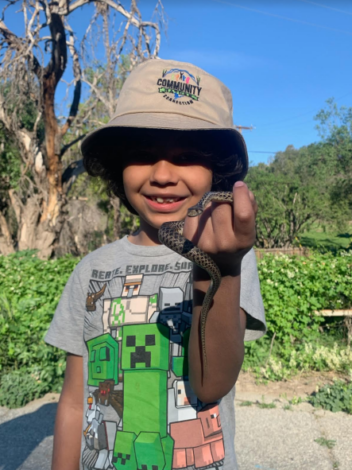
outdoorsman. I was not so much looking for tips on how to hike with a child, but for a community of parents who liked to hike. Since HiB had just been founded, there were no groups in Los Angeles (originally Tovaangar, home of the Tongva people) where we live. Fast forward seven years and a career working for intersectional environmental organizations that guide young adults from historically excluded communities on a pathway to careers in parks and conservation. I joined the HiB Board of Directors this year and I am very happy to bring my experience as an outdoor professional and as an outdoor parent!
Why is it important to you as a dad to raise your child to love nature and being outdoors?

That’s a layered answer for sure! I am the proud father of a beautiful child who happens to be on the autism spectrum. We have found that nature provides a therapy that he can’t get anywhere else. Being outdoors calms him down. He seems to get grounded. The stress of city stimuli melts away. So first and foremost nature provides socio-emotional, mental health, and physical exercise benefits. My son is 7 years old. He faces a changing planet challenged by extreme weather events driven by climate change. Have you studied the 2022 IPCC report?! The only way we humans can turn around this course is by all of us pitching in. By raising our children to love and appreciate nature and the outdoors, we raise the next generation of stewards to care for the planet.
What has surprised you most about being a dad?
Every day presents a new surprise, a revelation! This question is probably best answered by a book. I think for me it would be my ability to be more sensitive around him and to sense what he needs. It’s true, we dads get a sixth sense at child birth. I think mine has evolved more to meet his emotional needs above all. 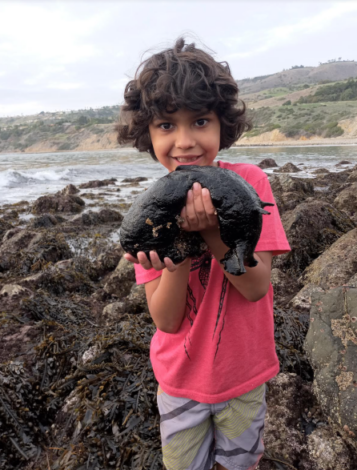
We know that Dads are sometimes perceived in society as ‘babysitting’ when taking care of their kiddos. However, we know that Dads aren’t babysitters, they are involved parents! Can you share your perspective?
I’m definitely more than a “weekend dad” who only takes him on outings. For me, being a dad mostly means advocating for him at school, therapy, and at doctor’s visits. Being involved in IEP meetings. Not giving in to endless requests for screen time all the time. Desperately trying to encourage him to eat healthy. Teaching my son to have body positive values, especially to respect women of all shapes. Teaching him to respect his elders. And teaching him the values of tending the land. But I don’t do it alone. I have an amazing support system in my parents and partner. Welcome to the Hike it Baby Board of Directors, Julio!
Este Día del Padre, nos encantaría tomarnos un minuto para presentar a uno de nuestros nuevos miembros de nuestra Junta Directiva de Hike it Baby y padre, Julio Soria. Lea a continuación para aprender sobre Julio, cómo encontró Hike it Baby y sus pensamientos sobre ser padre. ¿Cómo ha sido la naturaleza parte de tu vida? ¿Dónde encuentras a tu familia explorando más la naturaleza? ¿En qué partes de la naturaleza se encuentra explorando más tu familia? Fui muy afortunado de crecer con padres que me llevaron a acampar a una edad temprana. Mi abuelo también cultivaba una variedad de frutas y verduras en su propiedad, una tradición que trajo consigo al crecer en un rancho en México. Eso plantó una semilla en mi, un amor por la conexión con la tierra y la comida que crece de ella.
Ahora practico la agricultura urbana en casa, mi jardín está completo con gallinas e incorporando plantas nativas y estanques de vida silvestre para el beneficio de la vida silvestre. Nuestro jardín se convirtió en un oasis y proporcionó un escape de los bloqueos por la pandemia, un privilegio que desafortunadamente muchos no tenían en Los Ángeles. La gente piensa en Los Ángeles como una ciudad desprovista de naturaleza, pero lo contrario es en realidad la verdad. ¡LA NO ES UN DESIERTO!
Vivimos en un clima mediterráneo y nuestra región se encuentra dentro de un punto caliente biológico conocido como la provincia florística de California. LA está dividida por dos cadenas montañosas transversales, el Área Recreativa Nacional de las Montañas de Santa Mónica y el Monumento Nacional de las Montañas de San Gabriel. Tenemos kilómetros de costa salpicados por pozas de marea y bosques de algas marinas. También tenemos ríos urbanos para recrearse. Todos estos lugares no solo han establecido el telón de fondo para mi carrera, sino que también han proporcionado muchos sitios para recrearse. Tampoco puedo no reconocer que toda esta "tierra pública" se encuentra en los territorios no cedidos de los pueblos Tongva, Kizh, Tataviam y Chumash. En estos días, mi familia y yo nos encontramos explorando las pozas de marea. A mi hijo le encanta buscar criaturas, ¡especialmente liebres marinos!
¿Cómo aprendiste y te involucraste con Hike it Baby? Aprendí por primera vez sobre HiB en 2014, cuando nació mi hijo. Era un naturalista con mucha experiencia. No estaba buscando tanto consejos sobre cómo caminar con un niño, sino una comunidad de padres a los que les gustaba caminar en la naturaleza. Desde que HiB acababa de ser fundada, no había grupos en Los Ángeles (originalmente Tovaangar, hogar del pueblo Tongva) donde vivimos. Avance rápido siete años y una carrera trabajando para organizaciones ambientales interseccionales que guían a adultos jóvenes de comunidades históricamente excluidas en un camino hacia carreras en parques y conservación. ¡Me uní a la Junta Directiva de HiB este año y estoy muy feliz de aportar mi experiencia como profesional y como padre!
¿Por qué es importante para usted como padre criar a su hijo para que ame la naturaleza y estar al aire libre?
¡Esa es una respuesta con capas! Soy el orgulloso padre de un hermoso niño que está en el espectro del autismo. Hemos descubierto que la naturaleza proporciona una terapia que no puede obtener en ningún otro lugar. Estar al aire libre lo calma. Parece estar conectado a tierra. El estrés de los estímulos de la ciudad se desvanece. Entonces, ante todo, la naturaleza proporciona beneficios socioemocionales, de salud mental y de ejercicio físico. Mi hijo tiene 7 años. Se enfrenta a un planeta cambiante desafiado por eventos climáticos extremos impulsados por el cambio climático. ¿Has estudiado el reporte del IPCC de 2022? La única forma en que los humanos podemos cambiar este curso es mediante todos nosotros colaborando. Al criar a nuestros hijos para que amen y aprecien la naturaleza y el aire libre, criamos a la próxima generación de administradores para que cuiden el planeta.
¿Qué es lo que más te ha sorprendido de ser padre? ¡Cada día presenta una nueva sorpresa, una revelación! Esta pregunta es probablemente mejor respondida por un libro. Creo que para mí sería mi capacidad de ser más sensible a su alrededor y sentir lo que necesita. Es cierto, los papás tenemos un sexto sentido. Creo que mi sentido ha evolucionado más para satisfacer sus necesidades emocionales por encima de todo. Sabemos que los papás a veces son percibidos en la sociedad como "niñeras" cuando cuidan a sus hijos. Sin embargo, sabemos que los papás no son niñeras, ¡son padres involucrados!
¿Puedes compartir tu perspectiva? Definitivamente soy más que un "padre de fin de semana" que solo lo lleva de excursión. Para mí, ser padre significa principalmente abogar por él en la escuela, la terapia y en las visitas al médico. Participar en las reuniones del IEP. No ceder a las interminables solicitudes de tiempo de pantalla todo el tiempo. Tratando desesperadamente de animarlo a comer sano. Enseñarle a mi hijo a tener valores positivos para el cuerpo, especialmente para respetar a las mujeres de todas las formas. Enseñarle a respetar a sus mayores. Y enseñándole los valores de cuidar la tierra. Pero no lo hago solo. Tengo un sistema de apoyo increíble en mis padres y mi pareja. ¡Bienvenido a la Junta Directiva de Hike it Baby, Julio!
ABOUT OUTGROWN
OutGrown is a 501(c)(3) nonprofit that works to create a world where everyone can enjoy the physical and mental benefits of spending time outside. We are focused on creating opportunities and removing barriers to access so families with babies and young children can take their first steps outside. We believe all families have the right to connect with nature, benefit from spending time outdoors and be inspired to a lifelong love of nature. Since its grassroots inception in 2013, OutGrown is a growing community of 280,000 families and over 300 volunteer Branch Ambassadors. More information on all of our programs can be found at WeAreOutGrown.org
EDITORS NOTE:
We hope you enjoyed reading this article from OutGrown. We’re working hard to provide our community with content and resources that inform, inspire, and entertain you.
But content is not free. It’s built on the hard work and dedication of writers, editors, and volunteers. We make an investment in developing premium content to make it easier for families with young children to connect with nature and each other. We do not ask this lightly, but if you can, please make a contribution and help us extend our reach.
Related Content



Comments