
Story of a Stay-at-home-Dad

  1. Share
0 0

Originally posted August 2016.

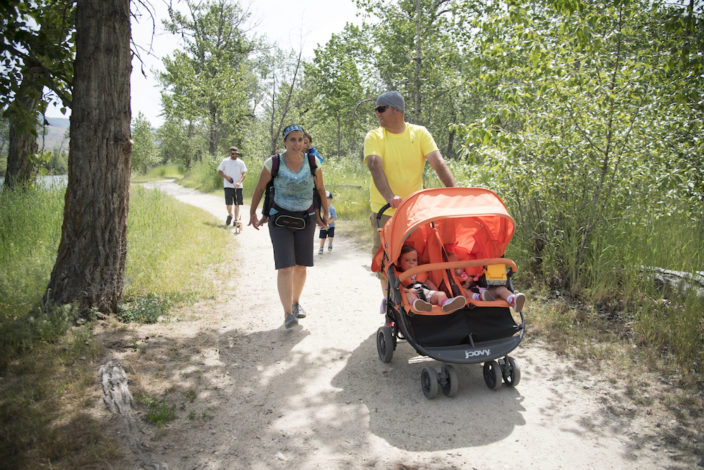
When I decided to leave my job as a mental health professional to become a full time dad, I was scared. I was going to be responsible for the care of my 1 year old twin girls. I didn't know what to expect, but one of the biggest of my concerns was just how to spend the time productively with them. I wanted to be able to promote learning and social development, so I knew I needed to get involved with something.

That's where Hike it Baby came in.

I met a branch ambassador at the library and she invited me to come out. At my first event, I felt the warmth and welcoming environment that I have come to know through my Hike it Baby experience. Instantly, I felt included as part of the group. My girls and I went on a few trail hikes and many urban strolls. The "no hiker left behind" philosophy was simple, but important. I enjoyed knowing that everyone would remain a part of the group, regardless of individual ability or fitness level.

As an avid indoorsman, I was not in world class shape. I received an awesome amount of support and encouragement from others in the group. I was encouraged to push my boundaries and during HiB 30 in April, the girls and I covered more than 100 miles! I felt great to have reached a goal I wasn't sure I could. When some encouraged me to take the girls on a toddler led hike, I was nervous. But, when the Hike it Baby founder came to join one of our toddler led hikes, I figured the time might be right to give the girls a chance to lead. It was, as I expected, difficult to try to follow two girls who rarely seem to be headed in the same direction. Still, with a group, there were other eyes to help me keep track of them. That's what made the toddler led hike possible. DaveBoise
Recently, I went on a hike in Glacier National Park with my family. My wife and I each carried one of the girls. We were accompanied by my mother in law and my brother in law and his wife. She carried their 4 month old and he carried their two year old. We did not establish any rules, such as " no hiker left behind." I started the hike with confidence high and we decided to take a 2 mile hike up to a mountain lake.

I did not foresee an issue and we started along the trail. My brother in law and his wife are relatively fit and active people, whereas my wife and I are not so much. It wasn't long until I watched their backs disappear from my view. My mother in law and my wife hung back closer to me, but it became clear, rather quickly, that they were capable of keeping a much better pace than I was. The difficulty involved was that the trail was steep and there were large rocks to step over.

It felt like a 2 mile staircase to me.

As we continued, my wife and her mother got further ahead of me on the trail. I was slow, feeling pain, and struggling. Absent the encouragement of my fellow hikers, self doubt started to enter my mind. Those who know me, are aware of my issues with self doubt. When my wife stopped to let me catch up, I told her I wasn't going to make it. Perhaps I was blowing my pain out of proportion, but I'd had a while to convince myself I couldn't do this and I didn't.

My wife and I turned around while the rest forged on. Heading back down the trail, I felt weak and embarrassed. We decided to stop carrying the twins and let them walk. That was when something inspiring happened. The girls led us the entire way back down the trail. It was the furthest they had ever walked in their entire lives. I was so proud of them. So, my positive takeaways from a seemingly unsuccessful hike were that I rely on the encouragement from my group.

Hike it Baby has given me that and I value it highly. Also, I've raised little hikers! Hiking with my daughters became the best part of the afternoon. I'm glad to be a part of this organization and I'm ready to get my daughters involved with more toddler led hikes. Oh, and I promise not to be so hard on myself. See you on the trails!

Dave is a full time father of twin girls. He lives with his wife of 8 years, Jamie, in Boise, ID. He's a novice but enthusiastic cook, writer, and hiker.


ABOUT OUTGROWN

OutGrown is a 501(c)(3) nonprofit that works to create a world where everyone can enjoy the physical and mental benefits of spending time outside. We are focused on creating opportunities and removing barriers to access so families with babies and young children can take their first steps outside. We believe all families have the right to connect with nature, benefit from spending time outdoors and be inspired to a lifelong love of nature. Since its grassroots inception in 2013, OutGrown is a growing community of 280,000 families and over 300 volunteer Branch Ambassadors. More information on all of our programs can be found at WeAreOutGrown.org 


EDITORS NOTE:

We hope you enjoyed reading this article from OutGrown. We’re working hard to provide our community with content and resources that inform, inspire, and entertain you.

But content is not free. It’s built on the hard work and dedication of writers, editors, and volunteers. We make an investment in developing premium content to make it easier for families with young children to connect with nature and each other. We do not ask this lightly, but if you can, please make a contribution and help us extend our reach.

Community tags

This content has 0 tags that match your profile.

Baby (Newborn to Crawler)

Comments

To view comments or leave a comment, login or sign up.

Related Content

0
How to Layer Yourself and Your Baby When Babywearing in the Cold
Winter is upon us, and as much as this weather makes us want to hibernate and never leave the house again, at some point, we have to venture out in the cold. And that might mean bringing baby with us, too. Babywearing is a great way to keep babies safe, dry, and warm in winter weather. Here's everything you need to know about layering when babywearing in the cold. Basics of Layering The most important thing you need to do is to maintain a normal body temperature for both baby and you. For the same reason you must put your own oxygen mask on first in a plane emergency, you need to have all your faculties to properly care (or wear) a child. So take care of yourself and make sure you are bundled up before you get baby ready. In the winter, both the cold and sweat are your enemies. Too cold and you risk health issues like hypothermia, frostbite, extreme dry eye pain, even trench foot.  Too many layers can cause you or your baby to overheat, leading to sweating (your body’s natural cooling-off mechanism). Once the sweat touches the cold air, you'll begin to cool down even faster, speeding up the cold risks mentioned above. The key to keeping both you and baby warm is layering. Wearing layers help trap in heat, keep the sweat away, and can be removed/added as needed to keep you both at the optimal temperature. Here is a wonderful infographic from an Antarctic travel site. In a nutshell, you and baby need a base layer to keep you from sweating, an insulation layer to keep you warm, and a waterproof layer to keep you dry and cover all your extremities. The layers can vary depending on the weather outside. For example, a raincoat would be perfect for a typically cool, drizzly Portland winter day but not warm enough for snow at Timberline. Here is an infographic from an outdoor sports retailer on layering for different temperatures. Now that you get the basic layering idea, you may be wondering how to apply this to your baby. The most important thing to remember when wearing in the cold is that the carrier counts as a layer. And, if you are using a wrap, multiple pass carries count as multiple layers. You need to adjust your layering accordingly. Less clothing or a different carrier may be necessary to keep a normal body temperature. For example, if it’s cool and rainy, a base layer, jacket, and a waterproof SSC is a good combination. If it’s snowing and windy,  base, insulating, outer, hats/gloves and a thick woven wrap in a double hammock would be a great option. Below are some examples of layering for a baby in different winter weather types. Cool When it’s above freezing, but not warm by any means. ​Or maybe it is freezing, but you aren’t going to be outside long; for example, running into the store. First photo: Base layer of a thicker long sleeve onesie and thick pants. Wool pants are a great choice. Second photo: Add warm gloves and socks. Third photo: Warm, but not bulky coat. Fleece and wool work well. Add a hat if no hood. Fourth: Carrier, no need for multiple passes. For a quick babywearing up, try a ring sling if you're just taking your baby out of the car seat and into a store. Total: 2 clothing layers, plus extremities covered, and one carrier layer. Cold When it’s cold, closer to freezing, and no precipitation. Making sure extremities are well covered will keep baby warm. First photo: Base layer of wool socks and a long-sleeve onesie. Second photo: Warmer layer, I did overalls, but a shirt and pants would be great as well. Wool is a great fiber for this layer. Third photo: Leg warmers/more socks over feet and legs to keep ankles from being exposed. Fourth photo: Outer layer of a fleece one-piece suit. Make sure it is on the bigger side so it doesn’t pull on baby’s feet in the spread-squat position. ​Fifth photo: Carrier, with multiple passes, as needed for warmth. Total: 3 clothing layers, extremities covered, and 1-3 carrier layers. Colder When it very cold or just above freezing, layers under a snowsuit are a great option. First photo: Base layer of a thicker onesie. Second photo: Warm pants and a long-sleeve shirt. Wool is a great fiber for this layer! Third photo: Leggings or long socks and gloves. Fourth photo: Warm, waterproof one-piece suit. Hand and feet covers. Make sure it’s a little on the bigger side for baby to move freely in the spread-squat position. Fifth photo: Carrier with multiple passes. Total: 3 clothing layers, plus extremities covered, and 2-3 carrier layers. Below freezing or snowing: When it’s below freezing and/or snowing. An extra insulation layer keeps baby warmer and a waterproof layer keeps you dry. First photo: Base layer long shirt, long pants, and socks. Second photo: Thermal shirt, warm pants, and thick socks. Wool is a great fiber for this layer. Third photo: Wool or fleece jacket. Fourth photo: Waterproof jacket, hat, boots (or covered feet for non-walking child), and gloves.  Waterproof pants are also a great addition if your child will be out of the carrier to walk. Fifth photo: Carrier that you don’t mind getting damp. A waterproof SSC is a great option, especially if your toddler might be getting out to walk occasionally. A woven wrap with multiple passes will add layers of warmth. Total: 4 layers of clothing, plus extremities covered, and 3 carrier layers. Now that you've learned how to layer for the cold, stay warm and wear those babies! Read more: Hard-framed carrier: improve the quality of your hike 5 Comfy and cozy winter carriers for babywearing How to carry supplies when hiking with a soft-structured carrier ABOUT OUTGROWN OutGrown is a 501(c)(3) nonprofit that works to create a world where everyone can enjoy the physical and mental benefits of spending time outside. We are focused on creating opportunities and removing barriers to access so families with babies and young children can take their first steps outside. We believe all families have the right to connect with nature, benefit from spending time outdoors and be inspired to a lifelong love of nature. Since its grassroots inception in 2013, OutGrown is a growing community of 280,000 families and over 300 volunteer Branch Ambassadors. More information on all of our programs can be found at WeAreOutGrown.org    EDITORS NOTE: We hope you enjoyed reading this article from OutGrown. We’re working hard to provide our community with content and resources that inform, inspire, and entertain you. But content is not free. It’s built on the hard work and dedication of writers, editors, and volunteers. We make an investment in developing premium content to make it easier for families with young children to connect with nature and each other. We do not ask this lightly, but if you can, please make a contribution and help us extend our reach.  
0
How to babywear in the rain
Oregon means rain. And a lot of it. Like six months or more of it. There is no escaping it. But that doesn’t mean you can’t wear your baby for half of the year here. Here are a few tips to babywear in the rain and keep you, baby and carrier dry! Don’t worry too much about your carrier. Mud washes out. Wet dries. It takes a lot to truly ruin a carrier. Even a silk woven wrap will probably be okay after a romp in the rain. That being said, if you have a very special carrier, it might be best just to leave it safe at home. Always make sure baby’s airway is unobstructed, so any hoods, covers, ponchos or whatever you use to keep dry must not cover baby’s face. Breathing is always more important than dryness. And never alter the design of the carrier or put added stress on it. No babywearing accessories should compromise the integrity of your carrier. Safety is also more important than dryness. Umbrella I know it’s very un-Oregonian to suggest this, but an umbrella is an effective and easy way to keep dry while babywearing in the rain. It’s also inexpensive. Just put on baby’s and your normal appropriate outerwear, pop open the umbrella and go! This is a good option for when it’s just sprinkling or raining on and off. Or when it’s not cold and there's no jacket trapping in body heat. If you get a large enough umbrella—like a golf umbrella—this makes a great option for tandem wearing. The downside is you need to hold it the entire time. It also may bounce around as you walk and may not always cover baby (especially in a back carry). If you are tandem wearing, you'll need to pay extra attention to keep both kids covered. And another thing to consider is that kids like to grab them and possibly whack you. Babywearing jacket A babywearing jacket is designed to accommodate baby and carrier. Some are even designed for tandem wearing. They either have an extra panel zipped in or are bigger, with a cutout or hood for baby’s head. Put baby in the carrier, put on the jacket and enjoy some hands-free wearing in the rain! However, there are a few downsides. First, they can be expensive (though they do come up for reasonable prices in co-ops often). You also need to make sure you get the right size for both you, baby (babies for tandem) and carrier. And keep in mind that baby will grow, so you may need to buy on the larger side so it lasts longer. They are not commonly found it stores, so trying on for sizing is not usually possible. ​ But most are wonderful at keeping you, baby and carrier dry, so once you get one you like and that fits, you won't regret it! Carrier Cover A carrier cover is a great way make sure baby and the part of the carrier in contact with baby stays dry. This is a piece of waterproof fabric that goes over the front of the carrier with a hood for baby. You still need to put a jacket over you and the back of the carrier (if your carrier isn’t waterproof). Put baby in carrier, put on cover, then your jacket, and enjoy come snuggles in the rain. Most buckle carrier brands make covers designed for their specific carrier. There are also generic ones that can work with most carriers as well, including wraps and ring slings. The downside is the cover is separate from you, so there is the risk of rain leaking in. Also, the cover doesn't go around your back, so the back of your carrier may get wet or you may still need a babywearing or larger jacket over your back. Keep in mind that they are designed to go on easiest for front carries. You can use them for back carries, but someone else may need to put it on for you, and you'll need to buy two of them. If all else fails, just put a waterproof coat on you, one on baby and dry your carrier later. A little water doesn’t hurt; it might even add to your fun! Just make sure baby doesn't get too cold, risking hypothermia. Keeping baby as dry as possible in a waterproof layer and snuggled close to your body should keep baby warm. For information on layering baby to stay warm for the cold, check our post on layering for the cold! Happy babywearing in the rain!!!! What kind of creative ways do you try to babywear in the rain? We'd love to hear your tips and tricks in the comments below. Read more: 5 Comfy and cozy winter carriers for babywearing Tandem babywearing tips - How to carry two small hikers How to layer when babywearing in the cold Photo by Amy Diebold. This post was sponsored by Onya Baby. ABOUT OUTGROWN OutGrown is a 501(c)(3) nonprofit that works to create a world where everyone can enjoy the physical and mental benefits of spending time outside. We are focused on creating opportunities and removing barriers to access so families with babies and young children can take their first steps outside. We believe all families have the right to connect with nature, benefit from spending time outdoors and be inspired to a lifelong love of nature. Since its grassroots inception in 2013, OutGrown is a growing community of 280,000 families and over 300 volunteer Branch Ambassadors. More information on all of our programs can be found at WeAreOutGrown.org    EDITORS NOTE: We hope you enjoyed reading this article from OutGrown. We’re working hard to provide our community with content and resources that inform, inspire, and entertain you. But content is not free. It’s built on the hard work and dedication of writers, editors, and volunteers. We make an investment in developing premium content to make it easier for families with young children to connect with nature and each other. We do not ask this lightly, but if you can, please make a contribution and help us extend our reach.