
13 Books that Help You Bring Nature into Your Child's Education

  1. Share
0 0

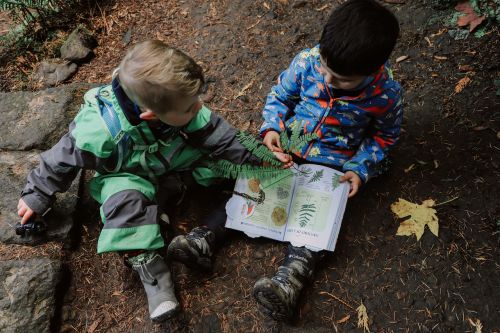
Want to learn more about using the outdoors as a learning tool for your whole family? Check out these books to help inspire you to bring nature into your child’s education. Outside learning with books. Walter Payton Edwards @shootsipeat  
Homeschooling

If you have made the decision to homeschool your kiddos or are considering it, check out these books for inspiration, encouragement and resources to help you along your way.

The Call of the Wild and Free: Reclaiming Wonder in your Child’s Education By Ainsley Arment 

This versatile book offers information, advice, and encouragement for caregivers that are considering homeschooling, looking for inspiration for their current homeschooling approach, or even those who simply want supplementary resources to enhance their kids’ traditional educations.

The Brave Learner: Finding Everyday Magic in Homeschool, Learning, and Life By Julie Bogart 

Bogart takes a child-centered approach to schooling by showing parents how to make education an exciting experience for their kids and create an environment that naturally moves learning forward. She encourages caregivers to make room for surprise, mystery, risk, and adventure in their routine so their kids can approach life with curiosity, joy, and the courage to take learning risks.

Ideas for Getting Kids Learning in Nature

These books offer a plethora of fun and engaging ideas, tips, and activities, to help you get your kids outside to learn and have fun in nature.

Vitamin N: The Essential Guide to a Nature-Rich Life By Richard Louv

This practical guidebook includes over 500 activities for children and adults along with down-to-earth advice for connecting with the power and joy of the natural world right now. You will also find thought-provoking essays and informational websites on everything from outdoor activities to choosing nature-smart resources such as schools and medical professionals.

The Green Hour: A Daily Dose of Nature for Happier, Healthier, Smarter Kids By Todd Christopher 

Here you'll find a range of easy science lessons,  projects, and fun facts meant to engage and energize your child, as well as the practical advice for caregivers that makes getting outdoors less stressful. There are options for all age levels along with book recommendations and tips to help make your nature exploration more meaningful.

Play the Forest School Way: Woodland Games and Craft for Adventurous Kids By Jane Worroll and Peter Houghton

This outdoor adventure manual encourages self-esteem, confidence, and social skills through engagement with nature. It is loaded with ideas from making nature jewelry and whittling a bow and arrow, to building a shelter and foraging for food with variations based on age group and group size.

A Year of Forest School: Outdoor Play and Skill-Building for Every Season By Jane Worroll

This book follows the previous “Play the Forest School Way” guide with brand new games and activities. It is structured around the four seasons with each chapter packed full of step-by-step Forest School games and activities that harmonize with the weather and what’s happening in nature at that time of year.

Guides that Inspire Kids to Explore Nature

These fun guides speak straight to the kids. They include things like fun outdoor projects, seek-and-find lists, photo scavenger hunts, and kid-friendly recipes to try. These are great to throw in their backpack on a hike or take along on your next outdoor adventure.

The Kid’s Guide to Exploring Nature By Brooklyn Botanic Garden Educators

This beautifully illustrated guide inspires kids to look closely at the world around them and teaches them how to observe environments as a naturalist does. This book shows how the complex ecosystems of plants and animals in the woods, at the beach, and in a city park change with the seasons, and includes fun activities that encourage families to explore nature in new ways.

Backpack Explorer: On the Nature Trail By Editors of Storey Publishing

This take-along field guide is designed for kids aged 4-8 and includes seek-and-find lists, on-the-trail art projects, and discovery games to get kids engaged in hands-on learning about nature. It even includes a pull-out magnifying glass to give a close-up look at the tiny aspects of nature such as tiny insects and seed pods.

Exploring Nature Activity Book for Kids: 50 Creative Projects to Spark Curiosity in the Outdoors By Kim Andrews 

This gorgeously illustrated activity book includes 50 amazing outdoor projects that are designed for a variety of seasons, regions, and age ranges. The hands-on, get-dirty approach of this book encourages natural observation, exploration, and learning in the outdoors.

Foraging with Kids: 52 Wild and Free Edibles to Enjoy with Your Children By Adele Nozedar

This fun, useful book encourages families to interact with their environment and gain knowledge and practical understanding of the natural world by foraging for 50 easy-to-identify plants. Once they have foraged their plants, children will be amazed by the diverse practical uses that they can set them to, from making soap or stopping minor cuts to creating delicious meals.

Why Learning in Nature is so Important

These titles delve into the research and science about why getting kiddos outside is so important. They also include tips, advice, and family activities you can do right outside your door.

How to Raise a Wild Child: The Art and Science of Falling in Love with Nature By Scott D. Sampson

Sampson, the host and science advisor for the tv show “Dinosaur Train”, makes a compelling case for the importance of fostering a “nature connection” in children in the age of boundless technology. He also provides a variety of ways to explore and enjoy nature starting in our own backyards.  

Balanced and Barefoot: How Unrestricted Outdoor Play Makes for Strong, Confident, and Capable Children By Angela J. Hanscom 

This book, written by a pediatric occupational therapist, shows how unstructured freedom of movement and outdoor play is vital for the cognitive development and growth of our children. Hanscom offers tons of fun, engaging ways to get our kids outside and help ensure they grow into healthy, balanced, and resilient adults.

There’s no Such Thing as Bad Weather: A Scandinavian Mom’s Secrets for Raising Healthy, Resilient, and Confident Kids By: Linda Akeson McGurk 

This personal narrative illustrates how Scandinavian culture could hold the key to raising healthy, resilient, and confident children in America and beyond. McGurk helps us get over our fear of exposing our children to “poor weather conditions” in order to let them have the freedom to grow and explore in nature.

Did we miss any books? What books would you add to the list?

Looking for more information? Here are some other Hike it Baby posts that may be helpful.

10 Ways to Combine Nature and Virtual Learning

Nature-Rich Resources for Distance Learning and Homeschooling

9 Diverse Children's Nature Books to Add to Your Collection

Learning in Nature: Programs that Promote Love for Nature

Epic Adventures Begin Right Outside Your Door with The New Outdoor Activity Booklet Series

The Dos and Don'ts of Risky Play  

Hike it Baby works to be the most effective hub of tools, information, and community inspiring all families with babies and young children to get outside and connect with nature. Learn more about Hike it Baby’s mission and how you can get involved.

ABOUT HIKE IT BABY

Hike it Baby is a 501(c)(3) non-profit organization dedicated to getting families outdoors and on trails across the U.S. and internationally, supporting, educating and inspiring families through their more than 300 communities across North America. Since its grassroots inception in 2013 in Portland, Oregon, Hike it Baby is now a growing community of 270,000 families and 500 volunteer branch ambassadors hosting more than 1,600 hikes per month. More information, as well as daily hike schedules, can be found at HikeitBaby.com, Facebook, YouTube, Pinterest, and Instagram.


Editors Note:
 
We hope you enjoyed reading this article from Hike it Baby. We’re working hard to provide our community with content and resources that inform, inspire, and entertain you.
 
But content is not free. It’s built on the hard work and dedication of writers, editors, and volunteers. We make an investment in developing premium content to make it easier for families with young children to connect with nature and each other. We do not ask this lightly, but if you can, please make a contribution and help us extend our reach.
 

This post contains affiliate links. If you purchase through one of those links you won't pay more but Hike it Baby will get a small commission which helps us further our mission. Thanks!

Community tags

This content has 0 tags that match your profile.

Young Explorers (Walker +)

Comments

To view comments or leave a comment, login or sign up.

Related Content

0
Books to Help Your Kids Engage with Nature
It’s no secret that our planet needs help. It needs people who will strive to protect and nurture the earth in ways we have failed to do in the past. That’s why here at Hike it Baby, we are striving to raise a generation to love nature and the outdoors. Our children are our future, and teaching them to respect the environment from an early age is the first step to ensuring the future is a bright one for our planet. That being said, it’s not always easy to help kiddos growing up in a technology-heavy lifestyle to step back from the screens and engage in the natural world. That’s why we have compiled this list of books to add to your collection to help you motivate your family to step out into nature, even if it’s the nature you find in your own backyard. Children’s Books Younger Kiddos Spring Hike by Dineo Dowd - This story helps children understand the change of seasons, the excitement of hiking, and the importance of what it means to “leave no trace." This is the third book from Dowd, all of which were created to inspire children to go outside safely and enjoy all that nature has to offer. Get Dressed Sasquatch by Derek Sullivan and Kyle Sullivan - This silly story follows a sasquatch enjoying his home in the Pacific Northwest when a rule-touting forest ranger comes along to tell him to put on some clothes. Laugh along with your kids as you read this fun, rhyming tale about being free to be yourself.  Check out these other great titles for younger children: Do Princesses Wear Hiking Boots by Carmela LaVigna Coyle  Fur, Feather, Fin - All of Us are Kin by Diane Lang Secrets of the Apple Tree (and other Shine-a-light books) by Carron Brown Forest Baby by Laurie Elmquist Adventure to the Top of the Mountain by Nataliya Moon Whoo’s There by Heather Zschock Baby Bear Sees Blue by Ashley Wolff Wild One by Jane Wittingham The Adventures of John Muir by Kate Coombs  A Walk in the Forest by Jaye Garnett  Adventure Day by Dineo Dowd Sunset Hike by Dineo Dowd Older Children Over and Under the Pond by Kate Messner - Discover the animals and plants that make up the rich, interconnected mountain pond ecosystem. This book is part of the highly recommended Over and Under Series which also includes “Over and Under the Snow” and  “Up in the Garden and Down in the Dirt."  The Great Kapok Tree: A Tale of the Amazon Rain Forest by Lynne Cherry - This story depicts a man who grows tired when trying to chop down a Great Kapok Tree in the Amazon RainForest. As he sleeps, the creatures of the forest whisper to him about the importance of trees and how “all living things depend on one another." This book provides a wonderful starting point for a discussion on conservation with your kids.  Check out these other great titles for older kiddos: When we Go Camping by Margriet Ruus The Lost Book of Adventure by Unknown Adventurer  Tracks, Scats, and Signs by Leslie Dendy  Insect Superpowers by Kate Messner  Grandma Gatewood Hikes the Appalachian Trail by Jennifer Thermes Books with Advice on Getting your Kiddos Outside (and why it’s important) There’s No Such Thing as Bad Weather by Linda Akeson McGurk - The author sets out to discover if her native Scandinavian philosophy of “there is no such thing as bad weather, only bad clothes” could hold the key to raising healthier, resilient, and confident children in America. This memoir is filled with ideas that will get your kids outside, reaping the many benefits of nature with more confidence and independence.  The Down and Dirty Guide to Camping with Kids by Helen Olsson - Does the idea of camping with kids elicit feelings of dread or anxiety? If so, this book is for you! It is filled with tips and tools to make your next campout enjoyable for the whole family, and it even includes recipes, activity ideas, games, and checklists for your next adventure. Check out these other great options that are filled with advice and tips for getting your kiddos outside: Hike it Baby: 100 Awesome Outdoor Adventures with Babies and Toddlers by Shanti Hodges h Let Them Be Eaten by Bears By Peter Brown Hoffmeister Balanced and Barefoot by Angela J. Hanscom  How to Raise a Wild Child by Scott D. Sampson  Vitamin N - The Essential Guide to a Nature-Rich Life by Richard Louv Books Filled with Activities to Inspire Outdoor Play The Outdoor Toddler Activity Book by Krissy Bonning-Gould - This book includes a diverse collection of activities geared toward getting toddlers outside to explore and grow in nature. The chapters are split into types of outdoor activity (such as messy play and outdoor art) and includes skill-building icons that show what each activity teaches your little one. The Green Hour by Todd Christopher - This book is based on the recommendation from the National Wildlife Federation that every parent should give their kids a “green hour” every day for unstructured play and interaction with the natural world. It is filled with activities designed to encourage discovery, creative play, and a wonder of nature for families with children of all ages.  Check out these other titles for more outdoor activity ideas: Exploring Nature Activity Book for Kids by Kim Andrews The Rainy Day Adventure Book by Steph Scott and Katie Akers I Love Dirt!: 52 Activities to Help You and Your Kids Discover the Wonders of Nature by Jennifer Ward  Click here to download the list of Books to Help Your Kids (And You!) Engage In Nature to keep as a handy reference! Want to dig into more books about nature? Join the Hike it Baby online bookclub!  ABOUT HIKE IT BABY Hike it Baby is a 501(c)(3) non-profit organization dedicated to getting families outdoors and on trails across the U.S. and internationally, supporting, educating and inspiring families through their more than 300 communities across North America. Since its grassroots inception in 2013 in Portland, Oregon, Hike it Baby is now a growing community of 270,000 families and 500 volunteer branch ambassadors hosting more than 1,600 hikes per month. More information, as well as daily hike schedules, can be found at HikeitBaby.com, Facebook, YouTube, Pinterest, and Instagram. Photo courtesy of Rebecca Hosley. This post contains affiliate links. If you purchase through one of those links you won’t pay more but Hike it Baby will get a small commission which helps us further our mission. Thanks!  
0
Leave No Trace with Little Ones: Teaching Kids Outdoor Ethics
You may have heard about the Leave No Trace movement, but what does it mean to “Leave No Trace”? Is that even possible when you have kids in tow? The answer is yes, sort of. The mission of Leave No Trace is to educate and inspire everyone to protect the outdoors by teaching people to enjoy the outdoors responsibly. It isn’t about leaving zero trace; it’s about reducing our environmental impacts whenever possible. That may seem daunting when attempting to wrangle a toddler on a trail, but we are here to help! We have listed each principle below, along with some tips and tricks for following them when you have little ones in tow.   Photo by Jessica Human Principle 1: Plan Ahead and Prepare – Know Before You Go Getting lost on the trail or caught in a storm while hiking can be a stressful experience. Add a few little ones to the equation, and things can get downright harrowing. While these experiences aren’t always avoidable (like an unexpected rainstorm), planning ahead can help you avoid most of these stressful experiences. Here are some tips to involve your kiddos in this step: Have your kids check the weather forecast with you and help them decide what clothing they should wear. Look at a trail map with your kiddos (a paper map, an online map, or a phone app) and decide which route you want to take. If they are old enough, let them pick out their own snacks to bring along. Older kiddos can pack their own adventure pack to take along with things like a snack, water, and adventure tools (like a journal and a pocket microscope). Principle 2: Travel and Camp on Durable Surfaces – Stay on the Trail Keeping kiddos on the trail can be challenging. They are natural explorers and want to investigate every little thing they discover. However, exploring off trail can lead to trampled vegetation, increased erosion, and damaged animal habitats. A durable surface includes established trails and campsites along with areas with rock, sand, gravel, snow, and dry grass. If you need to go off-trail (like for potty breaks that just can’t wait), seek out these durable surfaces whenever possible, and walk lightly, avoiding as much vegetation as possible. Here are some tips for keeping kiddos on the trail and decreasing your impact on the trail. Take a potty break when you get to the trail to reduce the number of off-trail excursions. Play silly games with kiddos with the primary goal of staying on the trail. For example, you can pretend that the vegetation on either side of the trail is lava, and they have to stay as close to the trail's center as possible to avoid the heat. You can also play the “ninja” (sometimes referred to as “secret spy”) game, in which kids have to step as lightly and quietly as possible and disturb as little as possible to avoid “detection.” Have a conversation with your kids about what happens when many people go off-trail. Point out signs of erosion and destroyed vegetation along the trail. Photo by Jessica Human Principle 3: Dispose of Waste Properly – Pack it in, Pack it Out Kids are messy creatures. Aside from their affinity for mud puddles, there are also spilled snacks and the occasional diaper explosion. It’s a good thing to remember that anything that wasn’t found in nature (like the mud) should be packed out. This includes spilled snacks. It may seem harmless, but those snacks usually end up in the stomachs of wildlife. This can lead to illness (I doubt any animals have fishy crackers as part of their natural diet) and increased dependency on humans. Once animals depend more on humans, they lose their fear of humans, which can be dangerous for them and us. Here are some tips for disposing of waste properly with kiddos in tow. Always have a bag on hand to collect your trash (and any other trash you may find) along the way. This could be as simple as a plastic grocery bag or a specific reusable trash bag. Whenever you stop for a snack or meal break, have everyone use their “owl eyes” to find any trash left behind before heading back out. Principle 4: Leave What You Find This is another tricky principle to follow with little ones. Especially if you have a rock collector like I do! While taking natural objects, picking flowers, carving on trees, etc. may seem harmless, it can damage the ecosystem, especially when a lot of people are doing it. Rocks, sticks, flowers, and even pine cones serve as shelter and food sources for various organisms. If the plant you pick is invasive to the area, you could inadvertently spread the species as you transport it. That being said, you don’t want to stifle the curiosity of a budding geologist or botanist. Here are some tips and alternatives for keeping your nature collector happy while leaving nature in nature (or at least most of it): Use “do” language to help little ones understand how to interact with nature. Use statements like “let’s be nice with the flowers” or “touch softly”. Encourage your kiddos to use their senses to experience the object IN nature. For example, let them take a few minutes to feel, see, and even smell the object. You can talk about it and then have them replace the object where they found it. Take along some paper and crayons to they can do some leaf or bark rubbings. Have them draw a picture or take a photo of the object. When all else fails, allow them to choose one or two favorite nature finds to take home and replace the rest where they found them. Photo by Jessica Human Principle 5: Minimize Campfire Impacts  Improperly tended campfires are one of the leading unnatural causes of wildfires. If you are camping be sure you know the local regulations on fire and seek out established fire rings when possible. If you need to gather wood, use dead and downed wood that is no larger than the diameter of your wrist and can be broken easily by hand. When leaving, douse the fire with water until it’s cool to the touch. A better alternative would be to use a camp stove for heat and cooking, or a simple lantern for light. Here are a few tips for minimizing campfire impacts with kiddos: Keep flammable objects far away and out of reach from curious hands, and don’t allow kids to play with sticks near the fire. Have children help collect firewood. You can make it a game to see who can be the first to find 5 pieces of dry, downed firewood no larger than the diameter of their wrist. Photo by Deanna Curry   Principle 6: Respect Wildlife Observing animals in the wild is fascinating for both adults and kids alike. Whether you see a deer dash across the trail ahead of you or a woodpecker busily searching for food, there’s just something awe-inspiring about watching wildlife. To keep having these encounters safely, we need to teach our little ones how to respect wildlife. That means keeping a safe distance, never feeding wild animals, and storing food and odorous objects securely while camping. Here are some tips for teaching our kiddos to respect the animals they encounter on their outdoor adventures and to keep the wildlife wild. To help young ones understand what it means to keep a “safe distance”, have them stand with an arm raised to shoulder height with their thumb pointing up. Then have them look at the animal with one eye closed and try to cover it with their thumb. If they are a safe distance away, their thumb should completely block sight of the animal. Remind your kids that insects are wildlife too, and we need to be careful not to harm them. We can admire an intricate spider web or a long line of ants without destroying what we find. Bring along some adventure items such as binoculars and a magnifying glass so that kiddos can observe wildlife safely. Contrary to popular belief, bird feeders can follow the Leave No Trace Principles IF they follow the Audubon Society Guidelines. These include avoiding seed mixtures and cleaning the bird feeders at least every season. If you want to attract a variety of bird species, it is best to have different bird feeders at different heights with different types of seed/food in each of them. Principle 7: Be Considerate of Other Visitors Respecting other people you meet on the trail helps ensure that all can enjoy nature. Modeling and encouraging behaviors such as staying to the right on the trail to let others pass or taking breaks on durable surfaces away from the trail goes a long way to preserving the experience for other visitors. Other good practices include avoiding talking on cell phones or making excessively loud noises while on the trail (when possible). Here are a few tips we use to encourage being kind to others on the trail: If your kids are like mine, they like to pretend to be wild animals when they are on the trail (particularly howling wolves). This can get extremely noisy, so I started challenging them to be quieter animals, such as a bunny or squirrel, or pretend that they are sneaking around like a cheetah. Practice “moving to the right” with your kids while on the trail or on a neighborhood walk. When you practice ahead of time, it can avoid confusion when you ask them to move to the right to let other people or cyclists pass on the trail.   It is important to note that these principles are GUIDELINES, not strict rules. As parents, we know that it is extremely unlikely that we will be perfect at following these principles all the time, and that’s okay! The point is not to strive for perfection all the time. It’s to decrease our impact on the environment whenever and wherever possible and to teach our children to do the same. The tips above can help your family make fewer environmental impacts. You can also check out these other fun resources from Leave No Trace to help your kiddos understand the impact their actions can make on the environment:   Fun Resources from our friends at : Learn the Leave No Trace Hand Motions to help kiddos remember the 7 principles. Check out the Leave No Trace and Bigfoot Activity Booklet for some fun, education activities for older kids. This Trash Timeline Game can be played with kids (and adults) of all ages. Here is a free Online Awareness Course for parents and caregivers who want to learn more about Leave No Trace.   How do you practice the Leave No Trace Principles with your family? Let us know in the comments below!   Created in partnership with  About OutGrown OutGrown is a national nonprofit working to ensure that every family, especially those with babies and young children, can experience the benefits of time outside. Since our grassroots beginning in 2013, we have supported more than 300,000 families with the help of thousands of volunteers across the country. We believe nature belongs to all of us from the very beginning. That means creating opportunities, removing barriers, and supporting families in finding their way outdoors, whether that starts with a stroller walk, a community outing, or a quiet moment under the sky. You can learn more and explore our programs at WeAreOutGrown.org. Editor’s Note Thank you for reading. At OutGrown, we believe content should offer more than information. It should create a connection, support real-life caregiving, and reflect how families grow together through nature. Everything we share is made with care by our team and volunteer community. If this piece inspired you or helped you feel more confident in your outdoor journey, we invite you to support our work by donating today. Your contributions help us keep resources free and accessible to all families. Please remember that the experiences and tips shared in this article are for general information only. They are not a substitute for professional medical, mental health, or safety advice. Always consult with a qualified provider if you have specific concerns or questions. We are glad you are here. We are growing something meaningful together.