5 of the best historic places for hiking

  1. Share
0 0
5 of the best historic places for hiking by Frank Tucker for Hike it Baby The reasons we love the outdoors are many and varied. For some it may simply be a matter of recreation and exercise. Others enjoy nature and chance encounters with wildlife. Some enjoy relaxing around the campsite, while others challenge themselves on more difficult trails. Many experience healing and reinvigoration by spending time in nature. Many of us want nothing more than to share with our children our love of the outdoors and pass something on to the next generation. We know that there's much to learn about and from nature. But what may not so quickly come to mind is the chance to learn history from some of these outdoor adventures. It's not just something to be read about in books or found in great cities full of old buildings. Hike it Baby members experience history in a much more compelling way in the great outdoors. Here we present five terrific places with miles of trails that can also teach us something of history in addition to the usual benefits we seek in nature.

Yellowstone National Park, Wyoming

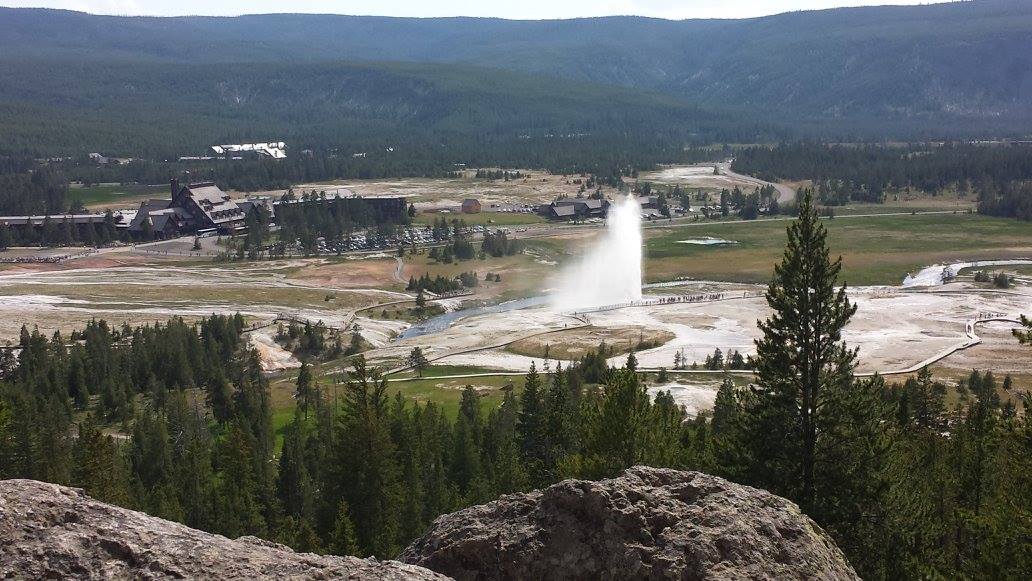
How fitting it is to start our tour with Yellowstone National Park. By the late 19th century, the vast North American continent was quickly seeming less so as it became settled. Species whose numbers had once seemed inexhaustible were disappearing. It was slow in coming, but thankfully some far-sighted individuals began to recognize that the natural gifts we had been given could disappear without good stewardship. On March 1, 1872, President Ulysses S. Grant signed the act that created the world's first national park. Thus, the wonders of Yellowstone were protected for future generations. There is much, MUCH more to the fascinating history of this natural gem. Why not learn for yourself along with the kids? Here's a great itinerary for exploring Yellowstone with kids. There are several visitor stations, museums and information stations around the park. Rangers are full of helpful information and interesting stories as well. Learning a little history of the park can only enhance your family's enjoyment of the natural wonders that attract millions of visitors. When you're ready, Hike it Baby members recommend taking Observation Point Trail to Observation Peak. Once there, you'll be treated to an incredible vista of the Upper Geyser Basin, including Old Faithful.

Mt. Rushmore National Monument, South Dakota

Mt. Rushmore National Memorial can be found in Black Hills National Forest. It was the brainchild of a South Dakota state historian named Doane Robinson who wished to put his state on the map. For this, he engaged sculptor Gutzon Borglum in a project to create monumental carvings in the Black Hills. It was Borglum who chose Presidents George Washington, Thomas Jefferson, Abraham Lincoln and Theodore Roosevelt for their historical importance and perceived broad appeal. Securing funding was the biggest obstacle to overcome in the beginning, and many politicians and other VIPs were involved in support and fundraising. Perhaps the most important persons involved were the 400 or so workers who toiled from 1927 to 1941 to complete the heads of the four presidents. There is more to the story, of course, and it can all be found at the visitor center in the form of talks by rangers, museum exhibits, films and books. Just as there's more to Mt. Rushmore than huge faces carved into a mountain, there's more to Black Hills National Forest than Mt. Rushmore. Outdoors enthusiasts, kids included, will find plenty to captivate, entertain or challenge them. If you can do it outdoors, you can do it here: camping, climbing, hiking, cycling, picnicking, wildlife viewing and on and on. For a perfectly good family-friendly hike, Hike it Baby members recommend Iron Creek Trail in the northern part of Black Hills National Forest near the town of Spearfish. Amazing views of rock formations along the creek will bring hikers to Iron Creek Lake, which is perfect for picnicking and relaxing.

Gettysburg National Military Park, Pennsylvania

There are places that are considered hallowed ground, usually where people died for the values their society holds most dear. In the U.S., Gettysburg National Military Park is one such place. Surely there can be few, if any, places better to learn history, for young and old alike, than the battlefield of one of the most consequential Civil War battles. Most of those took place in the South, but General Robert E. Lee attempted a bold stroke in taking the war to the North. His Confederate Army was checked in a bloody slog from July 1 to 3, 1863, at the town of Gettysburg. Why did the armies meet there? What happened at Little Round Top? What was Pickett's Charge? And what took place after the battle? Find answers at the Gettysburg Museum of the American Civil War, which offers exhibits, a short film and much more. Upon leaving the museum, visitors can do what is seldom possible – actually experience the subject of the museum by walking the battlefield. The 2 miles of Battlefield Trails near Devil's Den come recommended by Hike it Baby members. There are great views of the places where men fought and died, as well as several monuments, memorials and information plaques where families can now rest and enjoy the peace those men could only dream of. Devil's Den, with its large boulders strewn about the area, is a perfect playground for kids. How appropriate it is that the awful sounds of battle are replaced these many decades later by the delightful sounds of children at play.

Garden of the Gods, Colorado Springs

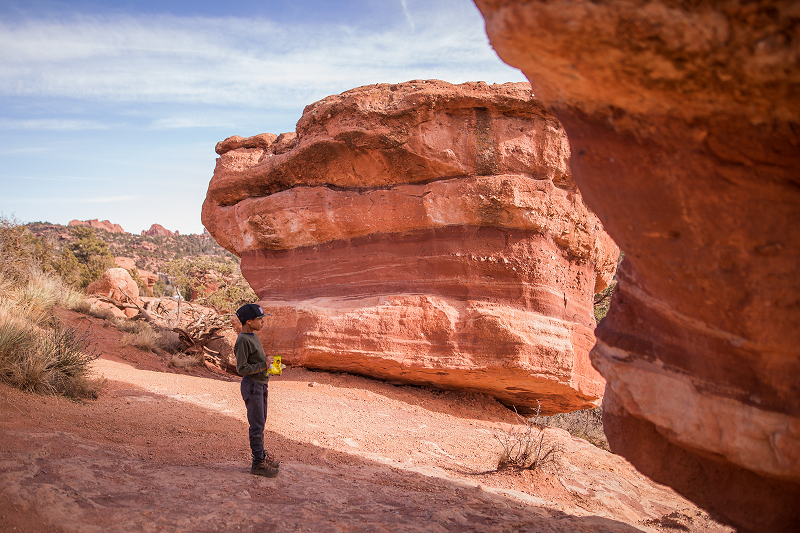
The history of Garden of the Gods is intimately tied to that of the American West. It got its name in 1859 when surveyors arrived in the area to lay out a townsite for settlement. Struck by the beauty of the sandstone formations scattered around the place, one of them gave it its name, which stuck. A little over a decade later and just a few years after the transcontinental railroad had been completed, railroads were crisscrossing the West. Railroad tycoon Charles Elliot Perkins initially purchased 240 acres in 1879, eventually expanding to 480 acres. However, he never built on the land, preferring to keep it in its natural state and allowing the public to enjoy it. Perkins died in 1907, but his children respected his wishes and bequeathed the land to Colorado Springs as a public park. Over a century later, we can all now marvel at the sandstone structures of Garden of the Gods. We should also feel gratitude for the farsightedness and generosity of those who saw fit to preserve what is now a registered National Natural Landmark. The best way to take it in? Hiking, of course! There are 15 miles of trails of varying levels. One popular trail is the Siamese Twins Trail, an easy 1-mile loop around the famous Siamese Twins rock formation, which offers incredible views of the surrounding natural wonders and even Pikes Peak. The best time to visit Garden of the Gods is at sunset when the rocks turn a deep reddish-orange. For those considering a trip to Colorado Springs, check out this itinerary of 15 fun things to do with kids in Colorado Springs, which includes, yes, Garden of the Gods. The kids will love this outstanding public park. And parents will love knowing that the kids may one day return with kids of their own, and little will have changed. 5 of the best historic places for hiking by Frank Tucker for Hike it Baby
Mt. St. Helens, Washington

May 18, 1980, may have started off as a peaceful Sunday morning, but it wouldn't last long in the area of Mt. St. Helens, a once-dormant volcano. In fact, there had been seismic activity for weeks. Scientists knew that something was happening. And boy, did it! The eruption began with an earthquake that caused a landslide of the north side of the volcano. What followed was the most destructive volcanic eruption in U.S. history. Rock and magma overtook the landslide and laid waste to hundreds of square miles. An ash column was thrust 15 miles into the air, and ash fell across the western U.S. and Canada. In the aftermath of the eruption, 110,000 acres were set aside as Mt. St. Helens National Volcanic Monument to preserve the vast area of flattened forest and land buried under lava flows and ash. Now researchers and members of the public alike can see how nature responds to such a catastrophic event. Opportunities to enjoy the outdoors abound in Gifford Pinchot National Forest, where Mt. St. Helens is found. Just south of the volcano and within the borders of the monument is Ape Cave, a popular hiking destination, as recommended by Hike it Baby members. The cave is a lava tube, the third-longest in North America, at 13,000 feet. Upper Cave is more rugged than Lower Cave, but both were born in the distant past of the same kind of volcanic activity that struck so violently in 1980. No need to worry though; the last eruption of Mt. St. Helens was in 2008, and the volcano is quiet ... for now. What historical parks or trails are your favorite? Please share with us in the comments below! To find more local trails to you or trails in or near vacation spots, visit the Hike it Baby Family Trail Guide. It's a great resource for anyone looking for kid-friendly trails around the U.S.

Read more:

Photos by Vong Hamilton and Krystal Weir.

Comments

To view comments or leave a comment, login or sign up.

Related Content

0
What Is the 10 Minute Walk & Why Your City Needs It
Have You Heard About the 10-Minute Walk Initiative? Suppose you believe that access to parks and green spaces improves physical and mental health, especially during times of crisis, or that life simply feels better when nature is close by. In that case, you are already aligned with the vision behind the 10 Minute Walk Initiative. Photo by Monique Vargas What Is the 10 Minute Walk Initiative? The 10-Minute Walk Initiative is a nationwide effort to ensure that everyone in the United States has safe, easy access to a quality park within a ten-minute walk of home by the year 2050. This is not just a goal for green-friendly states like California or Colorado. It is a promise for every city, every neighborhood, and every family. Want to know if your city is part of it? Visit the 10 Minute Walk website to see if your mayor has signed on. If you do not see your city listed, you can do what some of our community members have done: sign up for updates and learn how to get involved. You may even be able to encourage your local leaders to take part. If you are part of the OutGrown community, you already know our roots go back to the Hike it Baby movement and its guiding value: Leave No Family Behind. That means no matter your pace, parenting moment, or personal identity, you belong here. Whether you are changing a diaper, feeding your baby, managing a meltdown (yours or theirs), or just starting, we will not leave you behind. But here is the hard truth: Some families are being left behind simply because they do not have access. Parks are too far, sidewalks are unsafe, and transit is unreliable.  That is why OutGrown supports the 10-Minute Walk Initiative. Ensuring every family has access to nature is the first step in building an inclusive and equitable future outdoors. OutGrown exists to be a hub of tools, stories, and support for families with babies and young children who want to grow up outside, together. Learn more about our mission and how you can be part of it at WeAreOutGrown.org. About OutGrown OutGrown is a national nonprofit working to ensure that every family, especially those with babies and young children, can experience the benefits of time outside. Since our grassroots beginning in 2013, we have supported more than 300,000 families with the help of thousands of volunteers across the country. We believe nature belongs to all of us from the very beginning. That means creating opportunities, removing barriers, and supporting families in finding their way outdoors, whether that starts with a stroller walk, a community outing, or a quiet moment under the sky. You can learn more and explore our programs at WeAreOutGrown.org. Editor’s Note Thank you for reading. At OutGrown, we believe content should offer more than information. It should create a connection, support real-life caregiving, and reflect how families grow together through nature. Everything we share is made with care by our team and volunteer community. If this piece inspired you or helped you feel more confident in your outdoor journey, we invite you to support our work by donating today. Your contributions help us keep resources free and accessible to all families. Please remember that the experiences and tips shared in this article are for general information only. They are not a substitute for professional medical, mental health, or safety advice. Always consult with a qualified provider if you have specific concerns or questions. We are glad you are here. We are growing something meaningful together
0
5 Tips for Trail Cleanup Safety
Trail cleanups can be a powerful way for families to give back and connect with nature at the same time. With little ones in tow, safety and simplicity are key. Whether joining a group event or picking up trash on your usual stroll, this guide offers practical tips to help make your next cleanup effort safe, age-appropriate, and meaningful for everyone involved. Winters can be hard on trails. Many will need both cleanup and maintenance come springtime. You can contact your local or state park system to see if they have anything planned, or you can plan your own trail cleanup hike with your Hike it Baby branch! Hike it Baby offers lots of information on organizing a trail cleanup, and safety is a consideration when participating in a trail cleanup. Some of these things may seem like common sense, but it’s always nice to double check your preparedness whenever you try something new (or for the first time in a while). 5 Tips for Trail Cleanup Safety 1. Bring proper cleanup supplies Certain supplies will come in handy during a trail cleanup. This would include gloves, trash grabbers and bags. It’s a good idea to have the littles carry the trash bag instead of picking up trash. They may not know what they should and shouldn’t touch. 2. Work in pairs or groups Sticking together and staying in communication with the organizer are very important. Make sure you have a charged cell phone or walkie-talkie with you. A compass could also come in handy if you're off the beaten path. Make sure someone knows exactly what area your group will be working in. Check in often with the organizer and stay close to your partner or group. Or, if you're hosting the hike, help the group stay together and communicate the meet up locations and times. 3. Bring your normal safety supplies All normal hiking injuries can occur on a trail cleanup. In fact, after winter, the trail will likely be in worse shape than usual, so be prepared. Make sure you pack your typical first aid kit, plus plenty of water and snacks. 4. Give the kiddos simple tasks The concept of trail cleanup is super important to share with our kids beginning at a young age as it teaches them to be stewards for our trails and parks. It’s even better to reinforce as they get older. That being said, not every trail cleanup is organized with young children in mind. If attending a hike organized by another group or parks department, speak to the cleanup organizer before deciding whether or not you will bring young children. Make sure there will be tasks suitable for their age and ability. With supervision and proper gloves and grabbers, tiny people are great at holding trash bags, spying trash, and they love to use trash grabbers! Older kids can also be great to pair with younger kids. If hosting your own hike, make sure you communicate what supplies to bring and provide safety tips during Welcome Circle. 5. Use caution Don't ever touch anything sharp or lift anything too heavy. While you will typically feel totally awesome after participating in a trail cleanup, you might not if you cut yourself and get an infection. After winter, there could be trees or large branches across the trail. Don’t try to be the hero and lift something too heavy on your own. Even professional bodybuilders use a spotter to lift. Bring a notepad with you and document anything you can’t handle. Then give this list to the trail cleanup organizer so that the proper crew can address it. (Or, if you're hosting, contact the parks department with the information.) For toddlers and little kids, have them spot the trash ("I spy!") instead of picking it up. This will ensure they aren't picking up anything dangerous or unsanitary. What are your safety tips for trail cleanup? Have a question about safety while participating in a trail cleanup? Leave a comment or a question below! Read More: 11 Tips for Safety on Trail 3 Trail Safety Tips You Must Know Photos by Vong Hamilton. Hike it Baby hikes are hosted by volunteers who have no professional training and are not experts to guide families on hikes. They are people who want to raise a generation to love the outdoors and they accomplish this by facilitating outings for all to join. Our tips are gathered from collective experience. As with any physical activity, please be sure to check with your healthcare provider and other experts when hiking with your children. About OutGrown OutGrown is a national nonprofit working to ensure that every family, especially those with babies and young children, can experience the benefits of time outside. Since our grassroots beginning in 2013, we have supported more than 300,000 families with the help of thousands of volunteers across the country. We believe nature belongs to all of us from the very beginning. That means creating opportunities, removing barriers, and supporting families in finding their way outdoors, whether that starts with a stroller walk, a community outing, or a quiet moment under the sky. You can learn more and explore our programs at WeAreOutGrown.org. Editor’s Note Thank you for reading. At OutGrown, we believe content should offer more than information. It should create a connection, support real-life caregiving, and reflect how families grow together through nature. Everything we share is made with care by our team and volunteer community. If this piece inspired you or helped you feel more confident in your outdoor journey, we invite you to support our work by donating today. Your contributions help us keep resources free and accessible to all families. Please remember that the experiences and tips shared in this article are for general information only. They are not a substitute for professional medical, mental health, or safety advice. Always consult with a qualified provider if you have specific concerns or questions. We are glad you are here. We are growing something meaningful together.