How to thru-hike on the Appalachian Trail with a baby

  1. Share
0 0
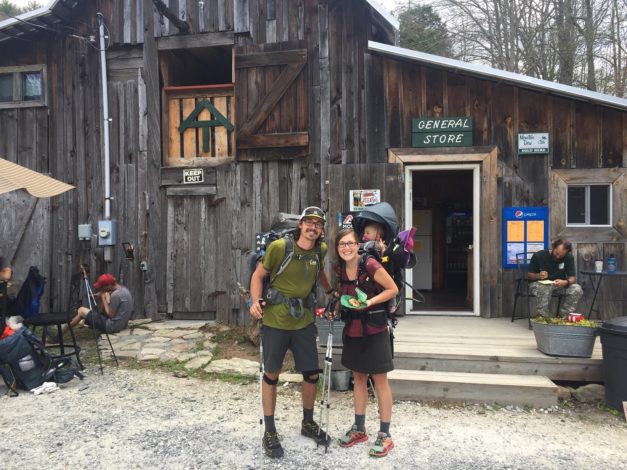
Deciding to thru-hike the Appalachian Trail (AT) didn't happen overnight for us. We had been dreaming of thru-hiking for almost 10 years; we just never imagined that the best time in life to do so would be after we had our first baby, Ellie. From the time our daughter was two months old, we started hiking regularly as a family. But hiking wasn't anything new for me and Derrick. In fact, the outdoors had been the center of our entire adult education and career. This meant it probably didn’t come as a surprise to those around us when we announced that we had decided to thru-hike the Appalachian Trail with Ellie on a six-month backpacking trip. How to thru-hike on the Appalachian Trail with a baby for Hike it Baby
Preparing to thru-hike with a baby

Derrick and I both graduated college with a degree in Outdoor Leadership, then took the same career path guiding hiking trips for families in the southeast and backpacking trips for inner-city youth. Not only did we have prior backpacking experience, but a large amount of that experience involved taking care of others while out on the trail. This was definitely a key component for us to thru-hike with a one-year-old. Backpacking skills were second nature to us. Other than walking, we were able to focus on Ellie and her needs rather than on how to backpack. We were also medically trained for wilderness emergencies as Wilderness First Responders. When we decided we were going to thru-hike with Ellie, the first thing we did was scour the internet for resources on how to distance hike with a baby. To our surprise, there was very little information. We pieced together what we could and made up the rest as best as possible. We knew we had a pretty tight time frame in which this would be possible. How to thru-hike on the Appalachian Trail with a baby for Hike it Baby

Packing baby supplies for the trail

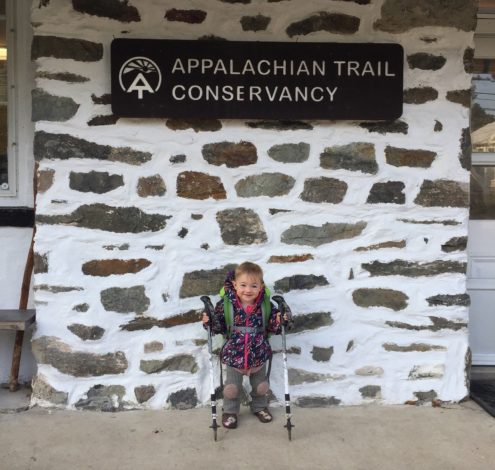
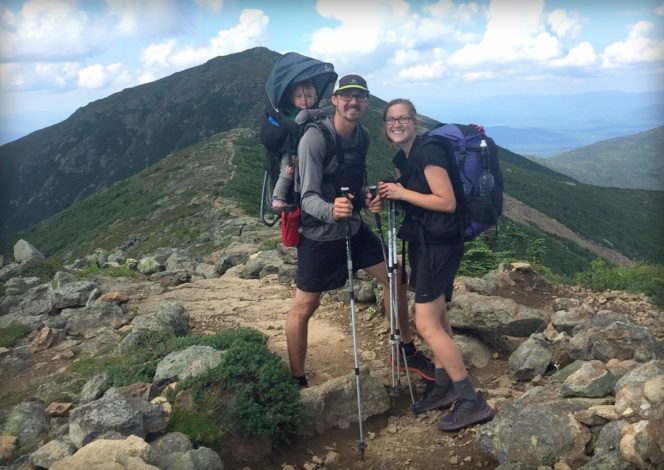
We wanted to wait until Ellie could sit up so she could sit in the Deuter Kid Comfort 3 backpack. And we wanted to complete the trail by the time she gained too much independence to be carried in a pack for multiple hours every day. Not to mention before she gained too much physical weight, too. We left when Ellie was 12 months and finished when she was 18 months, which was a perfect window of time. After deciding on a time frame, we honed in on her nutrition, diaper and clothing needs. Ellie was breastfed the entire thru-hike, which helped meet her nutritional needs perfectly. In addition, she would eat little bites of our food, which were freeze-dried and pre-packed in advance. A few things to note when journeying so far with a baby: We didn't pack any separate food for her. Diapers were a constant battle, and we still don't have a great solution! The wet and humid Appalachian Trail climate meant cloth diapers were nixed immediately, but we also aren't a fan of disposable diapers. We mostly used Diapers, which have a composting insert in a cloth cover. We had the option of burying the inserts, but preferred to pack them out instead. Ellie's clothes were minimal, but we made sure she had enough to stay warm at any point during the seasons. Then other than a toddler toothbrush, that's all we had for Ellie. Her toys were sticks and rocks, and some of her first words were "backpack" and "blaze." How to thru-hike on the Appalachian Trail with a baby for Hike it Baby  

Tips for thru-hiking with a baby

Now that we’re back home, we’re so thankful we got to take Ellie with us on our AT thru-hike and wouldn't have it any other way. The reward of spending that quality time with her on the trail was undeniably one of the most remarkable experiences of our lifetime. But I’m not going to lie, it was hard! Long-distance hiking with your baby is possible—and even enjoyable—but it's not necessary to do a thru-hike in order to have an adventure with your baby. While it certainly isn't necessary to have the same resume as we did to long-distance hike with a baby, there are some key components that are important. Here are our top five tips to successfully distance hike with a baby:
  1. Become a pro in the skill prior to adding a baby in the mix. If you already have kids, this will be a little more challenging, but not impossible! Many backcountry skills, such as cooking, filtering water and pitching a tent, can all be practiced at home. However, we definitely recommend practicing those skills in the backcountry until you're comfortable with them before bringing baby.
  2. Be flexible. Ellie's needs were more important than the trip's agenda. This was especially true when it came to inclement weather. While Derrick and I probably would keep hiking through rain and snow on our own, we waited out the bad weather in town with Ellie.
  3. Invest in ultralight equipment. A baby is a pretty lofty luxury item! It was important to us to efficiently walk quickly while Ellie napped in the pack, and efficiency is definitely impacted by pack weight. While Ellie may have been an average 20 lbs on the trail, we cut down in every other way possible. From our sleeping bag to our tent, we made sure we had the lightest gear for our needs. We were thankful for every ounce we got to drop!
  4. Acquire Wilderness medicine experience. We highly recommend a Wilderness First Responder course. While it is lengthy and costly, the skills you learn will give you a priceless peace of mind to be able to respond to a medical emergency in the backcountry if needed.
  5. Make the transition from home to tent as seamless as possible. Ellie slept in our bed longer than anticipated because she'd be sleeping between us in the tent. We knew we would be tenting near other hikers, so we made sure we had a way to soothe Ellie should she get upset. For Ellie, this was nursing her. If she awoke upset in the middle of the night, I could calm her by nursing her immediately. Also, we constantly were wearing her around the house, out to errands, and, of course, hiking on the trail. She got accustomed to being worn all the time everywhere. These three things made our transition to the tent seamless.
Have you thru-hiked with a baby? Please share with us in the comments below any tips you may have.

Read More:

Often in the Hike it Baby community, the question is asked what “adventurous” means when you are a parent. And the answer is different for all of us. For some, it’s climbing a mountain with a frame carrier fully loaded or doing a huge backpacking overnighter with a new little. For others, it’s ditching the stroller for the first time and trying a dirt trail, or just letting the kids spend leisure time climbing rocks and jumping in puddles. There are so many levels of “adventure” when you have little kids, and we wanted to share stories of families who have redefined adventure on their terms. We hope it inspires you to get out and have adventures YOUR way too. How to long distance on the Appalachian Trail with a babyBekah, Derrick and Ellie live in Roanoke, VA, and are ambassadors for Hike it Baby. They hiked the entire Appalachian Trail in 2017 over a six-month period, doing what’s called a “flip hike.” They started at a midpoint on the trail, hiked the southern portion and came back to that same point to hike the northern portion. Two sections put together to make the full 2,190 miles.      

Community tags

This content has 0 tags that match your profile.

Baby (Newborn to Crawler)

Comments

To view comments or leave a comment, login or sign up.

Related Content

0
Breastfeeding on the Trail: Tips for Outdoor Feeding
In August 1990, a declaration was signed to promote World Breastfeeding Week (Aug. 1-7) to encourage moms to breastfeed and improve their and their baby’s health and well-being. With all the benefits that come with breastfeeding, the decision to nurse also brings many challenges – including the many obstacles that come with nursing on trail. But don’t let that keep you from hitting the trails with baby. To help you overcome some of the fears you might have about breastfeeding on trail, we’ve gathered some firsthand tips from our Hike it Baby families to help you breastfeed on the go trailside. Practice makes perfect It takes some practice playing with your SSC carrier to drop baby down lower so they can latch and you are still comfortable. I keep the waist the same and loosen straps and just keep adjusting baby so that he can latch. Nursing camis work best because you have one shirt under your SSC hip belt. Try to make sure the shirt over your cami is not under the belt. It’s not the end of the world but it takes a little longer having to pull it out to get it up. I often pause until I get him lactched and then I can keep going. It’s easier to readjust after they unlatch while on the go. Practice before you go out on the trail (or store). It helps with your confidence when they are hangry. – Keira, Lexington Branch In a front carry SSC, wearing layers and practicing loosening the shoulder straps to lower the baby is key! Nursing tanks with a shirt over makes it easy to lift the top shirt and still have a covering on your stomach. It also prevents baby from sticking to you (I have sweaty kids) while hiking. With a little practice, I was able to very discreetly feed my son on the trail or out in public and keep going. – Suzanna, Akron Branch Use gear that works for you I really love hiking with a short woven wrap because it makes it really easy to move baby from back to front or hip to nurse and keep on moving. For toddlers who want to walk on their own feet but may still want to nurse, a ring sling is awesome. They pack down small and it's super fast to get kid up and then back down when they're ready. – Courtney, Charleston/Lowcountry Branch For me, layers are great. My favorite combo on the trail is a synthetic nursing tank top with a zip jacket or button-down shirt. Not having to pull my clothes up or down in weird ways allows me to get baby to latch quickly and usually I don't have to stop and remove my pack, etc. – Sarah, Albuquerque Branch Learning to nurse in a carrier was one of the most freeing skills I ever acquired as a parent. I could simply loosen the straps on my SSC carrier to give my baby access and she would contentedly nurse as I walked along. In fact, she got so used to nursing in the carrier that she would grab for the carrier, even when home to tell me she wanted to nurse! The carrier hood also served as a good cover for those times I wanted to be more discreet. It worked so well that I once had a Monk (we were visiting a monastery) come up and pat my daughter on the head when she was nursing, thinking she was simply snuggling! – Rachel, Charleston/Low Country Branch I loved how so often you couldn’t even tell I was nursing, like in this photo. – Rachel Minimize breastfeeding stress on trail If you’re nervous or shy about nursing in public or on the trail, find another mama to nurse with! It's a huge confidence booster when there are 2+ of you sitting together feeding your babies. It definitely helped me the first couple times nursing in public without a cover. – Sandy, South King County Branch My advice is to make it awesome. Find the best possible spot with the best possible view and own it. Make it something to look forward to. – Kathryn I personally don't like nursing in a carrier while walking/hiking because my kids would gag or choke if I was moving. I LOVE the "no hiker left behind" mantra of HiB because I never feel awkward asking to take a nursing break. Luckily, both my kids are fast eaters, so it's never a long stop. My advice: if you're not comfortable hiking while nursing, don't feel bad about asking to stop! – Colleen   What are some ways you’ve successfully nursed on trail that weren’t mentioned here? We’d love to hear your tips in the comments below. Read more: Ways to get back on the trail after having a baby Babies on trail: 4 ways to feed your baby on a hike 9 Tips for soothing a cranky baby on the trail How to prevent clogged ducts on trail Photos by Jessica Human and Andrea Leoncavallo, as well as courtesy of Kiera Wickliffe and Rachel Adams.    About OutGrown OutGrown is a national nonprofit working to ensure that every family, especially those with babies and young children, can experience the benefits of time outside. Since our grassroots beginning in 2013, we have supported more than 300,000 families with the help of thousands of volunteers across the country. We believe nature belongs to all of us from the very beginning. That means creating opportunities, removing barriers, and supporting families in finding their way outdoors, whether that starts with a stroller walk, a community outing, or a quiet moment under the sky. You can learn more and explore our programs at WeAreOutGrown.org. Editor’s Note Thank you for reading. At OutGrown, we believe content should offer more than information. It should create a connection, support real-life caregiving, and reflect how families grow together through nature. Everything we share is made with care by our team and volunteer community. If this piece inspired you or helped you feel more confident in your outdoor journey, we invite you to support our work by donating today. Your contributions help us keep resources free and accessible to all families. Please remember that the experiences and tips shared in this article are for general information only. They are not a substitute for professional medical, mental health, or safety advice. Always consult with a qualified provider if you have specific concerns or questions. We are glad you are here. We are growing something meaningful together.
0
4 Fall Crafts You Can Make Using Leaves
Whether it's listening to the leaves crunching under our shoes on a hike, jumping into leaf piles, or smelling the fresh crisp air as we admire the beautiful hues of the harvest season, the sensory experience fall invokes within us all is sure to make a lasting impression on our family as we head outdoors. We can take those memories a step further by creating leaf crafts that we can admire each season. We’ve thought of four simple low prep and low cost crafts to spend time doing with your kiddos this season. Head out to your own backyard to explore and gather different leaves to make these fun leaf crafts! Looking to make these crafts a little more Leave No Trace friendly? Pick up some fake leaves at your local craft shop! Your kiddos can pick their favorite colors and their finished products will last for years to come! Door wreath Materials: Paper plate, glue, leaves, optional: ribbon to hang wreath Instructions: Cut the center out of the paper plate and glue leaves all around the front of the wreath. Use similar colored leaves or mix them up for an even more colorful wreath. Butterfly Materials: Cardstock, green felt, googly eyes, glue, leaves Instructions: Glue two same-sized leaves on a sheet of cardstock, stems facing inward. Cut a long oval out of green felt and glue over the stems. Glue on googly eyes and watch your butterfly come to life! Turkey Materials: Cardstock or construction paper, felt or construction paper in dark brown, light brown, and red, googly eyes, leaves, glue Instructions: Spread glue on cardstock and have child place leaves in a fan shape on the glue. Cut a peanut shape using the dark brown for the body and glue it down over the leaves. Glue on the googly eyes, cut out the waddle with red, and beak and feet and glue down. Canvas tree art Materials: Canvas or cardstock, craft paints in red, brown, orange, and yellow; paint brush/ear swab/folded pipe cleaner (anything that can be used for paint dabbing);  leaves (optional); glue stick (optional) Instructions: Spread the brown paint on your childs hand, and then stamp it on the cardstock or canvas and then paint on a trunk for the tree. Using the red, orange, and yellow paints dab in leaves around fingers and background. Cut or rip the leaves into smaller pieces, then using a glue stick, select an area near the trunk of the painted tree to apply glue and spread the cut of pieces of leaves at the bottom to create the look of fallen leaves. What are your favorite fall crafts? Leave a comment below!   Read more: Easy DIY Nature-Inspired Costume Ideas 4 Easy Winter Crafts for Kids Wox Presents: Winter Frozen Crafts! Photos by Vong Hamilton.  ABOUT OUTGROWN OutGrown is a 501(c)(3) nonprofit that works to create a world where everyone can enjoy the physical and mental benefits of spending time outside. We are focused on creating opportunities and removing barriers to access so families with babies and young children can take their first steps outside. We believe all families have the right to connect with nature, benefit from spending time outdoors and be inspired to a lifelong love of nature. Since its grassroots inception in 2013, OutGrown is a growing community of 280,000 families and over 300 volunteer Branch Ambassadors. More information on all of our programs can be found at WeAreOutGrown.org    EDITORS NOTE: We hope you enjoyed reading this article from OutGrown. We’re working hard to provide our community with content and resources that inform, inspire, and entertain you. But content is not free. It’s built on the hard work and dedication of writers, editors, and volunteers. We make an investment in developing premium content to make it easier for families with young children to connect with nature and each other. We do not ask this lightly, but if you can, please make a contribution and help us extend our reach.