
Adventure Awaits: Backpacking the Chilkoot Trail with a Toddler

  1. Share
0 0
Heather Helzer is a Hike it Baby mom who is backpacking a 4-day trip with her son. We got a chance to interview her before she left for the trail.

Where are you headed?

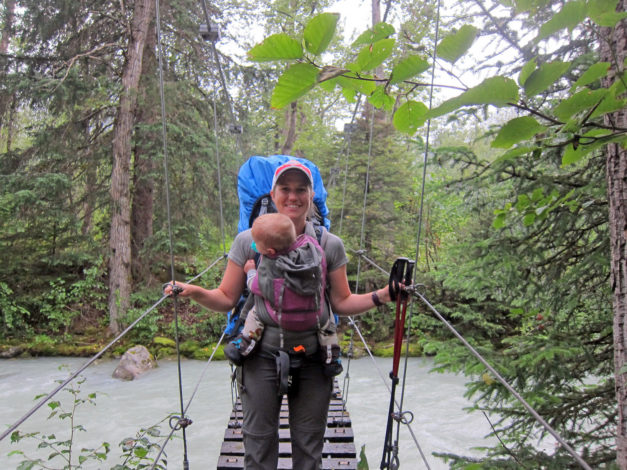
This week my son and I are solo backpacking the 33-mile Chilkoot Trail. The first adventure is getting to the trail. From Anchorage, AK, you can either drive 17 hours or fly to Juneau then to a ferry or seaplane to Skagway. We are taking the flight, ferry and seaplane route! Skagway is a small village in the Inner passage in Southeast Alaska. And it's a very special village. Unlike most villages in southeast Alaska that were wiped out because of the 1964 earthquake, Skagway survived. It still has several historical charms in this quant community. The Chilkoot Trail is also a historical charm, known as the original gold rush trail to Dawson City. My understanding is that along the trail I'll encounter several remnants from the past that were left on the trail along with lots of historical signs to learn about the past.
Adventure Awaits: Backpacking the Chilkoot Trail with a Toddler by Heather Helzer for Hike it BabyYou've Mentioned that it's Logistically Unique as well?

Another unique thing about this trail is that I'll cross the Canadian border on day two at the top of a 4,000-foot pass. I'm hiking with my son and my passports. The border patrol only allows 50 people to pass through the border a day so they require permits. These permits sell out quick! I got ours in January! The trail also has designated campsites which are regulated. My understanding is that they're unlike your typical Alaskan campsites with wooden platforms for every tent site, bear lockers and ranger house with someone at the houses June through September. When you get your permits, you also are required to pick your campsites because it's part of the permit fees. Lastly, on my last day, I'll be hiking a short four miles to the historical Whitepass train! The trail is one of the last coal trains that still are running. The train will take us back down the pass to Skagway! Again, one other important detail to nail down in January because the train only goes twice a week to Bennett, Canada, to pick up hikers.

What does your Hiking Itinerary look like?

  • Day 1 - 13 miles to Sheep Campground with 1,000 of feet elevation gain
  • Day 2 - 7.5 miles to Happy Campground with 3, 000 feet of elevation and a border crossing
  • Day 3 - 8.5 miles to Bare Loon Lake Campground with minimal elevation
  • Day 4 - 4 miles to the train station for lunch (prepaid for!) then taking the train back to Skagway

Heather's packing video

[embed]https://www.youtube.com/watch?v=9i8InLMK3uw[/embed]  

How Are You Feeling?

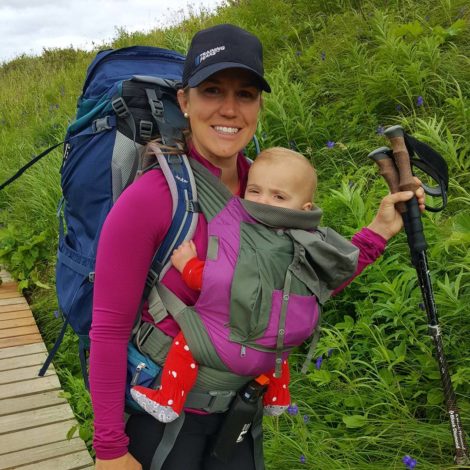
I'm very excited and nervous all in one about this adventure. I know that Finch and I are capable of completing the hike. We previously backpacked the Kesugi Ridge, which is 34 miles three weekends ago in 2 nights and 3 days, one day less than this trip. The catch is my friends came along so I had the comfort of another family, plus I got a total of approximately 5 minutes of free hands per day. I tried my best not to ask for any help the entire trip but broke down when I knew I could get it during tent setup and water collection. Unlike the Kesugi Ridge hike, this hike allows 50 people per day and the permits were sold out for the days I'm hiking, so my goal is to meet other hikers and not be shy about asking for assistance if I need it. This will probably be the hardest part of the trip, not getting any breaks from Mom duties. Finch has spent every weekend in the tent for the past five weekends, so we're pretty used to set up, take down and sleeping in a tent nowadays so things should be pretty easygoing.

You sound really prepared. Do you have a backup plan?

I have an inReach with me and will be checking in with my family, and it's tagged to my Facebook account so my friends will be able to see how we're doing. As far as backup plans go, I'll learn more details today about if I don't get to specific camps, but honestly, it's not really a concern for me. We hiked 14.5 miles three weekends ago with a 3-hour break to swim in a lake and eat. It's daylight here until 10, so we have plenty of daylight for hiking. Physically, yes, carrying a 50-lb pack plus 20-lb kid isn't easy, but my Deuter Air Comfort 70+10 pack is amazing and it makes carrying heavy weight a lot more manageable because of the weight distribution. Also, I've been training with heavy packs all summer long and triathlon training. Did I mention I'm signed up to run a 49k race on Sunday in Anchorage too? YEP, I'm nuts.
Adventure Awaits: Backpacking the Chilkoot Trail with a Toddler by Heather Helzer for Hike it BabyWhat do you think will be hard for you?

Emotionally, if it's pouring rain for four days like predicted, this could also wear on me. I hate wet tents! I luckily don't mind wet feet but four days of it might make me change my mind on that statement. Praying for better weather! Bears also scare me, but I'm just going to be loud when I'm scared and brave. I have two cans of bear spray but am unable to have a gun because of hiking through Canada. If I could, I would carry a gun but I can't so I'm going to be brave and loud!
Thanks so much for sharing your backpacking adventure with us. We can't wait to find out how your trip went! For those of you who have been backpacking with your little ones, share your adventure below. If you are a hiker and considering a trip like Heather's and you have questions, let us know and we'll try to get them answered for you!
 

Community tags

This content has 0 tags that match your profile.

Baby (Newborn to Crawler)

Comments

To view comments or leave a comment, login or sign up.

Related Content

0
What Is the 10 Minute Walk & Why Your City Needs It
Have You Heard About the 10-Minute Walk Initiative? Suppose you believe that access to parks and green spaces improves physical and mental health, especially during times of crisis, or that life simply feels better when nature is close by. In that case, you are already aligned with the vision behind the 10 Minute Walk Initiative. Photo by Monique Vargas What Is the 10 Minute Walk Initiative? The 10-Minute Walk Initiative is a nationwide effort to ensure that everyone in the United States has safe, easy access to a quality park within a ten-minute walk of home by the year 2050. This is not just a goal for green-friendly states like California or Colorado. It is a promise for every city, every neighborhood, and every family. Want to know if your city is part of it? Visit the 10 Minute Walk website to see if your mayor has signed on. If you do not see your city listed, you can do what some of our community members have done: sign up for updates and learn how to get involved. You may even be able to encourage your local leaders to take part. If you are part of the OutGrown community, you already know our roots go back to the Hike it Baby movement and its guiding value: Leave No Family Behind. That means no matter your pace, parenting moment, or personal identity, you belong here. Whether you are changing a diaper, feeding your baby, managing a meltdown (yours or theirs), or just starting, we will not leave you behind. But here is the hard truth: Some families are being left behind simply because they do not have access. Parks are too far, sidewalks are unsafe, and transit is unreliable.  That is why OutGrown supports the 10-Minute Walk Initiative. Ensuring every family has access to nature is the first step in building an inclusive and equitable future outdoors. OutGrown exists to be a hub of tools, stories, and support for families with babies and young children who want to grow up outside, together. Learn more about our mission and how you can be part of it at WeAreOutGrown.org. About OutGrown OutGrown is a national nonprofit working to ensure that every family, especially those with babies and young children, can experience the benefits of time outside. Since our grassroots beginning in 2013, we have supported more than 300,000 families with the help of thousands of volunteers across the country. We believe nature belongs to all of us from the very beginning. That means creating opportunities, removing barriers, and supporting families in finding their way outdoors, whether that starts with a stroller walk, a community outing, or a quiet moment under the sky. You can learn more and explore our programs at WeAreOutGrown.org. Editor’s Note Thank you for reading. At OutGrown, we believe content should offer more than information. It should create a connection, support real-life caregiving, and reflect how families grow together through nature. Everything we share is made with care by our team and volunteer community. If this piece inspired you or helped you feel more confident in your outdoor journey, we invite you to support our work by donating today. Your contributions help us keep resources free and accessible to all families. Please remember that the experiences and tips shared in this article are for general information only. They are not a substitute for professional medical, mental health, or safety advice. Always consult with a qualified provider if you have specific concerns or questions. We are glad you are here. We are growing something meaningful together
0
How to Overcome These 6 Common Winter Hiking Dangers
Winter hiking can often be more rewarding than summer hiking. After all, it’s easy to get out of the house when the weather is good. However, hiking in colder weather requires a bit more planning, and certainly, more gear in order to overcome potential dangers. Here are 6 common winter hiking dangers to be aware of, and what you need to do to overcome them. Colder temperatures Colder temperatures may be the most obvious of the winter hiking dangers. The saying goes, “There’s no bad weather if you’ve got the right gear.” This is absolutely true, so it’s imperative to have the proper attire for you and your kids to minimize heat loss and the chance for cold weather-related injuries. Layering correctly for the temperatures can ensure you are protected against whatever the winter elements throw your way. Check out this guide on proper layering for all the members of your family from L.L. Bean. Wild animals Although lots of animals hibernate, not all of them do. And, of those that snooze away the winter months, some wake up periodically for a short walk. The best thing you can do to prepare is to be aware of the creatures in your area and pay attention to any word about encounters. Learn more about mitigating wildlife encounters here. Avalanches Depending on where you live, avalanches may or may not be one of the winter hiking dangers to consider. If you are new to an area or aren’t sure, then definitely ask some locals. The best practice is to avoid areas that are prone to avalanches during winter months. However, most regions that experience avalanches also offer some great training opportunities. Check out this post to learn more about avalanche safety. Difficult trail conditions Winter weather often means winter trail conditions or trails covered with ice or deep snow. In addition to being prepared with good gear, which may include ice grippers for your footwear, snowshoes, or trekking poles, you’ll also want to factor in additional time. A trail that takes an hour in good conditions may take two to three hours if you’re slogging through deep snow or being extra careful of your footing. Furthermore, if you are crossing any streams, the crossings can be more difficult due to slippery or thin ice. Trail signs hidden by snow/ice Prepare for signs to be obscured or hidden by snow or ice. Instead of solely relying on signage to navigate trails, you’ll want to have a backup on hand, whether a map or a handheld GPS unit. Less daylight On the outset, less daylight might not seem like one of the winter hiking dangers to overcome. However, daylight can be a significant factor if your hike takes more time than anticipated. So, if your hike runs the risk of coinciding with dusk, plan ahead and bring flashlights or headlamps. Here are some tips we love for hiking in the dark.  And, of course, glow sticks are great! Kids love them, and they help you locate your little ones during low light. Fun Hike Idea: Plan a glow stick hike or stroll to take advantage of fresh air activities when days are shorter. Are you ready to overcome winter hiking dangers? As with most things, the key to overcoming winter hiking dangers boils down to preparation. Make sure you have the right gear and know your area well. If you have questions about hiking in your local area, any safety concerns, or need some information, reach out to your local or state parks department, or ask other hikers on your local Hike it Baby Facebook page. Winter hiking is a beautiful thing when you plan ahead. And the best part? Your kids will learn to love the outdoors year-round. Happy Trails! Hiking with a group is a sure way to stay safe on the trail in the winter. Connect with your local Hike it Baby branch and join an upcoming community led hike near you today!  About Hike it Baby Hike it Baby is a 501(c)(3) non-profit organization dedicated to getting families outdoors and on trails across the U.S. and internationally, supporting, educating and inspiring families through their more than 300 communities across North America. Since its grassroots inception in 2013 in Portland, Oregon, Hike it Baby is now a growing community of 270,000 families and 500 volunteer branch ambassadors hosting more than 1,600 hikes per month. More information, as well as daily hike schedules, can be found at HikeitBaby.com, Facebook, YouTube, Pinterest, and Instagram. Photo courtesy of Alex Wong.