The Less You Carry: Dealing with Postpartum Anxiety

  1. Share
0 0

The Less You Carry: Dealing with Postpartum Anxiety by Jaime Lintott for Hike it BabyOverprepared, me?

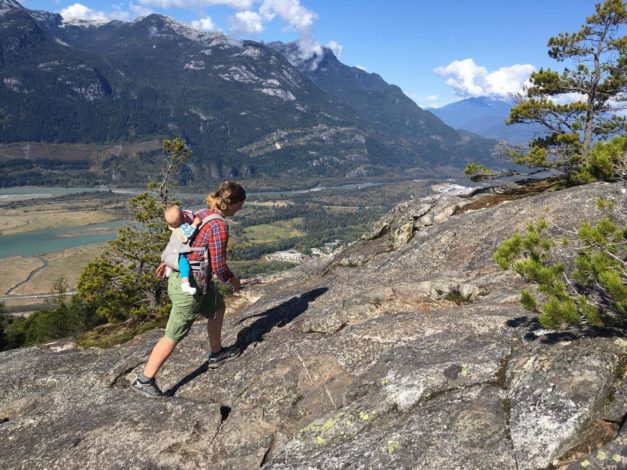
The first hike I went on with my baby, my bag contained four bananas, seven bottles of formula (even though I was breastfeeding), two water bottles, a switchblade, a whistle, a first aid kit, a headlamp, two blankets, four changes of clothes for my baby, ten diapers, two full packs of wipes, a pack of matches and, just in case, a book called "Bushcraft" by the naturalist Mors Kochanski with important pages dog-eared, like how to build a shelter and how to build a fire (just in case I needed to access these pages in an emergency). Wow, such a prepared and smart hiker, right? Well...sure if I was going on a day hike. No, not me; I was going on a popular 3.8km roundtrip hike a stone's throw from a bustling community. My biggest concern was stepping on the heels of a tourist or giving a small child a concussion with my behemoth of a backpack. Nevertheless, I was convinced I needed every single last item listed above. I was not going to be an ill-prepared mom. So my bag weighed about twice the weight of my 4-month-old.
The only thing I ended up using from the backpack: a diaper, my water and a banana.

Life with a new baby

My baby was a cluster feeder. She fed constantly; and when I say constantly, I am not exaggerating. I remember hearing other moms talk about their baby-free time when their babies napped. I was left saying, “Huh? My baby's supposed to nap?” Okay, okay...she DID nap, but when she napped, she was attached to my breast. It was the only way she would sleep. So I would camp out at my station watching entire Netlix series in a day with my gallon of water and loaf of banana bread within easy reach. It gave a whole new meaning to the term "Boob Tube." My baby refused to nap anywhere except on me until the age of six months. I was tired of having to wait until my partner came home if I wanted to pee. I needed to get out of the house and my baby hated the stroller, car seat, anything that would allow me a smidgen of freedom. So I made babywearing work. Wearing my baby did not come easily to me though. I was so jealous of other parents who rocked wrap carriers with their newborns and looked like they just walked out of a photo shoot for Today’s Parent.
The Less You Carry: Dealing with Postpartum Anxiety by Jaime Lintott for Hike it BabyPostpartum Anxiety made me feel desperate

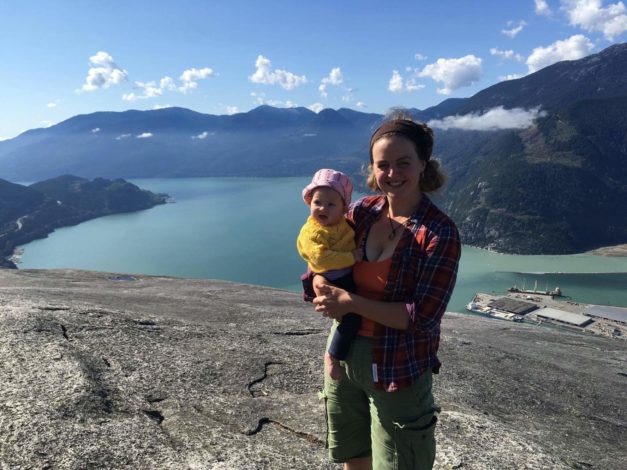
I was desperate. This desperation made even worse with my later onset Postpartum Anxiety, which reared its head around the 4-month mark. I experienced dizziness, spinning, racing heart and nausea anytime I had to go anywhere with my baby. I panicked about packing enough food, diapers, wipes, extra clothes, etc. It didn’t help that breastfeeding was a royal challenge. We saw every possible professional to help us get the hang of breastfeeding. I took it day by day, ready to quit at any moment. It was a major source of my heightened anxiety in public. I had to use a nipple shield and it was always awkward to put it on in public, wash it, store it, etc. I bought extras in case I should lose one. Eventually, I got up to four nipple shields before my partner insisted we couldn’t afford to get any more. I needed to get out, socialize and move my body. My PPA manifested itself in body aches and pains, migraines and lots of sweats and shaking. Then I saw a post for Hike it Baby and I instantly fell in love. I wanted it so bad it hurt, and I fantasized about wandering through the woods with my babe strapped to my back. I longed to be outside. Too many hours I spent inside. If I did go outside, it was often the same route around my neighbourhood. I was usually too scared to venture outside my comfort zone lest I drop four-plus nipple shields randomly and strayed too far from a store that sold them. I was worried I was already setting my baby up for failure. Mostly, I needed to just get out of my darn head.

I impulsively signed up for a hike

I prepped and prepped for the hike days ahead. It was a group of parents meeting up for a hike called Quarry Rock in Deep Cove North Vancouver. Not a super hard hike but not necessarily an easy one with a baby either. I went whole hog. I figured I could do it. Part of my prep included Facebook stalking the members who were attending the hike. I checked their profile pics to gauge how intimidating they appeared. Basically, I was hoping for a profile pic of a parent like me, dishevelled, terrified, deer-in-headlights mess. Nope. All these parents had epic profile pics. Like glowing, ethereal-CEO of Momness-outdoor-women-survival-goddess-style profile pics. And just like that, I was a no-show. I told myself there was no way I was showing up with my postpartum body, old ratty shoes, making a fool of my bumbling anxious self in front of these Amazonian/Viking warrior women. I remember I had programmed the hike into my phone for a reminder and when the reminder came and went, I felt a tidal wave of regret, shame and despair. My partner, seeing that I was spiraling deeper and deeper into my anxiety, suggested we try a few hikes together. I jumped on the chance; in fact, I tackled the chance with full force. My PPA brain decided that not only would I try a few hikes, I would need to complete exactly thirty hikes in thirty days. Only then would I be ready to show myself to other hiking parents.
The Less You Carry: Dealing with Postpartum Anxiety by Jaime Lintott for Hike it BabySigning up for the Hike it Baby 30 changed my outlook

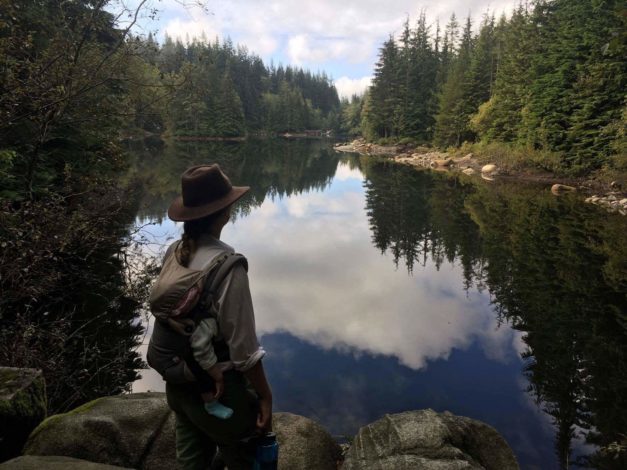
Let me preface this by saying that I am not fit. I mean that with full sincerity. I’ve only hiked casually pre-baby and struggled each time at that. So this endeavor was indeed a little ambitious to say the least. My partner, God love him, indulged this quest as he just desperately wanted to support me any way he could. So I did it. We did it. I went on thirty different hikes in my city in thirty days; some hikes were super mild, and others were quite challenging. Over the course of the thirty days, my body became stronger, my mood became more consistent, my comfort level with hiking increased and my backpack became increasingly lighter and lighter. I logged my miles on the Hike It Baby website. I joined the Hike it Baby 30 challenge and got my motivation from seeing photos of other parents hitting their miles all over the continent. Parents from all over the place, different levels of skills, varying weather and terrain were logging both modest and astronomical amounts of miles. Whenever I faltered, I checked this page, getting a burst of motivation each time. Each new hike gave me a bit more confidence. Some days I struggled...very, very badly. Sleep deprivation and breastfeeding still taking its toll on my body and mental health, I pushed through this arbitrary goal I made for myself, believing that if I could just accomplish this one goal that I could survive this whole Mom gig.

I still longed for a community of my own

When the challenge was over, I was ready. I was exhausted but I was ready. Even though I managed to meet my goal, I realized that the one thing I still desperately longed for was community. I no longer wanted to hike alone or just with my partner. I wanted to meet other parents. That was the original reason Hike it Baby stood out for me in the beginning: the sense of community I was so desperately lacking. My family lived on the other side of the country and my childless friends dwindled dramatically after my babe was born. I needed human contact. The moment a new Hike it Baby hike went up in my local chapter, I leapt at the opportunity, refusing to allow myself a chance to back out. It was a simple hike around flat terrain. It was toddler-paced too, meaning I could bring my stroller. Which I did. Which also meant I didn’t have to walk around like a pack mule with all the survivalist gear. The parents who showed up were all kind, welcoming and supportive. There were about six of us. Some of us outdoor enthusiasts; others were hiking for the first time. It was exactly like I hoped it would be. And exactly how the initial hike months before may have gone if I just allowed myself to be vulnerable. As much as I grew from my own personal thirty hikes in thirty days challenge, I didn’t need to go all Rambo in order to prep for a Hike it Baby hike.

Everybody has to start somewhere

Don’t worry about not having the right gear or the right look. Do what you need to do to help yourself make the first step. For me, it was packing my bags for the apocalypse to hike a 3km rounder. I’d like to say I’ve matured and stopped carrying my copy of Mors Kochanski’s "Bushcraft" on hikes in my overstuffed bag, but for some strange reason it has become my rabbit’s foot. It helps me walk out of the door. So if ever I feel ill-prepared, nervous or anxious about my skills or experience, worse case scenario, I have the apocalypse handbook tucked away next to an extra banana, a first aid kit, water, a whistle, a switchblade, extra clothes, blankets and, this time, only one pack of wipes, because let's face it, two packs of wipes just seems...excessive. The Less You Carry: Dealing with Postpartum Anxiety by Jaime Lintott for Hike it BabyJaime Lintott currently lives in Vancouver, BC . When she is not glued to the latest horror movie or a good murder mystery, you can find her out along some of BC's most beautiful trails with her partner and 18-month-old. You can follow along with her adventures on Instagram as Linty_McTotts.

Community tags

This content has 0 tags that match your profile.

Stages of Childhood

Baby (Newborn to Crawler)

Comments

To view comments or leave a comment, login or sign up.

Related Content

0
One Mother's Journey to Overcome Postpartum Anxiety and PTSD
Editor’s note: This article discusses maternal health, Post Traumatic Stress Disorder (PTSD) and Postpartum Anxiety (PPA) and some readers may find it triggering. It was a mild January day in the Northeast and we were setting out in unfamiliar territory after learning our intended destination was closed for hunting season. “Yes, we will happily go somewhere else,” our hike leader responded to the county park ranger who pulled up in a truck next to her car in the parking lot. Thankfully, her quick thinking meant we didn’t have to abandon our intentions of hiking that morning. More than an hour after the original start time, our tenacious group eagerly trekked into a nearby forest gem with the little ones strapped to our backs. The adults leading the way caught up on the busyness of the holidays and chatted about current events while my friend and I anchored the pack in deep discussion. One mile later, we descended into a ravine that looked like a scene straight out of a Middle Earth movie with the sunlight filtering through the fog rising gently above the river ice. It was breathtaking! We all felt that hiking high from the fresh air and scenery when she smiled and said, “It’s great to see you have found something that you are passionate about.” I was still relatively new to Hike it Baby on that winter hike at Hacklebarney State Park last year. I had a handful of stroller hikes under my belt, but this was one of my first real trail hikes with my son in a carrier. Being physically able to hike like this was exhilarating! It was also probably the last thing I ever expected to be doing so soon after surviving what I dubbed "the medical gauntlet." Surprising me and my family alike, hiking with a pack of parents and young children in the forest became one of the ways I began to emerge from the grief following pregnancy and postpartum trauma. Dodging Death Not Once, But Twice In 2015, I not only became a first-time mother, but I also became one of the many faces of the Maternal Health Crisis in the United States. It would be an understatement to say I had a challenging pregnancy and postpartum, dodging death not once, but twice. When the dust began to settle after my near-misses, I was shocked to learn that the United States is the most dangerous place to give birth in the developed world. According to the World Health Organization (WHO), maternal mortality in the U.S. has been on the rise – taking it to 46th in the world – while the rate is declining in other wealthy nations. While the majority of maternal deaths occur in the developing world, many people are surprised to learn that 700 women die every year in the U.S., and another 60,000 mothers come incredibly close to death. That is one every ten minutes! I am confounded by the stinging and unexpected contradiction of women dying while trying to give life. What should be a happily exhausting time in a new parent’s life is shrouded in tragedy and grief for so many others. Also troubling is that a significant number of women don’t get the care they need because their complaints are dismissed as a normal part of pregnancy or postpartum recovery. This delay in diagnosis can be enough to make treatable conditions catastrophic. I don’t share these statistics to frighten anyone, but the reality is that the Maternal Mortality Rate (MMR) is a key indicator for the quality of a nation’s health care system and the U.S. has a lot of room for improvement. It also means that many families are deeply affected by the long-lasting trauma from these types of maternal events and many suffer in silence. You may know one of these families or maybe you are even a survivor yourself. Healthy mothers and babies are a cornerstone of our society and certainly of the next generation. When one family hurts, we all hurt too. Reclaiming Motherhood I was completely blindsided by my near-misses and their effects still reverberate loudly two years later. My physical recovery was long and difficult, and I was not prepared for the emotional weariness that followed either. I missed a significant portion of my son’s early life while fighting for my own. The weight of nearly leaving my husband alone to raise our newborn left me mourning so many aspects of new motherhood that I would never get back. I struggled with sky-high anxiety for my own health, insomnia and flashbacks, in addition to the typical paranoia that plagues first-time moms. With my physical limitations, my expectations of motherhood were turned on their head. When I started to feel physically stronger a few months later, I knew I had to get out of the house more if I wanted to combat the Post Traumatic Stress Disorder (PTSD) and Postpartum Anxiety (PPA) I had acquired. I started walking with the stroller a few times a week and often thought to myself, “I wish I could find or form a group of moms to walk with.” It wasn't just seeking the benefit of increased physical activity – I knew I needed more social support too. Two things dramatically changed the course of my recovery during the summer of 2016. The first breakthrough was that my trial run of every mom group imaginable was rewarded by a chance meeting with a Hike it Baby mom. I went on my first hike a few weeks after meeting her and never looked back. Knowing families met regularly and that I could just show up was an invaluable resource for me. I could bring my son too, which helped ease my anxiety. Best of all, I was teaching him to love the outdoors and take care of himself by example. Around the same time, I found an online peer-led support group for Maternal Near-Miss Survivors which has been nothing short of a godsend! Regularly talking to women who intimately understand perinatal trauma and the challenges of living with it has been a critical element to processing my own experiences. Couple that with Hike it Baby’s organizational platform that encourages social support, exercise, fresh air and sunshine and I felt like I had finally found the two healthy outlets I needed to survive and thrive in this new season. Now, many of my friends are Survivors and Hike it Baby  parents and they have enriched my life far more than I could ever tell them. There is an underlying current that we are all in this parenthood thing together. Even though our journeys are as unique as they come, the threads of sleepless nights, and sometimes even suffering, are the same. No Mother Left Behind With statistics like more than 150 near-misses per day and even more women suffering from perinatal mood disorders like postpartum depression and postpartum anxiety (PPA), chances are high that there are a lot of hurting moms in our branches already. As a hiking organization, Hike it Baby’s motto is "No Hiker Left Behind" and I believe that sentiment can reach even farther. Our community encompasses the single largest demographic affected by the maternal health crisis, and we already know how the outdoors provide a wealth of physical and mental health benefits. What if we all started being more open about our stories and offered to be a part of the lifeline that these struggling families need? I see an opportunity for a strong symbiotic relationship between Hike it Baby and maternal health to develop over time. We have the chance to come alongside other moms in our circles and help them emerge from one of the darkest times of their lives simply by imploring them to get outside with us. Hike it Baby offers the social support of a community of parents and the vast benefits of the outdoors proven to help combat numerous health conditions. I cannot emphasize enough how a personal invitation has the potential to change this season in a new mom’s life! At the same time, near-miss survivors and those suffering from mood disorders have the unique ability to put faces to the crisis. Survivor stories are a largely untapped resource we can learn from. They empower a huge population of women to better advocate for their own health while raising awareness about the signs and symptoms of perinatal complications that should trigger an immediate trip to the emergency room. Together, we can make sure that no mother is left behind. Joining a Movement Spreading awareness about Maternal Health issues and the need for donated blood are two of the passions that emerged since my trauma. Thanks to the Robert Wood Johnson Medical School at Rutgers University and The Tara Hansen Foundation, this coming January 23 is the first annual New Jersey Maternal Health Awareness Day and it coincides with National Blood Donor Month. As someone who received over fifteen units of blood after childbirth – more than my entire blood volume – I can’t think of a better way to celebrate both initiatives than by teaming up with other mothers to collect donated blood for the community. With the help of Woodside Chapel Mothers of Preschoolers (MOPS ), I hope to raise awareness about the increasing rate of Maternal Mortality and Near-Miss in the United States. We hope to share information about the signs and symptoms of perinatal complications – conditions such as Postpartum Hemorrhage, Pre-eclampsia, HELLP Syndrome and Pulmonary Embolism to name a few – so women can recognize when they should seek immediate medical attention and advocate for themselves in those situations with more confidence. We also hope to encourage regular blood donations. Are you interested in joining the Maternal Health movement? It is as simple as rolling up your sleeve to donate blood. The demand for blood always outpaces the supply, and many people depend on the kindness of strangers for their second chance at life. Please consider joining us at the blood drive on January 23 if you live in the New Jersey area. Visit Heroes for Moms to learn about other survivor organized blood drives nationwide or visit the American Red Cross to find a collection location near you. Your blood donations go a long way in giving families like mine hope during a crisis. Let’s make January 23 a day that unites our voices regardless of where we live and change the course of Maternal Health in the U.S. Motherhood shapes the future and we each have a role to play in making it safer. To learn more about our blood drive and the Maternal Health Crisis, visit our Facebook page. Read more The less you carry: Dealing with postpartum anxiety Hiking as therapy Photos courtesy of Casey Cattell. Casey Cattell struggled with infertility for more than a decade before giving birth to her son in 2015. She is a two-time Maternal Near-Miss Survivor writing at The Heart of Home to give hope to women in the midst of hardships. She enjoys sharing her latest adventures and creative exploits. Casey and her husband live in the Garden State and in their downtime like to explore new places with their young son. If you liked this post or were encouraged by it, please consider passing it on. Find Casey on Instagram and Twitter.  
0
Stroller Running with Your Baby Postpartum
  When I first found out I was pregnant with my daughter, I was instantly overwhelmed, so I proceeded to do what I normally did to process any new information in my life – I went out for a run. The miles cleared my mind and gave me the space to solidify my emotions. I came back joyful about the new chapter in my life, though apprehensive about the things that I would lose. Running was at the top of that list. It seems so silly, but it’s a constant in my life that keeps me steady. I am happy to report that through careful research and hard work, running has never left my life throughout the process of having a child. Countless training miles, many races (topping out at a marathon and half ironman triathlon so far), and one spunky little 3-year-old running buddy later and I am still going strong. I’d like to share what worked for us in learning to run with a plus one. From the beginning of the journey... One of my biggest suggestions to women who want to continue running after they have a baby is to never stop running during the pregnancy and post-natal process. Of course, each pregnancy is different so you must talk to your doctor to make sure that physical activity is safe for you. If you stay active throughout pregnancy in whatever way you can (running until about 8 months and then swimming and walking worked for me), then it will be much easier to resume following your birth. Also, use some time in the last long weeks of waiting and sleepless nights to research what running stroller you want and buy it as one of your early baby purchases. Don’t wait until they are old enough to run in it to buy one, and make sure to buy the car seat adapter when you're ready to start walking. I personally think that if you want to train for races or other goals other than light jogging, then this is a worthy place to splurge a little and get a great stroller. Start walking Once your little one is born, start walking with them in the stroller with the car seat adapter as soon as you are ready to leave the house. From the first time my daughter went in the stroller, I tried to keep it a happy place for her. If she didn't enjoy being in the seat, I would take her out and put her in a carrier and just push the stroller. All the time spent pushing while walking really allows you to get the feel of the stroller. Walking also helps you feel better, get outside, and gently get back into activity during the healing process. I was lucky enough not to have a C-section, but if that is the case for you or if you had any complications, you should get your doctor’s approval before any activity. In the early days, going solo for short distances for me was less stressful because I didn’t have anyone else’s schedule to conform to, so we could go whenever we wanted to and go at our own pace so that I could easily attend to my daughter’s newborn needs. Working your way back up As you feel better and your baby is a little older, try incorporating short bursts (slowly for only 100-200 yards) on level ground to help your body feel what it feels like to run again. When you are healed but your baby is not ready to run in the stroller yet (2-6 months) and you are lucky enough to have someone watch them for a bit, try to get out and run without the stroller to rebuild your strength and endurance before adding a large weight in front of you. Six months is the generally accepted age when it is safe for a healthy baby to run in the jogging stroller forward facing without a car seat. We talked to our pediatrician and this age was her recommendation, but, again, all kids are different. I started my daughter out with a special head support pillow, but found that a rolled-up blanket around her head worked as well.   Keep the environment fun From the first time that she sat in the jogging stroller, I tried to keep a consistent, happy, and fun environment so that her association with running with Mama was positive. Nurse or feed the baby right before a run. Give them a favorite toy or comfort item or even a new toy that they have not seen sometimes to keep them entertained. Learn what time of day works best for your child. Playing music on my cell phone tucked into one of the pockets always kept my daughter calmer when she was a baby. One of the most important considerations is to dress your infant appropriately for the weather. A baby who is warm or cool enough is a happy baby. Consider that if it is cold, they will get a little bit of wind on them and be a bit colder than standing still or even just walking. If it is warm and sunny, their legs often stick out of the shade so apply sunscreen or put a light blanket over them. The stroller is beneficial because you can easily stash extra layers and supplies for yourself and the baby. I had a “crying rule” with my daughter that when she started to cry or fuss, instead of stopping right away, I would pick a landmark in the distance and if she was still upset at that point, then I would stop and try to address the problem. More often than not, in the two or three minutes it took me to get there, she would have settled down. This way, I could continue the flow of my run but had a concrete plan to calm her down if necessary. Make sure your stroller has a place for a water bottle so you can stay well hydrated and take care of your needs too. Once you have established a routine for yourself and your baby that works for both of you, you can focus more on the actual running. Getting your running groove back Sometime soon after you start stroller running, it is very helpful to ask someone to come run with you. Through the course of a run, switch off between running with the stroller and running without it so you can feel how your form is changing when you grab the stroller and you can make adjustments and try out a few positions to see what gets you closest to your actual running form. When you are starting out, try to run more with time goals instead of distance goals in mind. Keep in mind that you will most likely be slower with the stroller at first and learning to be flexible with incorporating another little person’s needs and rhythms into your runs. Try to find a paved bike or walking trail to run on instead of just sidewalks; having to cross streets can be unnerving and waiting on signals can break up your rhythm when running as well as disrupt your child if they are napping. If you don’t have this option then try to stay moving while waiting as it can help to keep your flow and keep the baby more content. Know how the stroller works Finally, know your stroller and how it works. Know how to change the tires, adjust the brakes if it has them, and adjust all the straps. Spend some time familiarizing yourself with all the features so you don’t get stuck dealing with an issue when you are miles from your car. Have fun! Enjoy the experience. Your attitude will directly affect your baby’s mood and how successful the run will be. Enjoy the freedom of doing what you love and sharing it with your child. Know that your running will evolve as your child gets older and you will cherish the time together in new and rewarding ways. Most importantly, continue setting goals and pushing yourself to achieve them. Suggested items to always bring on a run with a baby: Cell phone Water Formula for baby or any accessories necessary for you to nurse Extra warming or cooling mechanism (warm jacket can work for you and to put over your kiddo and extra water bottle to pour on you or dab on the baby to cool off) Blanket (for warmth, to use as a shade, or to wet and use to cool down) Diapers and wipes Pepper spray/self-defense tool (obviously up to you, but consider that you are extra vulnerable with a stroller if running during less busy times). A Tire Pump can always be handy in the event of a flat Check back in tomorrow for my follow up post on tips for running with a toddler as your child gets older and more active on their own and as your running journey further changes. Editors Note: Kirby uses a fixed wheel jogging stroller. For those of you with the swivel wheel option, it is important to lock the wheel while running or on trail.  Find more safety tips here. Additionally, our friends at BOB have some great video resources for maintaining your stroller   ABOUT OUTGROWN OutGrown is a 501(c)(3) nonprofit that works to create a world where everyone can enjoy the physical and mental benefits of spending time outside. We are focused on creating opportunities and removing barriers to access so families with babies and young children can take their first steps outside. We believe all families have the right to connect with nature, benefit from spending time outdoors and be inspired to a lifelong love of nature. Since its grassroots inception in 2013, OutGrown is a growing community of 280,000 families and over 300 volunteer Branch Ambassadors. More information on all of our programs can be found at WeAreOutGrown.org    EDITORS NOTE: We hope you enjoyed reading this article from OutGrown. We’re working hard to provide our community with content and resources that inform, inspire, and entertain you. But content is not free. It’s built on the hard work and dedication of writers, editors, and volunteers. We make an investment in developing premium content to make it easier for families with young children to connect with nature and each other. We do not ask this lightly, but if you can, please make a contribution and help us extend our reach.