
Getting Out The Door

  1. Share
0 0

We are a homeschooling family. This may lull you into a false sense of stereotyping where you assume we have all the time we need to prepare for a hike…or any outing for that matter. Well, you’d be mistaken. We have 2 problems working against us to be ready to get out the door in a timely manner.

Problem one: With 3 kids and 2 adults, we have TOO much stuff to keep organized, which means we forget something. Every. Time.
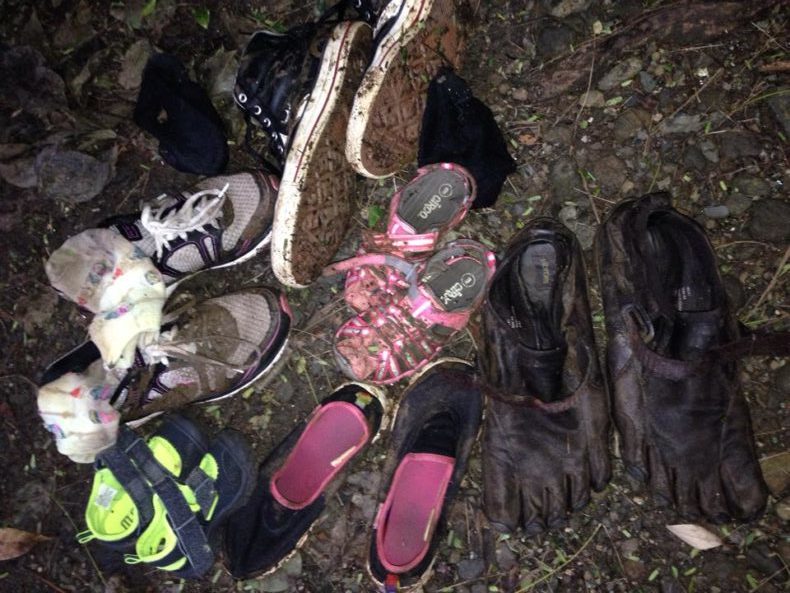
Problem two: We are a military family. Frequently, we plan a great weekend trip to Big Bear or a sweet hike up Digging Hill with friends and then the Navy prevents us from doing it. They have myriad ways to prevent us, but that’s a blog for another day. 

On the opposite end of the Navy life spectrum, my husband will randomly and with NO notice, end up with unexpected days off. While this is less frequent than the former, it’s still worth mentioning because we try SO hard to make the MOST of those days. Hiking helps us do that.

Overcoming Obstacles to Getting Out the Door

How do I plan, prepare, battle, and generally not get beaten down by these obstacles? Simple actually. I committed to teaching my children a love of nature. That commitment quickly turned to a realization that time spent outdoors held our best memories and our best selves. Why would I let ANYTHING stop me from doing that? I wouldn’t.

Lets look at our specific roadblocks of getting out the door and how we overcome them. Maybe they’re similar to what’s happening in your house.

Problem One: Unorganized stuff!

  • Our biggest step toward fixing this was Camelbacks (hydration packs) for each walking child. (My youngest will be 3 in July, and she will get one for her B-Day). In their pack, each child is responsible for filling the water (with assistance where needed), and placing 2-4 snacks depending on the length of the hike.
  • Which leads me to the next organizing tool that changed our process for the quicker. Hiking snacks. We have a whole basket of them. We use them for other things too, such as when we’re running late to an event, we may grab a hiking snack for the car ride. Or if we’re headed to a restaurant at a peak day and time, we’ll grab a hiking snack to hold them over while we wait for a table. Things like granola bars, fruit bars, trail mix in pre-made amounts, dried fruit are some of our go-to snacks. Additionally, the fridge has individual quantities of any fresh fruits and veggies as an option to drop in the pack. Side note: Having kids pack their own snacks has a world of benefits. Making choices, being responsible for those choices, spacial management when they have to fit 4 bananas in their tiny pack and eventually decide to diversify their choices. So while the kids are picking their snacks and placing them in their pack, I’m gathering gear. For most of our time in a previous duty station, our hiking gear was always in a bag by the door. That’s how frequently we used it.
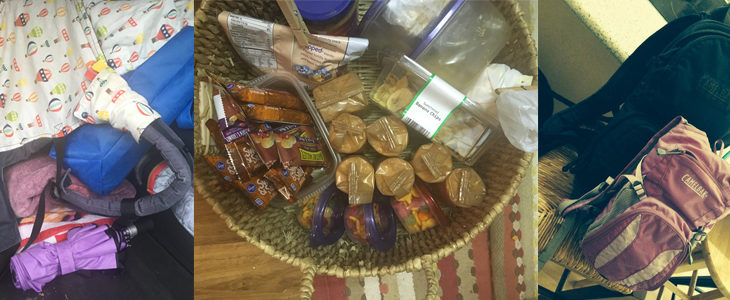
  • Organizing Gear. We were somewhat spoiled in our last station in that the weather never changed. So we always needed the same hiking gear and that made keeping it compiled easier. However, since moving back to the mainland we have found similar processes to help us.
  • Rain boots are a must right now in Oregon, so that’s always what we wear. We have a bag in each car with emergency clothes for each family member. The kids have an entire outfit, and parents have socks, shoes, and maybe a sweater or shirt.
  • We also keep at least one towel in each car. We have found that these essentials have assisted us in almost any trip. If we play in the creek too hard and our rain boots are filled and our socks soaking when we are finished, no worries. We strip them off and crank up the heat on the ride home. Not going straight home? That’s where the emergency clothes come in handy.
  • We also learned years ago that each car gets it’s own soft-structured carrier (SSC). When my daughter was born, she was walked to sleep every night in our Tula. Which means the next day as we pulled up to the hike, I would realize we forgot to grab it. So each car got one. I borrowed SSCs from friends for our "stays-in-the-house-never-does-anything-but-put-a-sweet-baby-to-sleep" carrier. The car SSCswere ours and were WELL loved. Cause, really, who has funds for that many carriers to just sit in cars? Not us. 

Now that snacks and gear are organized, we’re ready to jump the next hurdle.

Problem Two: Flexible Schedule!

Flexible schedule is my 'nice way' of saying "infuriating-changing-schedule-that-we-can-never-depend-on." But call it what you like. We have become masters of "flying by the seat of our pants", thanks to years of military service. So listen carefully.

  • Be ready. Gear is clean from the last hike where everyone slid down the muddy mountain. Snacks are replenished frequently so they aren't depleted on your hike day, and you have a list of 3-5 varying options to choose from. This list may change regularly. It may be compiled from a book on local places or from HiB locations you enjoyed or missed and want to check out. 
  • Just go. Don’t overthink it. Don’t compromise it away (you know, "we’ll go hiking next weekend", cause it never comes). Just. Go.
  • Acknowledge your emotional tie to the day's activity. More than I care to admit, I was miserable all day because our hike (or other exciting plan) was canceled unexpectedly. I had to learn to get past it. A list on hand of non-hike options assisted with these days, as it took the pressure off my fuming brain to come up with and/or decide on what we should do instead.
  • Don’t be afraid to go to the same place four times in a row. I used to get SO overwhelmed at thinking every opportunity to get out HAD to be somewhere new and different and exciting. It was too much pressure, to be honest. And the moment I let us have fun at places we loved, or explore a place we had hiked only once, our spur of the moment trips got better, infinitely better. That "getting better" made it easier to keep the "Compromise Monster" at bay. (More on him in future blogs, I’m sure).

Get organized in whatever way makes most sense for you, your family and how and where you hike. Even if your plan seems silly. Trust me, I was not convinced that an entire outfit per child would be that handy. I thought it was wasteful. I was wrong! And stay flexible. Even if you’re plans rarely change due to work and changing schedules. I’m sure they change due to kids getting sick or having off days or they change when you suddenly have great days where the kids want to explore. Everyone can benefit from practicing flexibility and having a plan for such days.

Comments

To view comments or leave a comment, login or sign up.

Related Content

0
What Is the 10 Minute Walk & Why Your City Needs It
Have You Heard About the 10-Minute Walk Initiative? Suppose you believe that access to parks and green spaces improves physical and mental health, especially during times of crisis, or that life simply feels better when nature is close by. In that case, you are already aligned with the vision behind the 10 Minute Walk Initiative. Photo by Monique Vargas What Is the 10 Minute Walk Initiative? The 10-Minute Walk Initiative is a nationwide effort to ensure that everyone in the United States has safe, easy access to a quality park within a ten-minute walk of home by the year 2050. This is not just a goal for green-friendly states like California or Colorado. It is a promise for every city, every neighborhood, and every family. Want to know if your city is part of it? Visit the 10 Minute Walk website to see if your mayor has signed on. If you do not see your city listed, you can do what some of our community members have done: sign up for updates and learn how to get involved. You may even be able to encourage your local leaders to take part. If you are part of the OutGrown community, you already know our roots go back to the Hike it Baby movement and its guiding value: Leave No Family Behind. That means no matter your pace, parenting moment, or personal identity, you belong here. Whether you are changing a diaper, feeding your baby, managing a meltdown (yours or theirs), or just starting, we will not leave you behind. But here is the hard truth: Some families are being left behind simply because they do not have access. Parks are too far, sidewalks are unsafe, and transit is unreliable.  That is why OutGrown supports the 10-Minute Walk Initiative. Ensuring every family has access to nature is the first step in building an inclusive and equitable future outdoors. OutGrown exists to be a hub of tools, stories, and support for families with babies and young children who want to grow up outside, together. Learn more about our mission and how you can be part of it at WeAreOutGrown.org. About OutGrown OutGrown is a national nonprofit working to ensure that every family, especially those with babies and young children, can experience the benefits of time outside. Since our grassroots beginning in 2013, we have supported more than 300,000 families with the help of thousands of volunteers across the country. We believe nature belongs to all of us from the very beginning. That means creating opportunities, removing barriers, and supporting families in finding their way outdoors, whether that starts with a stroller walk, a community outing, or a quiet moment under the sky. You can learn more and explore our programs at WeAreOutGrown.org. Editor’s Note Thank you for reading. At OutGrown, we believe content should offer more than information. It should create a connection, support real-life caregiving, and reflect how families grow together through nature. Everything we share is made with care by our team and volunteer community. If this piece inspired you or helped you feel more confident in your outdoor journey, we invite you to support our work by donating today. Your contributions help us keep resources free and accessible to all families. Please remember that the experiences and tips shared in this article are for general information only. They are not a substitute for professional medical, mental health, or safety advice. Always consult with a qualified provider if you have specific concerns or questions. We are glad you are here. We are growing something meaningful together
0
5 Tips for Trail Cleanup Safety
Trail cleanups can be a powerful way for families to give back and connect with nature at the same time. With little ones in tow, safety and simplicity are key. Whether joining a group event or picking up trash on your usual stroll, this guide offers practical tips to help make your next cleanup effort safe, age-appropriate, and meaningful for everyone involved. Winters can be hard on trails. Many will need both cleanup and maintenance come springtime. You can contact your local or state park system to see if they have anything planned, or you can plan your own trail cleanup hike with your Hike it Baby branch! Hike it Baby offers lots of information on organizing a trail cleanup, and safety is a consideration when participating in a trail cleanup. Some of these things may seem like common sense, but it’s always nice to double check your preparedness whenever you try something new (or for the first time in a while). 5 Tips for Trail Cleanup Safety 1. Bring proper cleanup supplies Certain supplies will come in handy during a trail cleanup. This would include gloves, trash grabbers and bags. It’s a good idea to have the littles carry the trash bag instead of picking up trash. They may not know what they should and shouldn’t touch. 2. Work in pairs or groups Sticking together and staying in communication with the organizer are very important. Make sure you have a charged cell phone or walkie-talkie with you. A compass could also come in handy if you're off the beaten path. Make sure someone knows exactly what area your group will be working in. Check in often with the organizer and stay close to your partner or group. Or, if you're hosting the hike, help the group stay together and communicate the meet up locations and times. 3. Bring your normal safety supplies All normal hiking injuries can occur on a trail cleanup. In fact, after winter, the trail will likely be in worse shape than usual, so be prepared. Make sure you pack your typical first aid kit, plus plenty of water and snacks. 4. Give the kiddos simple tasks The concept of trail cleanup is super important to share with our kids beginning at a young age as it teaches them to be stewards for our trails and parks. It’s even better to reinforce as they get older. That being said, not every trail cleanup is organized with young children in mind. If attending a hike organized by another group or parks department, speak to the cleanup organizer before deciding whether or not you will bring young children. Make sure there will be tasks suitable for their age and ability. With supervision and proper gloves and grabbers, tiny people are great at holding trash bags, spying trash, and they love to use trash grabbers! Older kids can also be great to pair with younger kids. If hosting your own hike, make sure you communicate what supplies to bring and provide safety tips during Welcome Circle. 5. Use caution Don't ever touch anything sharp or lift anything too heavy. While you will typically feel totally awesome after participating in a trail cleanup, you might not if you cut yourself and get an infection. After winter, there could be trees or large branches across the trail. Don’t try to be the hero and lift something too heavy on your own. Even professional bodybuilders use a spotter to lift. Bring a notepad with you and document anything you can’t handle. Then give this list to the trail cleanup organizer so that the proper crew can address it. (Or, if you're hosting, contact the parks department with the information.) For toddlers and little kids, have them spot the trash ("I spy!") instead of picking it up. This will ensure they aren't picking up anything dangerous or unsanitary. What are your safety tips for trail cleanup? Have a question about safety while participating in a trail cleanup? Leave a comment or a question below! Read More: 11 Tips for Safety on Trail 3 Trail Safety Tips You Must Know Photos by Vong Hamilton. Hike it Baby hikes are hosted by volunteers who have no professional training and are not experts to guide families on hikes. They are people who want to raise a generation to love the outdoors and they accomplish this by facilitating outings for all to join. Our tips are gathered from collective experience. As with any physical activity, please be sure to check with your healthcare provider and other experts when hiking with your children. About OutGrown OutGrown is a national nonprofit working to ensure that every family, especially those with babies and young children, can experience the benefits of time outside. Since our grassroots beginning in 2013, we have supported more than 300,000 families with the help of thousands of volunteers across the country. We believe nature belongs to all of us from the very beginning. That means creating opportunities, removing barriers, and supporting families in finding their way outdoors, whether that starts with a stroller walk, a community outing, or a quiet moment under the sky. You can learn more and explore our programs at WeAreOutGrown.org. Editor’s Note Thank you for reading. At OutGrown, we believe content should offer more than information. It should create a connection, support real-life caregiving, and reflect how families grow together through nature. Everything we share is made with care by our team and volunteer community. If this piece inspired you or helped you feel more confident in your outdoor journey, we invite you to support our work by donating today. Your contributions help us keep resources free and accessible to all families. Please remember that the experiences and tips shared in this article are for general information only. They are not a substitute for professional medical, mental health, or safety advice. Always consult with a qualified provider if you have specific concerns or questions. We are glad you are here. We are growing something meaningful together.