
Limited Freedom: Why the Park and Play is My Favorite “Hike” for Toddlers
- Blog Limited Freedom: Why the Park and Play is My Favorite “Hike” for Toddlers

I have a secret that I’m ready to share: I hate hosting toddler-led hikes.
However, I have another, more valuable secret: A park and play is just about the best thing in the world to do with a toddler. Stroller walks and adult-paced trail hikes are fun, but they just don’t stack up against a great park and play.
My now almost-2-year-old and I went on our first hike with Hike it Baby when he was just eight weeks old. The hike was at a small but beautiful nature preserve whose dirt and mulch trails wind through a wooded area along a creek. It’s a flat, easy, stroller-friendly walking path and a little slice of nature heaven within a sprawling, urban city. I had a great time meeting and talking with the other families there, soon started hosting my own hikes, and became a Branch Ambassador a few months later.
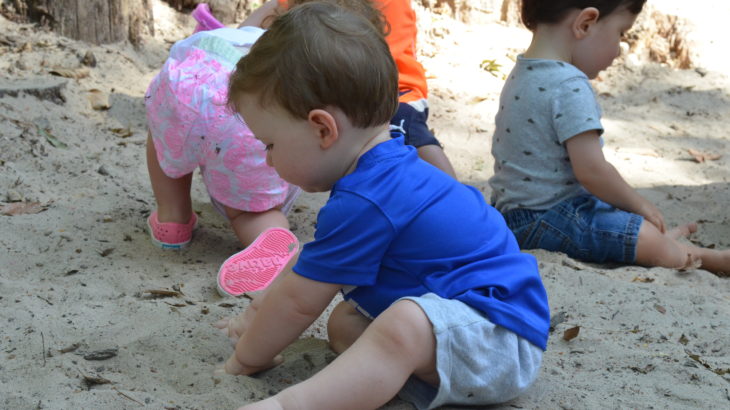 When my son, Graham, started walking just before his first birthday, I was ready and excited to start hosting toddler-led hikes. I knew that nature sanctuary where we attended our very first hike would be the perfect place for new walkers, so as soon as Graham was steady enough on his feet to walk a ways by himself, we set up a recurring weekly hike there. The first few months were great; Graham would walk most of the 3/4-mile trail himself, just a few other families with toddlers hiked with us, and we laughed and commiserated over toddler life stories together.
As the months passed, so did Graham’s willingness to walk happily alongside me, and my patience grew thin as I spent most of the hike either coaxing him to move or waiting on the other toddlers as their parents coaxed them to move. We were happy to let the kids sit and play at times along the way, but they never sat and played at the same time, so there were lots of tears. When families with older kids came, we were either left far behind or I had to carry Graham to keep up. Eventually, it was no longer a fun hike for Graham or for me.
As Graham became a better walker and then a confident climber and jumper, we started spending more time at playgrounds or parks where he could simply run around and do whatever he wanted (within reason). It was wonderful. I started hosting a few scattered park and plays with Hike it Baby at toddler-friendly playgrounds near our house. When they grew in popularity, I started hosting them weekly, and now the park and play is my (and Graham’s) very favorite type of “hike.”
When my son, Graham, started walking just before his first birthday, I was ready and excited to start hosting toddler-led hikes. I knew that nature sanctuary where we attended our very first hike would be the perfect place for new walkers, so as soon as Graham was steady enough on his feet to walk a ways by himself, we set up a recurring weekly hike there. The first few months were great; Graham would walk most of the 3/4-mile trail himself, just a few other families with toddlers hiked with us, and we laughed and commiserated over toddler life stories together.
As the months passed, so did Graham’s willingness to walk happily alongside me, and my patience grew thin as I spent most of the hike either coaxing him to move or waiting on the other toddlers as their parents coaxed them to move. We were happy to let the kids sit and play at times along the way, but they never sat and played at the same time, so there were lots of tears. When families with older kids came, we were either left far behind or I had to carry Graham to keep up. Eventually, it was no longer a fun hike for Graham or for me.
As Graham became a better walker and then a confident climber and jumper, we started spending more time at playgrounds or parks where he could simply run around and do whatever he wanted (within reason). It was wonderful. I started hosting a few scattered park and plays with Hike it Baby at toddler-friendly playgrounds near our house. When they grew in popularity, I started hosting them weekly, and now the park and play is my (and Graham’s) very favorite type of “hike.”
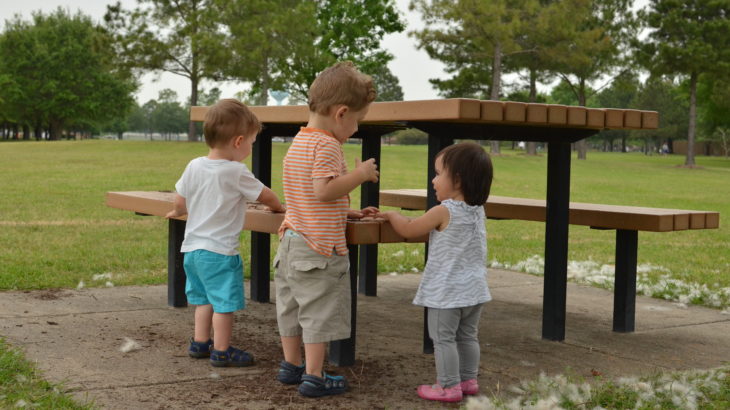
 Are you thinking that hosting a park and play sounds like a great idea, but don’t know where to start?
 When my son, Graham, started walking just before his first birthday, I was ready and excited to start hosting toddler-led hikes. I knew that nature sanctuary where we attended our very first hike would be the perfect place for new walkers, so as soon as Graham was steady enough on his feet to walk a ways by himself, we set up a recurring weekly hike there. The first few months were great; Graham would walk most of the 3/4-mile trail himself, just a few other families with toddlers hiked with us, and we laughed and commiserated over toddler life stories together.
As the months passed, so did Graham’s willingness to walk happily alongside me, and my patience grew thin as I spent most of the hike either coaxing him to move or waiting on the other toddlers as their parents coaxed them to move. We were happy to let the kids sit and play at times along the way, but they never sat and played at the same time, so there were lots of tears. When families with older kids came, we were either left far behind or I had to carry Graham to keep up. Eventually, it was no longer a fun hike for Graham or for me.
As Graham became a better walker and then a confident climber and jumper, we started spending more time at playgrounds or parks where he could simply run around and do whatever he wanted (within reason). It was wonderful. I started hosting a few scattered park and plays with Hike it Baby at toddler-friendly playgrounds near our house. When they grew in popularity, I started hosting them weekly, and now the park and play is my (and Graham’s) very favorite type of “hike.”
When my son, Graham, started walking just before his first birthday, I was ready and excited to start hosting toddler-led hikes. I knew that nature sanctuary where we attended our very first hike would be the perfect place for new walkers, so as soon as Graham was steady enough on his feet to walk a ways by himself, we set up a recurring weekly hike there. The first few months were great; Graham would walk most of the 3/4-mile trail himself, just a few other families with toddlers hiked with us, and we laughed and commiserated over toddler life stories together.
As the months passed, so did Graham’s willingness to walk happily alongside me, and my patience grew thin as I spent most of the hike either coaxing him to move or waiting on the other toddlers as their parents coaxed them to move. We were happy to let the kids sit and play at times along the way, but they never sat and played at the same time, so there were lots of tears. When families with older kids came, we were either left far behind or I had to carry Graham to keep up. Eventually, it was no longer a fun hike for Graham or for me.
As Graham became a better walker and then a confident climber and jumper, we started spending more time at playgrounds or parks where he could simply run around and do whatever he wanted (within reason). It was wonderful. I started hosting a few scattered park and plays with Hike it Baby at toddler-friendly playgrounds near our house. When they grew in popularity, I started hosting them weekly, and now the park and play is my (and Graham’s) very favorite type of “hike.”

Advantages of the park and play:
- There’s no hard start time. I typically set a window of an hour and a half to two hours for the “hike” and let families know they can drop in any time in that range that works for them. This way, parents can work around nap times, other kids’ activities, school schedules, doctor appointments, and those mornings when you just can’t get out the door in time. I make sure to welcome each family as they arrive and introduce them to the other Hike it Baby families there if they’re new to the group so no one feels left out.
- There’s no rush to GO anywhere. If your child wants to sit on the ground and play with rocks for 20 minutes, that’s completely fine! Do your child’s little legs get tired quickly? Take a rest on that bench! Have a snack and a drink and another snack while you’re at it. We’re not going anywhere. There are far, far less tears and tantrums when everyone gets to go at their own pace.
- It helps toddlers build confidence and motor skills. There are lots of great things about longer stroller or carrier hikes, but many important skills are learned by simply playing and exploring. At a park and play, your toddler can learn how to go down a slide, climb a ladder, dig a hole, share toys, splash in the water, scoop sand into a bucket, and interact with their peers.
- It provides toddlers with the freedom they crave, in a safe environment. No steep cliffs or busy roads here! It (almost) goes without saying that there are always dangers to be aware of, and children should be supervised at all times, but the park and play environment allows toddlers to explore at their own pace and with a (limited) freedom to move about wherever they’d like.
- The adults actually get to talk to each other. When you’re not navigating an uneven, muddy trail with an unpredictable toddler or struggling to push a stroller, grab thrown toys, and hand out sandwiches all at the same time, you’re able to have a real conversation with the other adults. (And it feels so good!)
- It’s great for brand new parents, too. See above: no hard start time, no going anywhere, conversations with other adults who have been in your shoes very recently. You don’t need a toddler to attend a park and play! It’s a much easier event to brave when you’ve been cooped up in the house with an infant than a “walk-2-miles uphill in the woods” hike would be. Many families who have just welcomed their second child find the park and play to be a great transition hike while getting used to handling multiple children as well.
Are you thinking that hosting a park and play sounds like a great idea, but don’t know where to start?
Here are some ideas that might work for you:
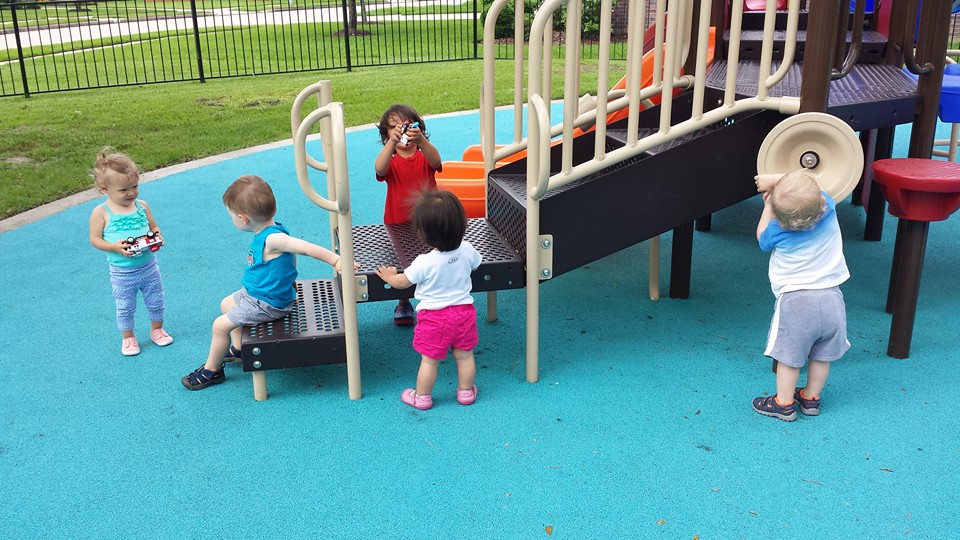
- Playgrounds. This one is pretty self-explanatory, but finding a toddler-friendly playground can be tricky. Look for playgrounds with baby swings, short slides, few or no open ledges to jump from, equipment that’s lower to the ground, and ones that are made of plastic rather than metal or wood. Bonus if it’s completely fenced-in or shaded from the sun.
- Splash pads. Summertime is great in most areas, but in the southern US where I live, it’s HOT. Sometimes it’s just not safe to go outside in the sun for more than a few minutes, but that’s where splash pads (sometimes called spray grounds) save the day. It’s a playground, but with water everywhere. Don’t forget swim diapers, pool toys and snacks!
- Grassy parks. Pack a picnic blanket, toys, and snacks, then let your toddler run and play until it’s naptime.
- Areas with rocks, sand, and/or dirt. Toddlers love to dig in the dirt, feel sand run through their fingers, and pile up rocks. This can be entertaining for hours. Be sure to find a safe area away from any roads or biking trails and bring buckets and digging and scooping toys.
Related Content



Comments