
How to Dress Baby for Cold-Weather Camping

  1. Share
0 0
IN PARTNERSHIP WITH OUR FRIENDS AT MORRISON OUTDOORS

The term “camping” may bring to mind warm summer nights and hot days splashing in the lake. However, there are benefits to camping in colder weather. There are fewer crowds, it’s easier to find prime campsites, there are not as many mosquitoes and biting bugs, and bedtime is less of a struggle since there are fewer hours of sunlight (just to name a few). So why don’t more families camp in colder weather?

The biggest question we get from caregivers is “How do we keep our family warm when camping in colder weather?” followed by “there is no way I could camp with my baby in this weather!”.  We promise you, it is possible, even with a young baby in tow. It’s all about the right layers and sleeping environment. Read on for more information on how to layer your baby for a cold-weather camping adventure and start reaping the benefits today!
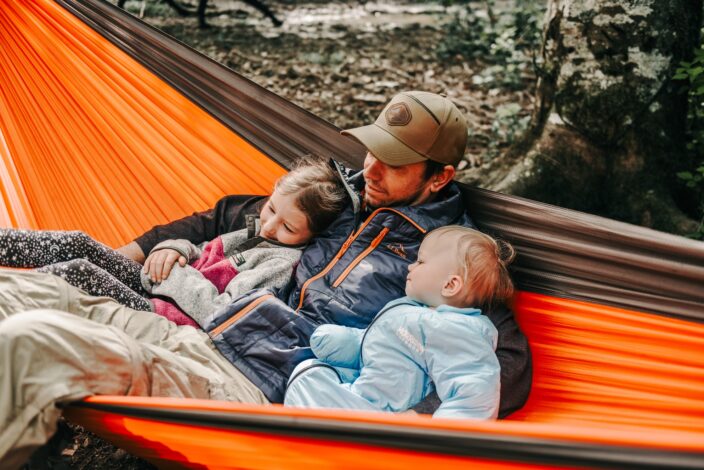
The Basics of Layering Baby for Cold-Weather Camping

Choosing the right material and number of layers is crucial for keeping your baby (and everyone) warm during cold-weather adventures. Here are some basics to keep in mind when picking cold-weather camping clothing:

Base Layers for Baby

First and foremost, AVOID COTTON! There is a reason you hear the term “cotton is rotten” when it comes to winter clothing. It collects and holds on to moisture which can then chill the skin when it’s cold. This is especially dangerous for babies since it can lead to a drop in body temperature. For the layers closest to the skin, we highly recommend wool for its soft feel, durability, and superior wicking ability. Synthetic materials (such as polyester) are also effective and generally a more budget-friendly option. Various companies make baby-specific base layers that include a onesie and leggings. Insider tip: if you choose a onesie option, snapping the onesie over the leggings can help prevent the leggings from sliding down while baby is moving around or being carried.

Middle Layers

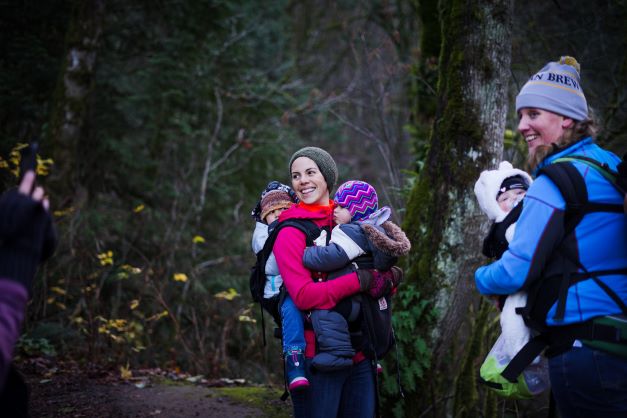
This layer goes right on top of the base layer and functions as an insulator to help retain body heat. Polyester fleece is a great, affordable option here, especially fleece footie pajamas that completely cover the baby’s feet. One thing to note: if you plan to babywear your child during your camping adventure, make sure the footie pajamas are not so tight that they could risk reducing circulation (I usually went a size up if I was wearing my kiddos). Other options include thick-knit wool or insulated down, which are very durable but also come with a higher price tag. Woman carrying two children in infant carriers
Outer Layers

The type of top layer you choose will rely heavily on two factors: temperature and moisture. For the really cold, wet adventures, you may opt for a waterproof, down, one-piece snowsuit. This provides full protection from the elements, but also limits mobility and can make your baby too warm if the temperatures rise (in this case, you can shed the mid-layer). For cool or cold (but not frigid) camping trips, a down or synthetic jacket on top will likely suffice. I highly recommend purchasing a waterproof one-piece shell (such as a rain suit) for baby in case the weather turns wet. Look for ones that cinch on the waist, ankles, and wrists so you can size up and let your baby grow into it.

Accessories

Wool is an excellent material for hats and socks to keep moisture away from the skin. Synthetic material is an affordable option as well, just stay away from cotton! My kiddos wear these at night as well since they tend to wiggle in their sleep (my oldest used to wiggle completely out of his sleeping bag!). If you don’t want to purchase wool baby socks that they will grow out of quickly, you can use big-kid or even adult wool socks on your baby’s feet and hands to keep little extremities warm. Fleece is a great option for gloves if the conditions are not wet and your baby prefers a bit more dexterity. They also layer well under waterproof gloves for some added warmth and protection. Wool or fleece scarves or neck warmers are a wonderful option for added insulation, just be sure to make sure they are loose and not constricting the baby’s airway. Proper footwear for your baby will depend greatly on outdoor temperatures and the mobility of your little one. Warm fleece or wool booties may suffice if your little one isn’t walking yet. Winter boots may be a better option for little walkers so they keep their feet dry and clean while traipsing around the campsite or trail.

Keeping Warm Through the Night
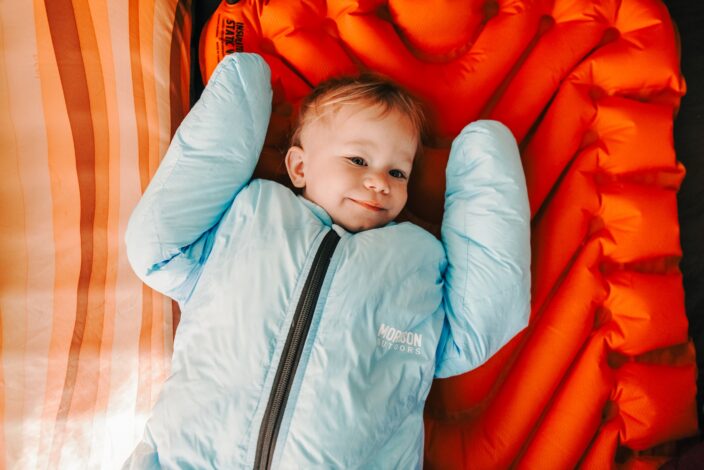
Once the sun sets, the temperatures can drop significantly. A baby-specific sleeping bag is a must for keeping your baby warm through the night. We love the Morrison Little Mo for babies 6 months and older. There are two temperature ratings to choose from: A synthetic 40-degree option and a down 20-degree option. You can find out more about these sleeping bags in this article. In addition, make sure your baby is not sleeping directly on the floor of the tent. A camping crib/pack and play or sleeping pad can provide insulation from the cold ground and help baby sleep more soundly.

Does your family enjoy cold-weather camping adventures? Do you have tips to make it enjoyable and successful for the whole family? Let us know in the comments below! Looking for more information on how to camp with a baby in tow? Stay tuned for more articles in this blog series! We will cover various topics and provide tips and advice to make camping with a baby a huge success!

Other Articles in this Series:

Photos by Deanna Curry and Kim Ives


ABOUT OUTGROWN

OutGrown is a 501(c)(3) nonprofit that works to create a world where everyone can enjoy the physical and mental benefits of spending time outside. We are focused on creating opportunities and removing barriers to access so families with babies and young children can take their first steps outside. We believe all families have the right to connect with nature, benefit from spending time outdoors and be inspired to a lifelong love of nature. Since its grassroots inception in 2013, OutGrown is a growing community of 280,000 families and over 300 volunteer Branch Ambassadors. More information on all of our programs can be found at WeAreOutGrown.org 


EDITORS NOTE:

We hope you enjoyed reading this article from OutGrown. We’re working hard to provide our community with content and resources that inform, inspire, and entertain you.

But content is not free. It’s built on the hard work and dedication of writers, editors, and volunteers. We make an investment in developing premium content to make it easier for families with young children to connect with nature and each other. We do not ask this lightly, but if you can, please make a contribution and help us extend our reach.

Community tags

This content has 0 tags that match your profile.

Stages of Childhood

Let's Talk Gear & Snacks

Comments

To view comments or leave a comment, login or sign up.

Related Content

0
Babywearing in the Rain
Does the thought of babywearing on rainy days sound like a daunting, seemingly impossible task? You’re not alone. When I was a Hike it Baby Branch Ambassador in the Pacific Northwest, we always saw a steep decline in participation once the rainy season started. However, once we started posting photos of hiking in the rain with a baby strapped to us, we started getting questions about how we do it: How do you keep your baby dry? How do you keep yourself dry? Doesn’t that ruin your carrier? And so on. Keep reading to find out the answers to these questions and more along with the benefits of hiking in the rain and tips from our amazing Hike it Baby community. Benefits of Babywearing in the Rain To help convince you it’s a good idea to hit the trail or pavement on rainy days, let’s start with some of the awesome benefits of getting your family outside in the rain: Fresh Air Fresh air is good for the body and the soul, rain or shine. It reduces stress, promotes better sleep, and can boost Vitamin D intake (yes, even on rainy days). If you live in an area that has long winters or rainy seasons, time in nature can help prevent and ease seasonal depression. To find out more about the benefits of getting out in nature, check out this article. Clouds and rain can make the temperature more bearable Clouds can have both a cooling and warming effect. On hot summer days, clouds can block the light and heat from the sun, making the temperature cooler. During the colder months, clouds can trap the heat from the sun, making the temperature warmer. Even with the added precipitation, you can enjoy milder outdoor temperatures, which can make a hike more enjoyable. Fewer Crowds Hiking is generally not the first activity that comes to mind on a rainy day for most people. However, fewer people on the trails makes for a more peaceful hike and more parking spots. I have found that a dreary day is the best time to visit the more popular hiking spots! Wildlife Spotting One of my favorite things about hiking in the rain is that you get to see critters you wouldn’t normally spot on a sunny day. Amphibians, such as frogs and salamanders, love the rain since their skin is sensitive to moisture. They usually hide or hang out near the water on hot, sunny days, but they come out to play when the rain clouds roll in. In addition, you’ll likely see plenty of slugs and snails, which are fun to watch as they slowly move across the path leaving trails of slime behind. A Lesson in Resilience Even as babies, our children are watching our every move and learning life lessons along the way. Showing them that you are willing to go through the effort to suit up and get out of the house regardless of weather will teach them that there’s no such thing as “bad” weather.  It shows that even though something is “hard” or takes effort and planning, it’s still worth doing. This mindset can help positively influence them as they grow and experience life. It’s Majestic There is something special and unique about hiking on rainy or wet days. The air smells fresh from the rain and soaked earth, the water droplets make the trees sparkle, and the sound of rainfall is soothing. It’s a delight for the senses! My older son would fall asleep in the carrier almost every time we hiked in the rain. Tips for Baby Wearing in the Rain Now that we know the benefits of getting out in rainy weather, let’s look at how it can be done safely, even with very young babies. Keep in mind that you always want to make sure that your baby’s airway is unobstructed, so be sure that any hoods, covers, etc. are not covering their face. Keeping Baby Warm and Dry The most important thing to remember about babywearing in the rain is to make sure your baby is warm enough (but not too warm). While babywearing, you will inevitably transfer some of your heat to baby. This can reduce the number of layers needed for both the baby and the adult wearing them. Check out this article for more information on how to layer when babywearing in chilly weather. Here are some tried and true tips and hacks for keeping your baby warm and dry from our wonderful Hike it Baby community. Invest in a Babywearing Jacket While they do come with a price tag, babywearing jackets allow you to take the guesswork out of keeping both you and baby warm. Many have both front and back carrying options, so it can grow with baby as they get big enough for a back carry. Check out this article on babywearing jacket options we love.  Love your own jacket? They even make zip-in panels that extend the size of your jacket to accommodate babywearing. “A waterproof babywearing jacket is a huge help! We have the Suse’s Kinder Deluxe, which zips apart to fleece and waterproof shell for mild weather, or you can put them together for truly cold weather. It has child panels for front/back/hip carries so it’s truly versatile.” – Gaila, Ames, IA Use a Multifunctional Carrier Cover Various companies make covers for baby carriers that keep baby warm and dry. Just be sure that the cover is listed as waterproof rather than water-resistant (unless you plan to double up on these hacks and use one of the next two options as well). Many of these covers can also be used as blankets, which is a huge bonus when you want to reduce the amount of baby “stuff” you have to lug around. “I wish the Jan and Jul company had their rain cover when my son was a baby because it's absolutely amazing and you can use it more than just with the baby carrier! The moms in our branch use it to change diapers by laying it on the ground then baby on top. You can use it as a waterproof blanket to protect and keep baby warm in their car seat, stroller, wagon, or wherever baby is!” –  Joey, Provo, UT Use Spare Rain Gear to Keep Baby Dry Not ready to invest in more gear? Why not use what you already have? This is one of our favorite hacks because it’s so simple and yet so effective! Many soft-structured baby carriers have straps that unbuckle, so all you have to do is unbuckle the straps, thread them through the arms of a rain jacket, buckle the straps again and you’re set! The rain jacket can also be tucked in around the carrier if the straps don’t unbuckle. Then, simply slip the hood over baby’s head, and voila! Baby stays dry and they can grow into the rain jacket. “Slip the straps of a carrier through a jacket to keep baby protected. It works with any size coat about 3T and up. I've done it with down coats and fleece on cold, dry days and with up to an adult size raincoat on wet days.. also makes for cute babywearing costumes.” – Nicholl, Portsmouth, NH” “Use an adult rain jacket to place over the child's head and the carrier if you are wearing them face first.” – Juliana, Fairbanks, AK Photo Credit Nicholl Summers And if All Else Fails, Bring an Umbrella There is nothing wrong with bringing along a collapsible umbrella in case of rain. This can give you peace of mind in case it starts raining more than predicted or if you are worried that baby will get too wet. They fold up neatly, and you can strap them to your carrier with a carabiner to keep your hands free when not in use. Keeping Yourself Warm and Dry If you’re like me, you tend to put the comfort of your child first and forget all about your own needs. However, coming prepared with the appropriate gear for yourself means you can stay out longer and go farther without dealing with discomfort from soaked shoes or soggy pants. Check out these tips for keeping yourself warm and dry on those rainy hikes. Waterproof Yourself At the bare minimum, make sure that you have a waterproof jacket and waterproof footwear. If it’s still chilly where you are, check out this article on layering for the whole family. If possible, buy some actual rain pants. You would be surprised how wet your pants can get while babywearing in the rain! “Rain pants for the babywearer for sure! And a big umbrella is what I usually do with a younger baby. Older kiddos get their own rain suit and I use a carrier like my Integra Solar that is made of quicker-drying material”. – Karole, Northern VA “I’m from Oregon, I always use rain pants for myself. Otherwise my butt and upper thighs would be soaked from the rain dripping off our rain gear”. – Tiffany, Oregon Borrow Rain Gear in a Larger Size Sometimes the easiest thing to do in a pinch is reach inside the closet of your spouse, father, or friend and borrow a rain jacket in a larger size. Just make sure it’s large enough to zip over yourself and your baby in their carrier but be sure it’s not covering your baby’s airway. “Borrowing my husband's rain jacket!” – Leah, Hampton Roads, VA Protecting Your Carrier The vast majority of baby carriers are machine washable, meaning that they won’t be ruined by getting soaked with rain. However, a wet carrier can get uncomfortable for the wearer along with the child (not to mention if you want to use the carrier again later in the day). Here are some tips for keeping your carrier dry while enjoying a rainy stroll. Purchase a Waterproof Carrier Cover Most carrier companies have waterproof covers that you can slip over the carrier to stay dry. They usually come with a hood to slip over baby’s head and an extra pocket you can slip your hands in to stay dry. You can also find generic brands online that work for most carriers. The Raincoat Hack I realize we already mentioned this hack, but it not only keeps your child dry, but it can also protect your carrier by covering both the body and the straps. “With a soft structure carrier where the straps unbuckle (Onya, Ergo, Kinderpack, etc.) you can slip a toddler size rain jacket over the straps and then you have a rain protected Carrier!” – Rachel, Charleston, SC Photo Credit Rachel Young Using these tips and hacks, “intolerable weather” can turn into yet another family adventure filled with memories and fun.  Do you have extra tips for babywearing in the rain? Let us know in the comments below. ABOUT OUTGROWN OutGrown is a 501(c)(3) nonprofit that works to create a world where everyone can enjoy the physical and mental benefits of spending time outside. We are focused on creating opportunities and removing barriers to access so families with babies and young children can take their first steps outside. We believe all families have the right to connect with nature, benefit from spending time outdoors and be inspired to a lifelong love of nature. Since its grassroots inception in 2013, OutGrown is a growing community of 280,000 families and over 300 volunteer Branch Ambassadors. More information on all of our programs can be found at WeAreOutGrown.org    EDITORS NOTE: We hope you enjoyed reading this article from OutGrown. We’re working hard to provide our community with content and resources that inform, inspire, and entertain you. But content is not free. It’s built on the hard work and dedication of writers, editors, and volunteers. We make an investment in developing premium content to make it easier for families with young children to connect with nature and each other. We do not ask this lightly, but if you can, please make a contribution and help us extend our reach
0
Layering Basics to Keep the Kids Cozy This Winter
We’ve all heard it before: “It’s too cold to go outside.” However, we believe that getting outside and enjoying nature is important all year round, regardless of the weather. As Alfred Wainwright so eloquently put it, “There’s no such thing as bad weather, only unsuitable clothing.” But how do you dress the kiddos so they will be comfortable when the temperature drops? Check out this handy guide to give you an idea on which layers and materials work best to keep your kids cozy in all temperatures, and dry when those first snowflakes fly. Get ready to make some fun outdoor family memories this winter! THE BASICS Layers can be broken into 3 main categories: BASE LAYER This is the layer closest to the skin. It wicks sweat away from the skin to keep you warm and dry. Best Materials: Merino wool is our favorite, but synthetic materials such as polyester and nylon can work as well. You’ll want to AVOID COTTON! It collects and holds on to moisture which can then chill the skin when it’s cold and lead to a drop in body temperature.   MIDDLE LAYER (ALSO CALLED “SECOND LAYER”) This layer goes right on top of the base layer and it retains body heat to provide an insulating layer of warmth. It is generally thicker and “fluffier” than the base layer Best Materials: Thick knit wool, polyester fleece, down insulated, and synthetic insulated are all great options. OUTER LAYER This shell layer shields you from the elements such as wind, rain, and snow. Best Materials: Depending on the weather, you’ll need water-resistant or waterproof, breathable shells. LAYERING BASED ON TEMPERATURE CHILLY (50-60 DEGREES F) While this temperature range may not seem concerning, it’s important to remember that children (especially babies) are not as efficient at regulating their own body temperature. Start with a base layer such as a bodysuit for babies or long-sleeve shirt for older kiddos made with Merino wool or synthetic materials. Add pants and a sweater, and top it off with a light wind or rain jacket if needed. Be sure to add a thin hat for babies (especially the adorable hairless cuties) and socks with shoes or booties to keep extremities warm. COLD (40 – 49 DEGREES F) As it gets colder, clothing materials become more important to keep kiddos warm and dry. Comfortable kids mean you won’t have to cut outdoor adventures short due to discomfort. Start with a quality bodysuit for babies made from merino wool or long johns for older kiddos. Add a mid-layer such as a fleece sweater/jacket and pants. You can then top it off with a wind or rain jacket medium-warmth hat, a neck warmer, thin mittens, shoes or booties. FRIGID (20-39 DEGREES F) Having fun outdoors in these temperatures is definitely doable with the right layers. Start again with a bodysuit or long johns made from Merino wool or synthetic material. Layer on a thick wool or synthetic sweater and pants. For the outer layer, we recommend a well-insulated jacket or snowsuit. Top it off with a thick hat, warm mittens, a neck warmer and winter boots.   For more tips on layering, check out these articles: Keeping your Family Warm on the Trail in Winter How to Layer When Babywearing in the Cold Winter Gear for Adults   (Photos Courtesy of Michelle Craig) ABOUT OUTGROWN OutGrown is a 501(c)(3) nonprofit that works to create a world where everyone can enjoy the physical and mental benefits of spending time outside. We are focused on creating opportunities and removing barriers to access so families with babies and young children can take their first steps outside. We believe all families have the right to connect with nature, benefit from spending time outdoors and be inspired to a lifelong love of nature. Since its grassroots inception in 2013, OutGrown is a growing community of 280,000 families and over 300 volunteer Branch Ambassadors. More information on all of our programs can be found at WeAreOutGrown.org    EDITORS NOTE: We hope you enjoyed reading this article from OutGrown. We’re working hard to provide our community with content and resources that inform, inspire, and entertain you. But content is not free. It’s built on the hard work and dedication of writers, editors, and volunteers. We make an investment in developing premium content to make it easier for families with young children to connect with nature and each other. We do not ask this lightly, but if you can, please make a contribution and help us extend our reach.