
4 Tips for Pumping on Trail

  1. Share
0 0
I had a really hard time taking care of my needs after the birth of my first child. So, when our second kiddo joined our family, taking time for myself to get out and do things that I loved was really important to me. I have been a better parent to both my children the second time around because I have done things like take a few weekends away in the wilderness or even just day hikes without the kiddos. But, like other breastfeeding or pumping mamas, I had to figure out how to pump on trail. Here's my journey and four tips I've learned for pumping on trail.
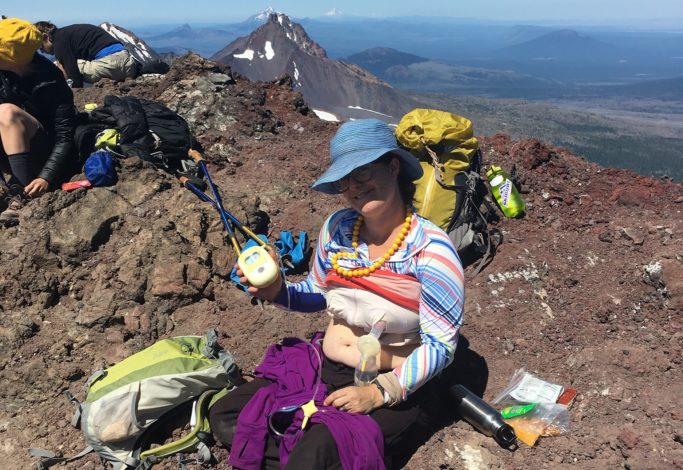
Pumping at 10,363 feet

When my second child was nine months old, I set out on an intense day hike to climb South Sister Mountain in Oregon with two good mamma friends of mine – and we made it. Because I was still breastfeeding exclusively, the journey required me to pump a few times at camp and twice during my climb. During the 10-hour hike, I had to take two 15-minute breaks to pump. I decided to pump at the peak of the mountain because it was gorgeous and I wanted to enjoy the view. Also, after about 6-ish hours of toiling up the mountainside, our group needed a well-deserved break. There was no place to hide but I tried to be fairly discreet and put my shirt over my pumping set-up. However, I'm of the mindset that pumping is breastfeeding and I don't believe that any woman anywhere needs to be ashamed of feeding their child. Pumping on trail by Leslie Talarico for Hike it Baby. Unfortunately, the reality of living in the United States is that breasts are sexualized to the point that I am sure it is not always safe for women to pump or breastfeed in public. I advocate people pumping or feeding in places where they personally feel safe. I probably would not have felt comfortable pumping on that peak if I had not had my friends with me. As it was, as I looked out across the stunning 360-degree view of Oregon, I felt proud of my mountain climbing accomplishment. But I was also proud that I was taking care of my mental and emotional needs in such a way that I could be the parent I want to be for my kiddos.
4 Tips for pumping on trail

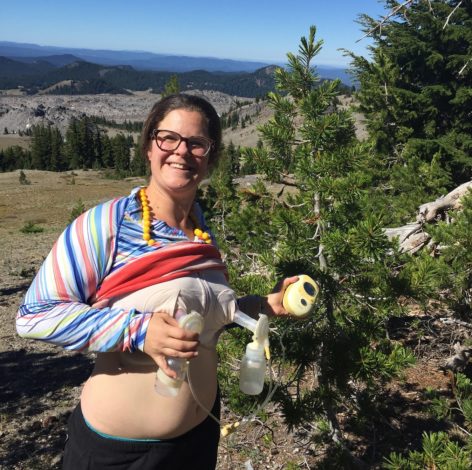
It’s all about the right equipment! I use a hands-free pumping bra when I pump, so I can be efficient and make my pumping breaks a chance to eat, drink and maybe snap a few pictures. 1. Electric pump My Medela Freestyle pump is such a lifesaver for little getaways. It doesn’t need to be plugged in and holds a charge for quite a long time (close to 36 hours or so depending on how often you use it). It also helped me feed my first baby for 13 months because I never could get him to latch. It’s a tough little pump and worked well for me, but nothing gets milk out quite like a baby though. But even if you have a great pump, you'll likely need to do some breast compressions if you're pumping away from baby for any period longer than two pump sessions or you may get a bit engorged. 2. Manual pump For longer backwoods trips away from baby, a manual pump might be necessary. There are a lot of very simple ones available and these are great. I've spoken with friends who have them and can pump on trail, in a bathroom stall or wherever they need to pump anytime, so consider looking into one of these. 3. Storage I bought a little thermal soft lunch bag that had an ice pack. On the day of my hike, I kept my pump bottles and the milk I pumped in the lunch cooler so I didn't have to pump and dump. I am a working mom and every drop of milk is liquid gold for me! I had a big cooler with lots of ice waiting in the parking lot to transport the milk home. 4. Sanitation There are wipes that you can buy if you need to clean your pump parts on the go. Because I kept my pump parts cold, I was able to use them twice without needing to do a cleaning in between. But while attending a wedding with my first child, I didn't always have access to a sink or cooler for my pump parts, so I really utilized the wipes. From what I've read and learned, it's probably safe to reuse parts for about 24 hours as long as they're kept refrigerated in between pumps. Pumping on trail by Leslie Talarico for Hike it Baby. Like Leslie, do you also pump on trail? Add your own tips - or ask a question - in the comments below. Photos courtesy of Leslie Talarico.

Read more:

Community tags

This content has 0 tags that match your profile.

Baby (Newborn to Crawler)

Comments

To view comments or leave a comment, login or sign up.

Related Content

0
How to prevent clogged ducts on trail
Clogged ducts is a phrase no breastfeeding parent wants to hear – especially when it becomes a chronic issue. It can put a damper on your outdoor adventures if not cared for properly. Complete and regular removal of milk is the best solution, and there are other steps you can take on the trail. First and foremost, learn the signs of mastitis and take them seriously. It is a common condition that can be easily treated if caught early. Without proper care, it can lead to an abscess and other complications that can result in hospitalization and emergency surgery. Talk to a lactation consultant if your clogged ducts are due to an oversupply. They can offer solutions to decrease or manage your supply properly. How to prevent clogged ducts on trail Below are some general tips for the trail to prevent or relieve mastitis. Nurse or pump often. Just because you're on trail, doesn't mean you have to skip feedings or sessions. Ditch the underwire bra; this is a major culprit for repeated clogged ducts. Make sure your bra/clothes is not rubbing too much on your chest. Always keep baby in an upright and secure position, even while feeding. If you're carrying your baby in a wrap, make sure it's properly tightened. After feeding baby, always re-tighten the wrap and reposition baby close enough to kiss the top of their head easily. Carries with waist belts are a good option to bring weight off your chest. If your child is old enough and you feel comfortable trying, opt for a back carry when not feeding. Avoid torso passes that place the weight mainly on your upper torso. Avoid shoulder passes/straps that go directly over your breasts. Opt for a stroller or have someone else wear if you are too uncomfortable. How to wear a wrap for comfort Picking a woven wrap that is on the softer, cushier side could reduce the chance of fabric irritating against your breasts. Bijou Wear is a baby carrier brand known for their supportive and newborn- to toddler-friendly woven wraps. You can choose from a variety of materials, colors and patterns to find the perfect wrap for your needs. Here are some options for woven wrap carries that can help reduce irritating a clogged duct: Front wrap cross carry – This beginner carry is both easy to master and is supportive for babies of all ages. It can be easily adjusted to nurse baby – even while walking on the trail. There are no straps or passes directly over your breast – just your baby. And baby has easy access to nurse on demand to clear out any clogs. This carry is the best utilitarian option to keep ducts healthy. Poppins hip or front carry – Don’t let this fancy-looking carry fool you; it is supportive and comfortable. It's a one-shoulder carry, but it can stand up to any hike as long as you take your time to tighten properly before you head out. It is traditionally done as a hip carry, which is a good option for an older baby who might be big enough to block your view in front. It can also be shifted to the front to support a smaller baby snuggled on your chest. Either option has no fabric directly over your breasts, so your baby has easy access to your breasts to nurse. Coolest hip or front carry – This is another carry that can be shifted to the hip for a bigger baby or to the front to support a newborn. This carry is secured with a slip knot, which requires some practice to master, but will make adjusting baby for breastfeeding a breeze! Again, there's no fabric directly over your breasts to irritate your ducts. Ruck back carry – Even though it is physically impossible to breastfeed a baby in a back carry, it is still a great option for duct health. In this carry, there is no fabric or baby on your chest, so there is no irritation or pressure on your breasts. And baby snuggled safely on your back will make it easier to wander down the trail. Just make sure you stop to feed baby as needed. And, there is always the option to have someone else carry baby. It can still be a happy hike, especially if you need a break while you heal from a clogged duct. That woven wrap will be waiting for you as soon as you feel better. What are your remedies for mastitis on the trail or for everyday prevention? Please share with us in the comments below. Read more: Babies on trail: 4 ways to feed your baby on a hike 9 Tips for soothing a cranky baby on the trail This post is sponsored by Bijou. Photos courtesy of Bijou; featured photo by Arika Bauer.
0
What Is the 10 Minute Walk & Why Your City Needs It
Have You Heard About the 10-Minute Walk Initiative? Suppose you believe that access to parks and green spaces improves physical and mental health, especially during times of crisis, or that life simply feels better when nature is close by. In that case, you are already aligned with the vision behind the 10 Minute Walk Initiative. Photo by Monique Vargas What Is the 10 Minute Walk Initiative? The 10-Minute Walk Initiative is a nationwide effort to ensure that everyone in the United States has safe, easy access to a quality park within a ten-minute walk of home by the year 2050. This is not just a goal for green-friendly states like California or Colorado. It is a promise for every city, every neighborhood, and every family. Want to know if your city is part of it? Visit the 10 Minute Walk website to see if your mayor has signed on. If you do not see your city listed, you can do what some of our community members have done: sign up for updates and learn how to get involved. You may even be able to encourage your local leaders to take part. If you are part of the OutGrown community, you already know our roots go back to the Hike it Baby movement and its guiding value: Leave No Family Behind. That means no matter your pace, parenting moment, or personal identity, you belong here. Whether you are changing a diaper, feeding your baby, managing a meltdown (yours or theirs), or just starting, we will not leave you behind. But here is the hard truth: Some families are being left behind simply because they do not have access. Parks are too far, sidewalks are unsafe, and transit is unreliable.  That is why OutGrown supports the 10-Minute Walk Initiative. Ensuring every family has access to nature is the first step in building an inclusive and equitable future outdoors. OutGrown exists to be a hub of tools, stories, and support for families with babies and young children who want to grow up outside, together. Learn more about our mission and how you can be part of it at WeAreOutGrown.org. About OutGrown OutGrown is a national nonprofit working to ensure that every family, especially those with babies and young children, can experience the benefits of time outside. Since our grassroots beginning in 2013, we have supported more than 300,000 families with the help of thousands of volunteers across the country. We believe nature belongs to all of us from the very beginning. That means creating opportunities, removing barriers, and supporting families in finding their way outdoors, whether that starts with a stroller walk, a community outing, or a quiet moment under the sky. You can learn more and explore our programs at WeAreOutGrown.org. Editor’s Note Thank you for reading. At OutGrown, we believe content should offer more than information. It should create a connection, support real-life caregiving, and reflect how families grow together through nature. Everything we share is made with care by our team and volunteer community. If this piece inspired you or helped you feel more confident in your outdoor journey, we invite you to support our work by donating today. Your contributions help us keep resources free and accessible to all families. Please remember that the experiences and tips shared in this article are for general information only. They are not a substitute for professional medical, mental health, or safety advice. Always consult with a qualified provider if you have specific concerns or questions. We are glad you are here. We are growing something meaningful together