
How one family makes getting outdoors a priority

When Jack had his first-ever tantrum on a super popular trail in Squamish, British Columbia, Bobby and Maura Marko stood there totally “shell-shocked” and unsure of what to do as their son let out ear-piercing shrieks and screams.
“We had no clue what to do and people were beginning to stare. Looking back now as a mother to two emotional children, it’s funny how embarrassed I was,” says Maura. But like most parents discover, tantrums on the trail are as common an occurrence as indoor tantrums, and parents – even outdoorsy ones – can’t prevent this from happening as their little ones age up.
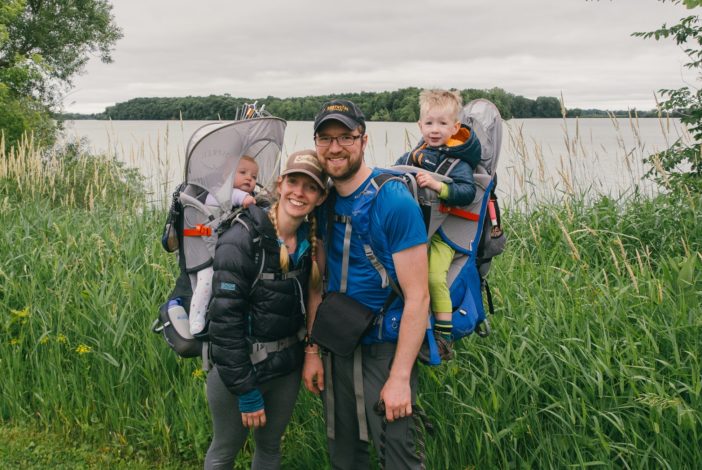 Maura continues, “When our kids are at their worst, when tantrums and tears are being thrown at me almost non-stop, we go outside. Both of our children thrive when in the outdoors. It is there that they can truly be themselves. Scream as loud as they want, climb, run, jump, observe, explore, do whatever it is they need to do to find their calm.”
The outdoors have been a big part of Bobby and Maura’s lives since meeting at a Boy Scout Camp in Wisconsin where they worked. From their early days together, every vacation they took included an outdoor element, whether that be day hiking in the French Alps or backpacking the 120-mile Kerry Way in Ireland.
When their son, Jack, was born, they knew they wanted to continue an adventurous lifestyle. They took Jack on his first hike at two weeks old; and when Rowan joined the family two years later, she beat out her brother by hiking on Mom and Dad when she was just 11 days old.
To further encourage the love for the outdoors in their children, Bobby and Maura embarked on a three-week journey through the remote Boundary Waters Canoe Area Wilderness (BWCA) in northern Minnesota. First, they biked in and then went paddling, followed by a week of camping and day hiking along the picturesque Gunflint Trail.
Maura continues, “When our kids are at their worst, when tantrums and tears are being thrown at me almost non-stop, we go outside. Both of our children thrive when in the outdoors. It is there that they can truly be themselves. Scream as loud as they want, climb, run, jump, observe, explore, do whatever it is they need to do to find their calm.”
The outdoors have been a big part of Bobby and Maura’s lives since meeting at a Boy Scout Camp in Wisconsin where they worked. From their early days together, every vacation they took included an outdoor element, whether that be day hiking in the French Alps or backpacking the 120-mile Kerry Way in Ireland.
When their son, Jack, was born, they knew they wanted to continue an adventurous lifestyle. They took Jack on his first hike at two weeks old; and when Rowan joined the family two years later, she beat out her brother by hiking on Mom and Dad when she was just 11 days old.
To further encourage the love for the outdoors in their children, Bobby and Maura embarked on a three-week journey through the remote Boundary Waters Canoe Area Wilderness (BWCA) in northern Minnesota. First, they biked in and then went paddling, followed by a week of camping and day hiking along the picturesque Gunflint Trail.
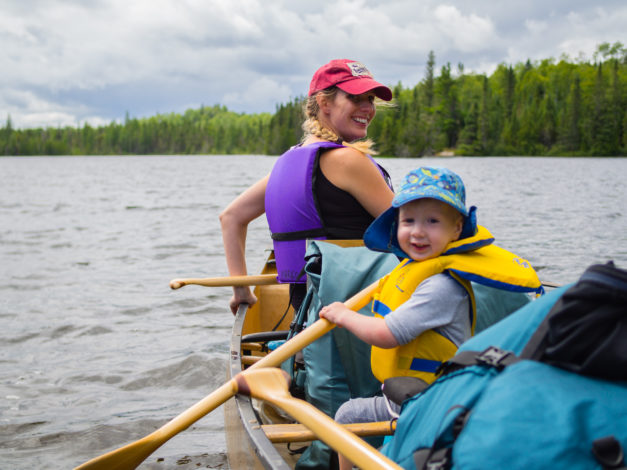 Maura remembers, “We were planning a six-day, 65-mile trek through some of the most wild terrain in the state. It was by far the loftiest goal we had ever set as a family. We made it approximately 2.5 miles in before turning around and heading back to the car. The trail was so rough and overgrown that there was literally nowhere to stop and change a diaper or heat a bottle for our baby. Our 3-year-old couldn’t walk on his own because the terrain was so difficult to navigate, so Bobby was stuck with a laughably large, 60+ pound pack that was slowly crushing his spine and his spirit. We car camped and day hiked instead but still had an amazing time doing so!”
Bobby and Maura realized the importance of flexibility with littles, and that it was okay if they didn’t complete that long hike they'd been planning for weeks. Any time spent outdoors together as a family was still a memorable adventure.
“Backpacking is an extremely difficult endeavor with young babies and toddlers along. Failure is a very natural part of the experience,” Maura says. “But it is our hope that our children will grow up thinking that hiking, camping, canoeing, and backpacking are normal family vacations.”
Photos courtesy of Bobby Marko.
Maura remembers, “We were planning a six-day, 65-mile trek through some of the most wild terrain in the state. It was by far the loftiest goal we had ever set as a family. We made it approximately 2.5 miles in before turning around and heading back to the car. The trail was so rough and overgrown that there was literally nowhere to stop and change a diaper or heat a bottle for our baby. Our 3-year-old couldn’t walk on his own because the terrain was so difficult to navigate, so Bobby was stuck with a laughably large, 60+ pound pack that was slowly crushing his spine and his spirit. We car camped and day hiked instead but still had an amazing time doing so!”
Bobby and Maura realized the importance of flexibility with littles, and that it was okay if they didn’t complete that long hike they'd been planning for weeks. Any time spent outdoors together as a family was still a memorable adventure.
“Backpacking is an extremely difficult endeavor with young babies and toddlers along. Failure is a very natural part of the experience,” Maura says. “But it is our hope that our children will grow up thinking that hiking, camping, canoeing, and backpacking are normal family vacations.”
Photos courtesy of Bobby Marko.
Maura continues, “When our kids are at their worst, when tantrums and tears are being thrown at me almost non-stop, we go outside. Both of our children thrive when in the outdoors. It is there that they can truly be themselves. Scream as loud as they want, climb, run, jump, observe, explore, do whatever it is they need to do to find their calm.”
The outdoors have been a big part of Bobby and Maura’s lives since meeting at a Boy Scout Camp in Wisconsin where they worked. From their early days together, every vacation they took included an outdoor element, whether that be day hiking in the French Alps or backpacking the 120-mile Kerry Way in Ireland.
When their son, Jack, was born, they knew they wanted to continue an adventurous lifestyle. They took Jack on his first hike at two weeks old; and when Rowan joined the family two years later, she beat out her brother by hiking on Mom and Dad when she was just 11 days old.
To further encourage the love for the outdoors in their children, Bobby and Maura embarked on a three-week journey through the remote Boundary Waters Canoe Area Wilderness (BWCA) in northern Minnesota. First, they biked in and then went paddling, followed by a week of camping and day hiking along the picturesque Gunflint Trail.
Maura remembers, “We were planning a six-day, 65-mile trek through some of the most wild terrain in the state. It was by far the loftiest goal we had ever set as a family. We made it approximately 2.5 miles in before turning around and heading back to the car. The trail was so rough and overgrown that there was literally nowhere to stop and change a diaper or heat a bottle for our baby. Our 3-year-old couldn’t walk on his own because the terrain was so difficult to navigate, so Bobby was stuck with a laughably large, 60+ pound pack that was slowly crushing his spine and his spirit. We car camped and day hiked instead but still had an amazing time doing so!”
Bobby and Maura realized the importance of flexibility with littles, and that it was okay if they didn’t complete that long hike they'd been planning for weeks. Any time spent outdoors together as a family was still a memorable adventure.
“Backpacking is an extremely difficult endeavor with young babies and toddlers along. Failure is a very natural part of the experience,” Maura says. “But it is our hope that our children will grow up thinking that hiking, camping, canoeing, and backpacking are normal family vacations.”
Photos courtesy of Bobby Marko.
Read more:
Often in the Hike it Baby community, the question is asked what “adventurous” means when you are a parent. And the answer is different for all of us. For some, it’s climbing a mountain with a frame carrier fully loaded or doing a huge backpacking overnighter with a new little. For others, it’s ditching the stroller for the first time and trying a dirt trail, or just letting the kids spend leisure time climbing rocks and jumping in puddles. There are so many levels of “adventure” when you have little kids, and we wanted to share stories of families who have redefined adventure on their terms. We hope it inspires you to get out and have adventures YOUR way too.Related Content



Comments