Hiking and Yoga: Nature-Inspired for the Whole Family

  1. Share
0 0
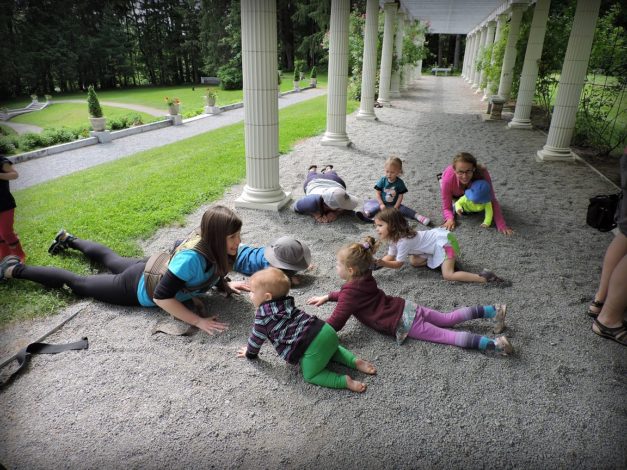
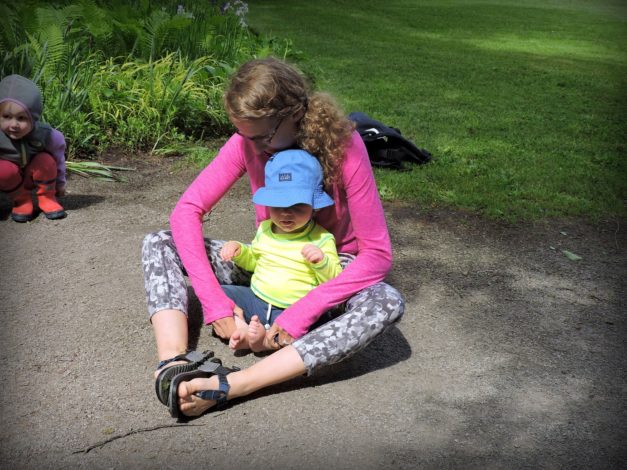
After researching how practicing yoga can benefit hikers, I was curious about how families can benefit from practicing yoga together in our favorite setting: nature! I enlisted the help of my mama friend and yoga-instructor, Jolene McGuire, to discuss some of the benefits of family yoga. Jolene is the woman responsible for pulling me out of a recent yoga hiatus after some bad experiences with a few instructors, and she helped me fall back in love with the practice. She is 200-hour RYT certified and practices in southern Georgia. Together, we compiled a list of tips and strategies for encouraging kids to participate in yoga, along with some fun nature-inspired poses you can try on your next hike or outdoor adventure.

Practicing yoga together benefits families

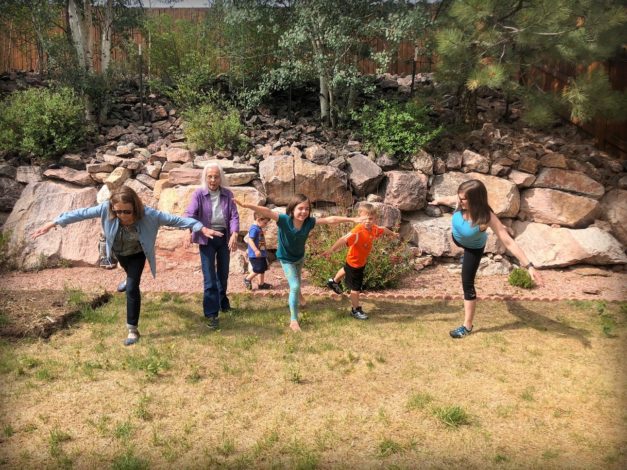
Practicing yoga is a healthy way for families to bond, spend quality time together, unplug from everyday distractions and stay active together. It can bring a sense of stillness, joy, awareness and compassion that may be overlooked as we sometimes monotonously move throughout our daily lives. It’s also a very fun and creative way to allow our children to see us in a different light and perspective! It allows us to be silly, calm, engaging and it can also allow for the kids to be able to show the family some cool yoga moves that we as adults may be limited to do! There are various poses you can incorporate into a practice that can also be done as a couple or even together as an entire family (such as tree pose), which can increase the bond that much more. Hiking and Yoga: Nature-Inspired for the Whole Family by Rebecca Hosley for Hike it Baby

Finding a connection between yoga and nature

One of the major components of yoga is developing self-awareness and exploring how we are linked to the environment around us and the earth beneath us. That is why many of the poses are focused on nature (tree pose, mountain pose, animal poses, etc.). When you practice yoga outside, it provides a greater union between your practice and nature, and intensifies the yoga experience. This is especially true if you use the elements in your practice (such as matching your breath to the breeze or letting the warmth of the sun help your muscles become more pliable). Or in the case of family nature yoga, using what you see around you to inspire your poses, even if they are not “true” yoga poses.

Encouraging kids to participate in yoga

  • Focus on fun over form. It’s more important that they are making fun family memories rather than how perfect their form is for the down-dog pose.
  • Grab a “stick” almost like a communication stick so the child can take a moment to be the leader. Have them pick a yoga pose from something they’ve learned prior, like a list of relatable animal/nature pictures or make up their own, and they can “teach” everyone how to do it. Each child can take a turn at each designated yoga break.
  • Have them use the wind as their guide to practice breathing techniques (“breathe in the breeze”).
  • If you are ready for a break in your hike, ask the kiddos what they see (tree, bird, flowers, etc.) and ask if they can pretend to be what they see. You can do the pose yourself first to show what you mean or let them come up with one on their own!
  • Use the letters of the alphabet to encourage a certain pose from yoga using kid-friendly names, such as alligator pose (any pose with chomping arm movements), butterfly, cat/cow, down dog, etc. Don't hesitate to make stuff up as long as they are learning and having fun!!!
Hiking and Yoga: Nature-Inspired for the Whole Family by Rebecca Hosley for Hike it Baby

Looking to Nature for Yoga Poses

Below are examples of some yoga poses inspired by nature and includes kid-friendly descriptions you can use. You can do these in any way you prefer, and they help break up the hike or refocus the kiddos.
  1. Mountain – Stand up tall with your feet planted on the ground and your palms facing forward. You are strong and steady like a mountain!
  2. Tree – Stand up tall and bring one foot to rest on your other leg, above or below the knee. With your leg rooted like a tree trunk, bring your arms up like tree branches. Grab hands with your friends to make a forest! Repeat on the other side.
  3. Bird (Warrior 3) – Starting in Mountain pose, extend your wings (arms) out to either side. Lean forward, lifting one leg straight behind you. "Fly” on both sides so your bird is balanced (bird noises are encouraged!).
  4. Rainbow – Stand up tall and reach your arms up, touching your hands together at the top. Then lean to one side to create half a rainbow. Repeat on the other side. You can also find a partner and create a whole rainbow together!
  5. Flower – Sitting up tall, bend your legs and place the bottoms of your feet together. Place your hands under your ankles and grab on to them. While sitting up tall, see if you can lift your feet off the ground and balance on your bottom. You are a blossoming flower!
  6. Butterfly – Sitting up tall on the ground, bend your legs and bring the bottoms of your feet together. Gently bounce your knees up and down as you flap your butterfly wings!
  7. Turtle – Sit on the ground with your knees bent and feet flat on the ground. Slide your feet closer to your body and let your knees fall open to the sides. Slide your hands underneath your legs so they look like turtle flippers under your legs.
  8. Snake – Lie on your stomach with your hands on the ground under your shoulders. Pushing through your hands, lift your head and shoulders up off the ground and give a great big hissssss.
  9. Downward Dog – Start on all fours with your hands shoulder-width apart. Spread your fingers and press your palms flat into the ground. Lift your tail into the sky, making an upside-down V shape. You can “walk” your dog by bending one leg at a time while straightening the opposite leg. (Barking and tail wagging is optional.)
  10. Frog – Start in a standing position and lower into a deep squat on your toes. Put your hands on the ground in front of you for balance. Once you are comfortable, jump into the air like a frog, being sure to “ribbit” as you hop.
  11. Lion – Start by kneeling on the ground, sitting on your heels with your hands in your lap. Clap your hands in your lap three times and then come up onto your knees. Open your claws, stick your tongue out, and make your eyes wide as you let out a great big ROAR!
Hiking and Yoga: Nature-Inspired for the Whole Family by Rebecca Hosley for Hike it Baby Butterfly Pose Does your family practice yoga together outside? Do you have other nature-inspired yoga poses you would add to this list? Let us know in the comments below! Photos courtesy of Rebecca Hosley.

Read more:


Comments

To view comments or leave a comment, login or sign up.

Related Content

0
Leave No Trace with Little Ones: Teaching Kids Outdoor Ethics
You may have heard about the Leave No Trace movement, but what does it mean to “Leave No Trace”? Is that even possible when you have kids in tow? The answer is yes, sort of. The mission of Leave No Trace is to educate and inspire everyone to protect the outdoors by teaching people to enjoy the outdoors responsibly. It isn’t about leaving zero trace; it’s about reducing our environmental impacts whenever possible. That may seem daunting when attempting to wrangle a toddler on a trail, but we are here to help! We have listed each principle below, along with some tips and tricks for following them when you have little ones in tow.   Photo by Jessica Human Principle 1: Plan Ahead and Prepare – Know Before You Go Getting lost on the trail or caught in a storm while hiking can be a stressful experience. Add a few little ones to the equation, and things can get downright harrowing. While these experiences aren’t always avoidable (like an unexpected rainstorm), planning ahead can help you avoid most of these stressful experiences. Here are some tips to involve your kiddos in this step: Have your kids check the weather forecast with you and help them decide what clothing they should wear. Look at a trail map with your kiddos (a paper map, an online map, or a phone app) and decide which route you want to take. If they are old enough, let them pick out their own snacks to bring along. Older kiddos can pack their own adventure pack to take along with things like a snack, water, and adventure tools (like a journal and a pocket microscope). Principle 2: Travel and Camp on Durable Surfaces – Stay on the Trail Keeping kiddos on the trail can be challenging. They are natural explorers and want to investigate every little thing they discover. However, exploring off trail can lead to trampled vegetation, increased erosion, and damaged animal habitats. A durable surface includes established trails and campsites along with areas with rock, sand, gravel, snow, and dry grass. If you need to go off-trail (like for potty breaks that just can’t wait), seek out these durable surfaces whenever possible, and walk lightly, avoiding as much vegetation as possible. Here are some tips for keeping kiddos on the trail and decreasing your impact on the trail. Take a potty break when you get to the trail to reduce the number of off-trail excursions. Play silly games with kiddos with the primary goal of staying on the trail. For example, you can pretend that the vegetation on either side of the trail is lava, and they have to stay as close to the trail's center as possible to avoid the heat. You can also play the “ninja” (sometimes referred to as “secret spy”) game, in which kids have to step as lightly and quietly as possible and disturb as little as possible to avoid “detection.” Have a conversation with your kids about what happens when many people go off-trail. Point out signs of erosion and destroyed vegetation along the trail. Photo by Jessica Human Principle 3: Dispose of Waste Properly – Pack it in, Pack it Out Kids are messy creatures. Aside from their affinity for mud puddles, there are also spilled snacks and the occasional diaper explosion. It’s a good thing to remember that anything that wasn’t found in nature (like the mud) should be packed out. This includes spilled snacks. It may seem harmless, but those snacks usually end up in the stomachs of wildlife. This can lead to illness (I doubt any animals have fishy crackers as part of their natural diet) and increased dependency on humans. Once animals depend more on humans, they lose their fear of humans, which can be dangerous for them and us. Here are some tips for disposing of waste properly with kiddos in tow. Always have a bag on hand to collect your trash (and any other trash you may find) along the way. This could be as simple as a plastic grocery bag or a specific reusable trash bag. Whenever you stop for a snack or meal break, have everyone use their “owl eyes” to find any trash left behind before heading back out. Principle 4: Leave What You Find This is another tricky principle to follow with little ones. Especially if you have a rock collector like I do! While taking natural objects, picking flowers, carving on trees, etc. may seem harmless, it can damage the ecosystem, especially when a lot of people are doing it. Rocks, sticks, flowers, and even pine cones serve as shelter and food sources for various organisms. If the plant you pick is invasive to the area, you could inadvertently spread the species as you transport it. That being said, you don’t want to stifle the curiosity of a budding geologist or botanist. Here are some tips and alternatives for keeping your nature collector happy while leaving nature in nature (or at least most of it): Use “do” language to help little ones understand how to interact with nature. Use statements like “let’s be nice with the flowers” or “touch softly”. Encourage your kiddos to use their senses to experience the object IN nature. For example, let them take a few minutes to feel, see, and even smell the object. You can talk about it and then have them replace the object where they found it. Take along some paper and crayons to they can do some leaf or bark rubbings. Have them draw a picture or take a photo of the object. When all else fails, allow them to choose one or two favorite nature finds to take home and replace the rest where they found them. Photo by Jessica Human Principle 5: Minimize Campfire Impacts  Improperly tended campfires are one of the leading unnatural causes of wildfires. If you are camping be sure you know the local regulations on fire and seek out established fire rings when possible. If you need to gather wood, use dead and downed wood that is no larger than the diameter of your wrist and can be broken easily by hand. When leaving, douse the fire with water until it’s cool to the touch. A better alternative would be to use a camp stove for heat and cooking, or a simple lantern for light. Here are a few tips for minimizing campfire impacts with kiddos: Keep flammable objects far away and out of reach from curious hands, and don’t allow kids to play with sticks near the fire. Have children help collect firewood. You can make it a game to see who can be the first to find 5 pieces of dry, downed firewood no larger than the diameter of their wrist. Photo by Deanna Curry   Principle 6: Respect Wildlife Observing animals in the wild is fascinating for both adults and kids alike. Whether you see a deer dash across the trail ahead of you or a woodpecker busily searching for food, there’s just something awe-inspiring about watching wildlife. To keep having these encounters safely, we need to teach our little ones how to respect wildlife. That means keeping a safe distance, never feeding wild animals, and storing food and odorous objects securely while camping. Here are some tips for teaching our kiddos to respect the animals they encounter on their outdoor adventures and to keep the wildlife wild. To help young ones understand what it means to keep a “safe distance”, have them stand with an arm raised to shoulder height with their thumb pointing up. Then have them look at the animal with one eye closed and try to cover it with their thumb. If they are a safe distance away, their thumb should completely block sight of the animal. Remind your kids that insects are wildlife too, and we need to be careful not to harm them. We can admire an intricate spider web or a long line of ants without destroying what we find. Bring along some adventure items such as binoculars and a magnifying glass so that kiddos can observe wildlife safely. Contrary to popular belief, bird feeders can follow the Leave No Trace Principles IF they follow the Audubon Society Guidelines. These include avoiding seed mixtures and cleaning the bird feeders at least every season. If you want to attract a variety of bird species, it is best to have different bird feeders at different heights with different types of seed/food in each of them. Principle 7: Be Considerate of Other Visitors Respecting other people you meet on the trail helps ensure that all can enjoy nature. Modeling and encouraging behaviors such as staying to the right on the trail to let others pass or taking breaks on durable surfaces away from the trail goes a long way to preserving the experience for other visitors. Other good practices include avoiding talking on cell phones or making excessively loud noises while on the trail (when possible). Here are a few tips we use to encourage being kind to others on the trail: If your kids are like mine, they like to pretend to be wild animals when they are on the trail (particularly howling wolves). This can get extremely noisy, so I started challenging them to be quieter animals, such as a bunny or squirrel, or pretend that they are sneaking around like a cheetah. Practice “moving to the right” with your kids while on the trail or on a neighborhood walk. When you practice ahead of time, it can avoid confusion when you ask them to move to the right to let other people or cyclists pass on the trail.   It is important to note that these principles are GUIDELINES, not strict rules. As parents, we know that it is extremely unlikely that we will be perfect at following these principles all the time, and that’s okay! The point is not to strive for perfection all the time. It’s to decrease our impact on the environment whenever and wherever possible and to teach our children to do the same. The tips above can help your family make fewer environmental impacts. You can also check out these other fun resources from Leave No Trace to help your kiddos understand the impact their actions can make on the environment:   Fun Resources from our friends at : Learn the Leave No Trace Hand Motions to help kiddos remember the 7 principles. Check out the Leave No Trace and Bigfoot Activity Booklet for some fun, education activities for older kids. This Trash Timeline Game can be played with kids (and adults) of all ages. Here is a free Online Awareness Course for parents and caregivers who want to learn more about Leave No Trace.   How do you practice the Leave No Trace Principles with your family? Let us know in the comments below!   Created in partnership with  About OutGrown OutGrown is a national nonprofit working to ensure that every family, especially those with babies and young children, can experience the benefits of time outside. Since our grassroots beginning in 2013, we have supported more than 300,000 families with the help of thousands of volunteers across the country. We believe nature belongs to all of us from the very beginning. That means creating opportunities, removing barriers, and supporting families in finding their way outdoors, whether that starts with a stroller walk, a community outing, or a quiet moment under the sky. You can learn more and explore our programs at WeAreOutGrown.org. Editor’s Note Thank you for reading. At OutGrown, we believe content should offer more than information. It should create a connection, support real-life caregiving, and reflect how families grow together through nature. Everything we share is made with care by our team and volunteer community. If this piece inspired you or helped you feel more confident in your outdoor journey, we invite you to support our work by donating today. Your contributions help us keep resources free and accessible to all families. Please remember that the experiences and tips shared in this article are for general information only. They are not a substitute for professional medical, mental health, or safety advice. Always consult with a qualified provider if you have specific concerns or questions. We are glad you are here. We are growing something meaningful together.
0
Easy, Fun Ways to Have a Playful Picnic
Created in partnership with   One of the things I love most about summer is the picnics. There’s something special about relaxing at a park on a warm afternoon after exploring the sights and trails nearby. It’s easily one of my favorite family outings! Over the years I’ve learned that adding fun and easy touches to a picnic can add excitement to your adventure. It also tends to have the side benefit of motivating my kiddos to keep moving down the trail to make it to the post-hike goodies.  As you work towards your 10 Park Challenge this month, consider these easy, fun ideas to increase the playfulness of your family picnic. Charcuterie Board, Picnic Style If your family is like mine and prefers to graze on a variety of goodies during outings, the kid-friendly charcuterie box is a great option! You can re-use those old veggie or fruit trays from your last barbeque or even use a clean tackle box and fill it with all your family’s favorites. For us, we prefer fruits (like blueberries and grapes), veggies (especially peppers and carrots), lunch meat, cheese, crackers, nuts, etc. My kids love to help choose which foods fit and fill the tray before we head to the park. Freeze it If you’re heading out for a fun adventure on a hot day, take along some frozen treats to enjoy such as frozen grapes, frozen yogurt tubes, frozen fruit pouches, etc. Even if they thaw out before you dig in, they are sure to provide a cold, refreshing treat on a toasty summer day. Animal Themed Foods One of my favorite snacks as a kid was “ants on a log”. It was simply peanut butter on a celery stick with raisins on top. I thought it was the coolest thing, and my parents were sneaking in veggies without me fighting it. I now make this snack for my own boys, and my older son will pre-make a batch and stick them in a container for our trips to the trail or the park. We top them with raisins, blueberries, and even chocolate chips for a sweet treat. Another fun animal-themed snack is butterfly baggies. Simply fill a snack bag with one or two snacks, cinch the middle with a pipe cleaner, and add a googly-eyed clothespin to finish them off. Simple and fun for kiddos to enjoy and play with during a picnic. Cookie Cutters – Not Just for Cookies You know those cookie cutters you tend to store for 11 months out of the year and pull out just for holidays? You now have an excuse to dig them out of storage and use them to make fun sandwich shapes. Our favorites are the star and evergreen tree on peanut butter and jelly sandwiches. We also use the mini-cookie cutters on fruits and veggies such as cucumber slices and watermelon. They make for a fun surprise and encourage kiddos to eat more fruits and veggies (who can resist a heart-shaped slice of cucumber?). Food Art Encourage your kids to “play with their food” to create fun pictures. Whether it’s cut-up fruits and vegetables, crackers, cheese sticks, etc., you may be surprised at what their creative minds come up with! Simply use a napkin or plate as a canvas, provide some examples if needed, and watch them smile and laugh. The best part? Clean-up is easy and nutritious. Skewer it I remember one barbeque we attended where they provided some fun fruit and veggie skewers as an appetizer. My picky older son thought they were the coolest thing and ended up eating more fruits and veggies in one sitting than he ever had before (some of which he refused to eat when offered at home). I asked him what he loved about them, and he replied “Mom, they’re on a stick!” as if it was the most obvious answer. Ever since then, I will often bring fruit and veggie skewers on outings. I usually cut the sticks in half, pile on a pattern of fruits and veggies such as strawberries, peppers, cucumbers, and grapes, and put them in a bag to enjoy at the park. Chase the Rainbow My family loves “Rainbow Picnics”. We head to the fridge (or grocery store) and pick out foods from every color of the rainbow to take along with us. Once we settle down with our picnic, we create a rainbow with our food before chowing down on our colorful goodies. Here are some options we enjoy for each color: Red – Strawberries, red peppers, grape tomatoes, watermelon, salami Orange – Carrots, orange slices, orange peppers, cheese Yellow – Yellow peppers, pineapple, banana Green – Green grapes, Kiwi, Sugar snap peas, cucumber Blue – Blueberries Purple – Purple grapes, cherries, purple peppers Don’t Forget the Drinks One of my favorite things as a kid was adding fresh fruit to homemade lemonade. We would make the lemonade the night before and bring it to the park along with an assortment of fresh fruit (such as strawberries, limes, and watermelon). You could also make some decaf sun tea or even just a special bottled drink from the grocery store. Looking for an adult beverage without the side effects? I love to bring along some non-alcoholic brews to enjoy during a picnic, especially following a hike. My favorites are the Upside Dawn and Free Wave brews from Athletic Brewing Company. They’re refreshing without compromising my mental state. As a bonus, this company donates 2% of sales to protecting and restoring local trails like the ones we frequently visit. Pick Your Own Fruit One of my favorite things about our time in Washington State was blackberry season. We would go for a hike and snack on the blackberries growing all along the sides of the trails. Now that we are in Virginia, we have enjoyed mulberries and the occasional wild strawberry. Just be sure you know EXACTLY what the fruit is before noshing on them to prevent consuming inedible varieties. Common fruit varieties that ripen in the summer include blueberries, blackberries, and raspberries. Have the Kiddos Choose My oldest tends to be a picky eater. When we pack a picnic, I let him choose which fruit, veggie, and sandwich he brings, and we pick a special “picnic treat” at the grocery store. For older kiddos, you can have them make and/or pack the picnic cuisine themselves (with some guidelines if needed). This can add to the excitement since they get to surprise you with what they chose for the family.   We want to see what goodies you bring along on your next picnic! That’s why Hike it Baby has partnered with Athletic Brewing for a #showusyoursnacks social media challenge this month. When you are out visiting parks and enjoying your outdoor time this month, be sure to snap a photo or reel of how you and your family likes to enjoy snacks on the go! Be sure to tag @hikeitbaby @athleticbrewing #10parkchallenge #showusyoursnacks and 3 friends you think will participate in the challenge, and you will be entered to win a stocked cooler backpack from Athletic Brewing Company! (Be sure to make your settings public so we can see your posts and reels!). What playful ideas will you come up with?  ABOUT OUTGROWN OutGrown is a 501(c)(3) nonprofit building a world where families with babies and young children can grow up connected to nature and each other. We focus on the earliest years of life, providing families with the support, community, and resources they need to feel welcome, included, and confident outdoors. Through volunteer-led communities, nature-based programs, and family-centered tools, we help remove barriers and expand access to outdoor connection. Since our grassroots start in 2013, OutGrown has reached more than 300,000 families nationwide, supported by a vibrant network of over 300 volunteer leaders. Learn more at WeAreOutGrown.org EDITOR’S NOTE Thanks for spending time with this piece. At OutGrown, we create content rooted in real life, built to support families, reflect lived experiences, and celebrate the small, meaningful ways we connect with nature. Every article, guide, and reflection is part of our mission to make the outdoors feel possible, welcoming, and worth showing up for. If this resource helped you feel more confident, seen, or inspired, we invite you to support our work. We are a small team building something lasting. Your contribution helps us reach more families and keep this work going strong. Donate or learn more at WeAreOutGrown.org