
Backpacking 102: Taking the Kids
- Blog Backpacking 102: Taking the Kids

Backpacking is often the next adventure after successfully taking on longer hikes and car camping. Similarly, backpacking with kids is something parents are excited about and they look forward to making more memories. But going solo (not necessarily by yourself, but without tiny munchkins) and gaining some backpacking knowledge and experience under your belt is a great way to test the waters of backpacking life before you thrust your family into it head first. Maybe you’ve gone on a few trips yourself or maybe you’re new to the experience in general, either way, you don’t have to keep the kids at home the next time you venture out into the big wide world with a pack on your back. Walking into the woods with your kids in tow doesn’t have to be a daunting task. I believe that if I develop a love for this lifestyle in them early on, it will be something they’ll have with them forever.
So, how do you prepare to go backpacking with kids? My family went on our first backpacking trip, and from that experience, I learned that you can prepare as best as possible, but then roll with the punches. Below are a few tips and tricks to help you prepare for your next backpacking adventure with your kids. 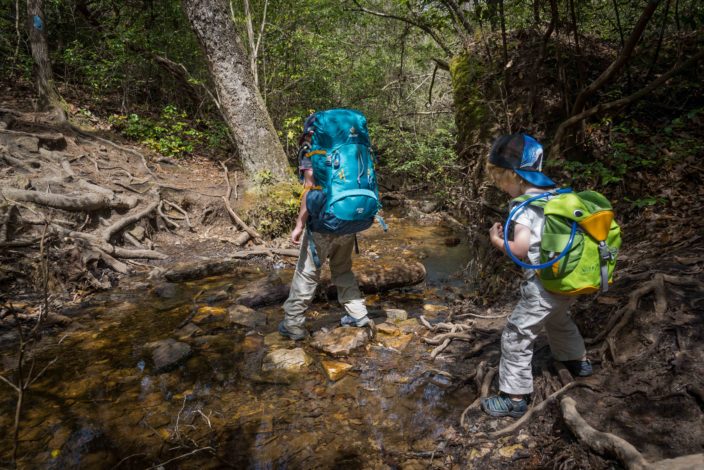
ARE THE KIDS READY?
Some families have been backpacking together since infancy. As the kids start to walk, it's just a natural progression and they adapt as needed. A lot of families – mine included – may have hiked and camped with infants but just aren’t ready to make a backpacking trip a part of their adventures until the kids are a little older. You know your children best, but here are a few steps you can take to make sure they are ready.
1. Can they hike over four miles? Our daughter is 7 years old and has already hiked over six miles in a day a few different times in her life. Because of that, I didn't plan a 7-mile day on the trail while we are backpacking, but as we were planning a multi-day route, I wanted to think about how many miles she could conceivably do in an emergency. She is too old to carry at this time, whereas our 4-year-old has not hiked that many miles in a day on his own two feet, but we can still carry him easily. In an emergency, we can easily drop our packs and carry him out. We can’t do this as easily with our daughter, so I needed to know she could handle a bigger hike if needed. If they aren't up to longer mileage, you can also look for a shorter backpacking route. Even a half mile hike in will still feel like a backcountry adventure!
2. Can they carry their own pack? My daughter has been fascinated with the idea of backpacking ever since we introduced it to her. However, during our day hikes, she'd ask me to carry her backpack at different times throughout the hike. I'd explain we couldn’t go backpacking until she could carry her pack for a longer distance. Because she really wanted to go, she very quickly decided that she'd be the only one to carry her backpack. We’ve recently started this with our son as well, and he too now loves to carry his own pack. 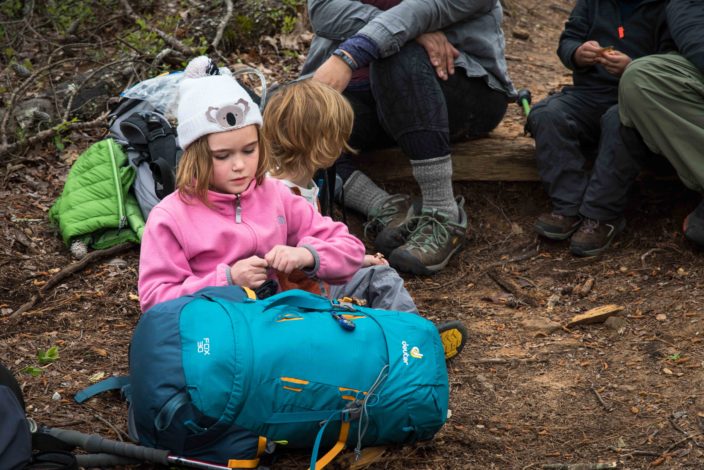
3. Are they comfortable with backcountry (wilderness) camping? Many national forests throughout the U.S. have primitive campsites scattered throughout their territory. Often they can be reached by a dirt forest road passable by cars, allowing you to “car camp” away from all amenities. Wilderness camping in national forests is a great way to test out the idea of backpacking with the security of having a car. The first time we did this with our children, we had a great time (they did too!). But we learned that our daughter, who was already potty-trained at the time, struggled without a proper toilet. Thankfully we were able to drive into the nearest town so she could use the restroom and then return to our happy camp. After a few more camping trips like that, she got comfortable doing her business in the woods; but I’m glad we were able to work that out before hiking miles away from a quick ride back to town. Related: 3 Things to Know About Pooping on the Trail
4. Do they want to go backpacking? This may seem like a silly question to ask, but trust me, no one is going to have any fun unless they are excited about the trip in the beginning. With little kids, it's not a bout of stubbornness that keeps them from wanting to try a new adventure ... they may have fears and insecurities that make them feel uncomfortable with the idea. Hopefully, there won’t be any fears to combat, especially if you’ve introduced them to wild places early on in their life. But if there are fears or objections, be sure to address them before asking them to do something this big. Just like we want to know what we are getting ourselves into as adults, kids are also the same. They may have questions about wild animals, how to navigate in the dark or may worry about feeling so far from home. The more you can do to prepare them for the experience and get them excited about going, the better off it will go for them. Include them in the trip planning, build excitement for it during your day hikes and address any concerns they may have so they can say, “Yes! I want to go backpacking!” 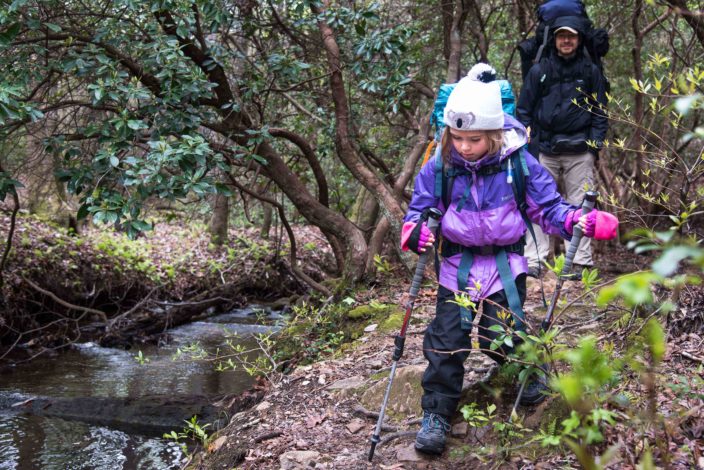
PLANNING YOUR ROUTE
There are so many factors that go into choosing the best route for your family's big trip into the woods. Consider the following questions and decide which answers you are most comfortable with and plan accordingly.
- How far can your child reasonably walk in a day? Factor in stopping for breaks, snacks, looking at bugs, climbing rocks and generally “not walking.”
- How many hours of daylight do you have each day? You want plenty of time to set up your tent in the afternoon before it gets dark. And if you are planning a multi-site journey, know that it will take considerably longer to get packed up and going again in the morning than it did during your kid-free days.
- How much time do you want at camp as opposed to being on the trail? Your backpacking trip doesn’t have to be about covering lots of mileage (and it definitely shouldn’t be when you are just starting out). The time in camp after a mile hike in can be just as rewarding as after five miles, and you might even enjoy it more.
- How far are you comfortable being away from your car at any given time?
- How far are you comfortable being away from the nearest ranger station? Town? Hospital?
- How much elevation change can your family handle and at what distance?
- Do you like seeing other people on the trail or prefer something more remote?
- What is the access to water like?
- Are their designated campsites along the trail or do you find your own?
- Is there access to firewood and are fires allowed?
- What kind of wildlife might you encounter?
After you figure out the answers to these questions, you should be able to find a trail that matches all the right parameters for your family. For our family’s first trip, we chose to backpack within a state park along a circular loop. There is a small town only 10 minutes by car from where we were, and the total mileage was 6.7 miles over three days and two nights and included two separate sites. There was an option to cut the loop short and keep it at 5 miles if we found ourselves too taxed on the last day. We filtered water from creeks near the trail and were required to camp in designated sites, which obtained a permit for after arriving to the park. And since we can have fires in the park, we planned on enjoying S'mores! 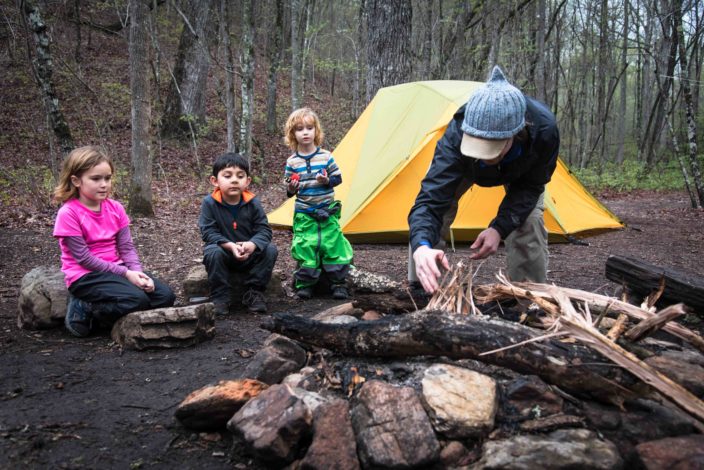
BACKPACKS AND EVERYTHING IN THEM
We are a family of four, but the reality is that we really only have two and a quarter backpacks to pack all of our gear and supplies. For the trip, my husband carried an 80-liter pack, I had my 60-liter pack, my daughter had a 30-liter pack and my son carried his preschool-sized backpack. Though my daughter now has a “real backpacking pack,” it doesn’t mean she can carry anywhere near the amount of weight that could potentially fit inside. We knew that whatever we took, we needed to make sure my husband and I could handle it on our own without relying on the kids to carry any of their own gear.
That said, we filled their backpacks with what was appropriate for them to carry, while knowing we may need to shove it back in our packs somehow. The recommended weight for a child’s backpack over long periods of time is between 10%-20% of their body weight. So if your child is 45 lbs, at a conservative measure, they should carry no more than 4.5 lbs in their backpack. Like any athlete, conditioning, strength and endurance all play a role, so if your child is conditioned to hiking and carrying a pack, you can creep beyond the 10% and up toward 20%, as long as it is for short periods of time. My daughter carried own sleeping bag, a water bladder and a few snacks for the trail. Our son carried his own water, a couple snacks and probably some dinosaurs. They each had a small headlamp in their packs along with an emergency whistle; everything else went in the adult packs. 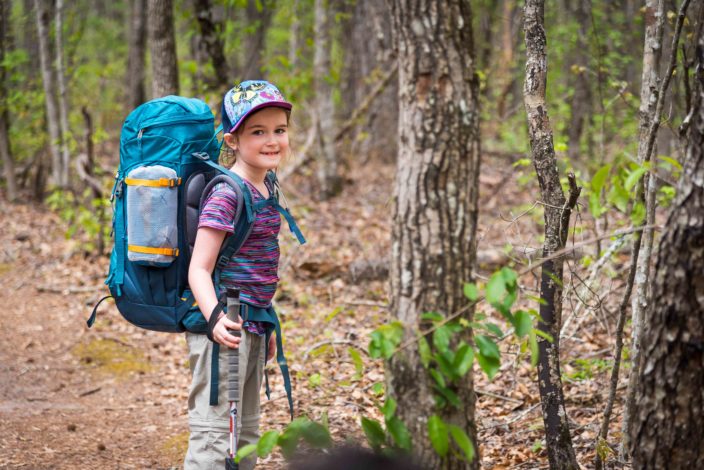
"DO I REALLY NEED EXTRA STUFF?"
When it comes to backpacking with the kids, don’t revert to your days as a new parent when you left the house with an overstuffed diaper bag, a backpack, two strollers just in case and the entire medicine cabinet. Whatever you bring has to fit on your back. Below is a list of what you might find useful for backpacking with kids beyond the basic adult staples:
- Hand sanitizer – You'll need it for that time your kids discover animal scat on the trail and, of course, have to pick it up. Actually this is good for adults too.
- Baby wipes – They're a must for diapers and not as necessary for toilet-trained kids; however, they are also useful for quick cleanups.
- Wet-bag – Remember that if you "pack it in, pack it out," and it's great for diapers or even big-kid messes.
- Lightweight toy or stuffie – If your child needs a friend to fall asleep with, maybe introduce a special backpacking friend that is a lot smaller and lighter than their current favorite a little bit before the trip.
- Two tents instead of one – Determine which tent works for your family. We plan on using one small, lightweight 4-man tent, but some families of four or more prefer to bring two backpacking tents if there are two adults; they'll then place one adult with a kid(s) in each tent. Also consider double sleeping bag systems like these for efficiency.
IF IT SMELLS, IT’S FOOD
For those of us who hike and play in bear country, the idea of keeping your food safe and away from hungry critters isn’t new. But, you may be surprised to discover that many cosmetic products (including baby wipes, diaper rash cream and deodorant) act just like food when it comes to attracting wildlife. Store your food and toiletries together so that it is easy to keep them separate from your sleeping area. You should never store food or toiletries in your tent; I like to follow this rule even when not in bear country.
Rodents and small mammals can be just as destructive to your food stash as a bear, and either scenario can result in a shorter than expected trip. Raccoons, marmots and squirrels are all notorious for stealing food when they have the chance and in areas where humans frequent often. They are very smart and usually get what they want if you aren’t careful with how you’ve stored your food. Personally, I prefer using a bear canister to store all my scented items as opposed to “bear bagging,” where you hang your food far out on a tree, as some parks no longer allow the practice. Whatever you decide to do, keep everything that smells out of your tent and away from wildlife. Related: Bear Safety for Families 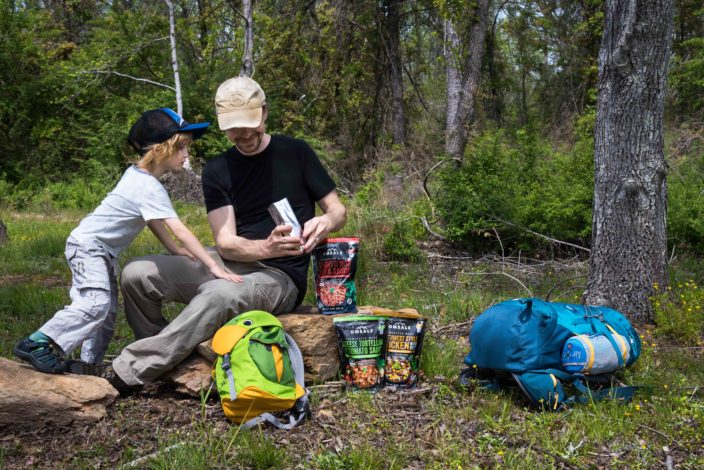
POOP AND OTHER NECESSARY CONVERSATIONS
I mentioned earlier the first time we camped in the wilderness, we discovered our daughter had difficulty going to the bathroom without a toilet. Number 1 wasn’t a problem, but as happens with a lot of kids when they find themselves in uncomfortable situations, she was not able to go number 2 and held it for some time before a half-hour trip into town to find a toilet. If your children are potty-trained, practice going number 2 outside and observe how to leave no trace when using the restroom outdoors. That might be strange, but the last thing you want is a bout of constipation for your child when you are out in the backcountry. You may have to cut your trip short when it could have been avoided with a little preparation and practice. And if your child is still in diapers, remember that you need to pack everything out. Anything you bring into the wilderness with you needs to come back into civilization with you and be disposed of properly. Whether it’s a Ziplock bag or a special odor-containing wet-bag, make sure you have a plan and a system for dirty diapers. You may need to consider how many diapers per day you’ll be going through and how much trash you will have to pack out with you as you consider the length of your trip.
TRAIL SIDE MOTIVATION
Remember all those day hikes you took with your toddler? The trail of goldfish you left them to get them to walk in the right direction? The songs you sang? The bubbles you blew? Just because your kids finally seem ready to go backpacking doesn’t mean you leave those tactics behind. Just like it does for adults, the trail can start to feel long and unending at times to kids. The constant “Are we there yet?” is something every caregiver hopes to avoid. I’ve found that all the same tactics you used on your new walker to get them to go half a mile can be used on your “big kid” to get to the campsite destination. As you hike together, think about singing your favorite songs or tell stories. My daughter loves to talk through different scenarios and could go on for hours discussing all the things you might need to survive in the desert. It might get a little tedious – discussing survival methods for barren lands – but it is a whole lot better than listening to complaining. And snacks. Snacks work miracles at any age. Friends help too. We teamed up with another family for our first backpacking trip, knowing it would make getting down the trail a little easier for our kids. Giving them special treats they might get when they reach the campsite can help too. (I’m not above bribing.) You could even pack a few small new toys that they get when they reach the campsite each night as a fun surprise. 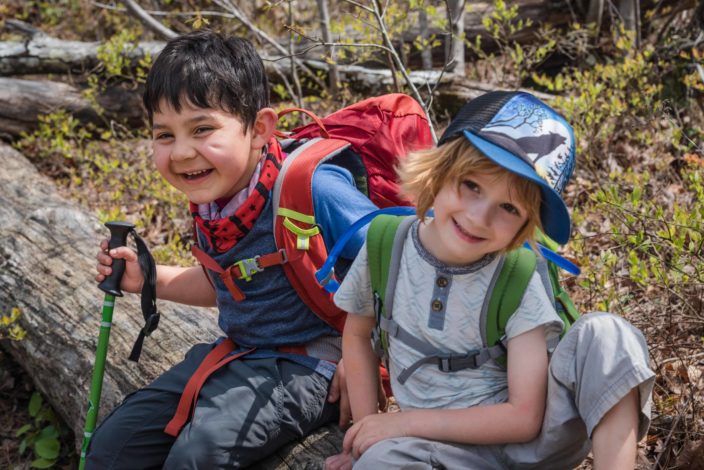
ATTITUDE IS EVERYTHING
Like anything when it comes to raising a small child, your children are always watching, always listening to what you say and do. Your attitude toward the trail and the trip will trickle down to them. Remember to stay positive. Maybe the hike is taking longer than you thought. Maybe you think you are stopping too much. All those times you stop on the trail can be wonderful times of teaching and exploration. If you stay excited about what they are discovering you can use that momentum to encourage them down the trail towards the next point of discovery. If you never let them stop and explore and only have the destination in mind, everyone will start to get cranky and things can go downhill fast.
Factor in times for exploration along your route, and remember that children can sense frustration and react accordingly. Likewise, when you yourself start to get tired, remember to stay upbeat and model a good attitude. Talk about the things you are looking forward to when you get to camp. Maybe it’s a warm fire or slipping out of your boots and into your camp shoes. Maybe it’s the delicious dinner you have planned or the S'mores you’ll have for dessert. A positive attitude is contagious. If your children do start to complain that their feet are hurting or their back hurts, do stop and assess the situation. It may be that they have a blister that needs tending to or their pack isn’t adjusted right or is too heavy. The last thing you want to do is push them to continue in an uncomfortable situation. What you see as complaining may be actual pain, so a quick stop to check never hurts. 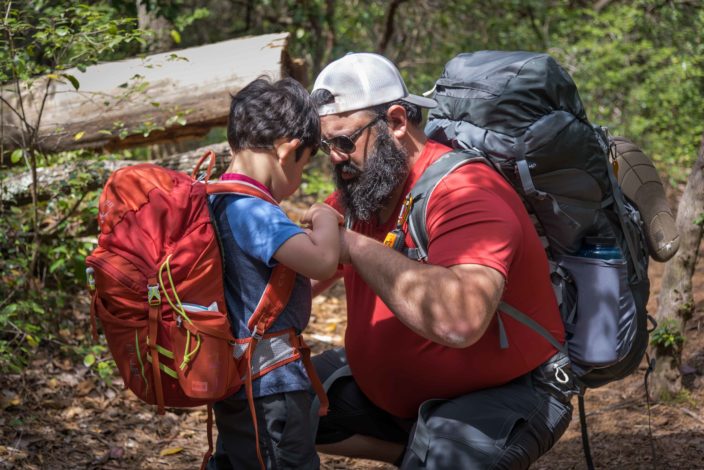
MARSHMALLOWS ARE LIGHT, BRING AS MANY AS YOU CAN
I’m serious. For the most part, we try to be healthy with our food choices; however, we don't refuse them this most awesome treat while camping and hiking. There is absolutely no reason not to fill your backpack with as many marshmallows as you can. That bear canister? All those little nooks and crannies not full of food? Marshmallows go there. Remember, backpacking is supposed to be fun. It’s OK to be silly, to enjoy special treats, to make amazing memories – like that time you ate way too many marshmallows. If it's not marshmallows, maybe it's glowstick bracelets or S'more cakes (OK, those also involve marshmallows). The point is, it's OK for the rules to be a little different in the backcountry if it means we all get down the trail feeling good and excited for what’s coming next.
IN THE END, IT'S ALL ABOUT THE JOURNEY
As you get ready to take your family on their first backpacking adventure, remember that no matter what happens, the memories you make will be ones you keep forever. Teaching your children the important life skills of endurance, patience, adaptation and flexibility can be so rewarding. It might not all go right, but something is bound to be amazing. Plan and prepare as much as you can and when the time comes, remember to go with the flow and enjoy the beauty around you – including the beauty of your little family enjoying their newfound abilities. You might even be surprised by how much they can do. 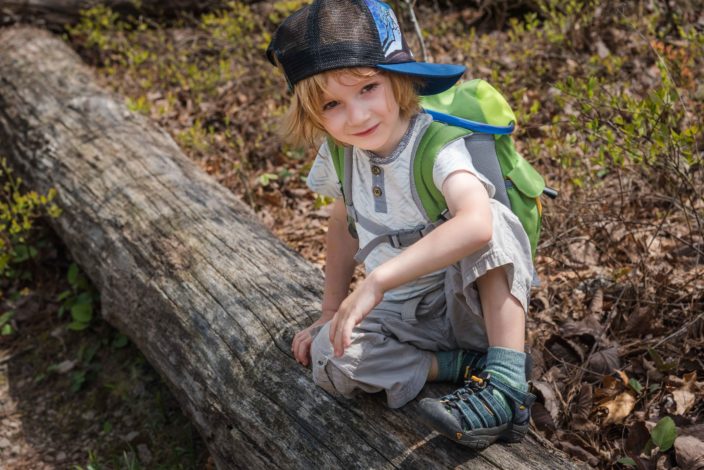 Photos by Melissa Hollingsworth.
Read More:
- Backpacking 101: The Next Adventure
- The New Era of the Family Camping Tents
- 3 Things to Know About Pooping on the Trail
If you've taken your child backpacking, we'd love to hear about your experience in the comments below. 
ABOUT OUTGROWN
OutGrown is a 501(c)(3) nonprofit that works to create a world where everyone can enjoy the physical and mental benefits of spending time outside. We are focused on creating opportunities and removing barriers to access so families with babies and young children can take their first steps outside. We believe all families have the right to connect with nature, benefit from spending time outdoors and be inspired to a lifelong love of nature. Since its grassroots inception in 2013, OutGrown is a growing community of 280,000 families and over 300 volunteer Branch Ambassadors. More information on all of our programs can be found at WeAreOutGrown.org
EDITORS NOTE:
We hope you enjoyed reading this article from OutGrown. We’re working hard to provide our community with content and resources that inform, inspire, and entertain you.
But content is not free. It’s built on the hard work and dedication of writers, editors, and volunteers. We make an investment in developing premium content to make it easier for families with young children to connect with nature and each other. We do not ask this lightly, but if you can, please make a contribution and help us extend our reach.
Related Content



Comments