
Snuggle Up - Comparison of Double Sleeping Bags
- Blog Snuggle Up - Comparison of Double Sleeping Bags

When you start to think about backpacking, you start to research gear. A lot of gear. To me, there are three things that can make or break a trip: your pack, your tent and your sleep system. If you don't get a good night sleep, no amount of coffee or tea is going to help in the morning. Splurging on a good sleep system that will last for years can make a big difference on whether you go once or continue to head out on trail.
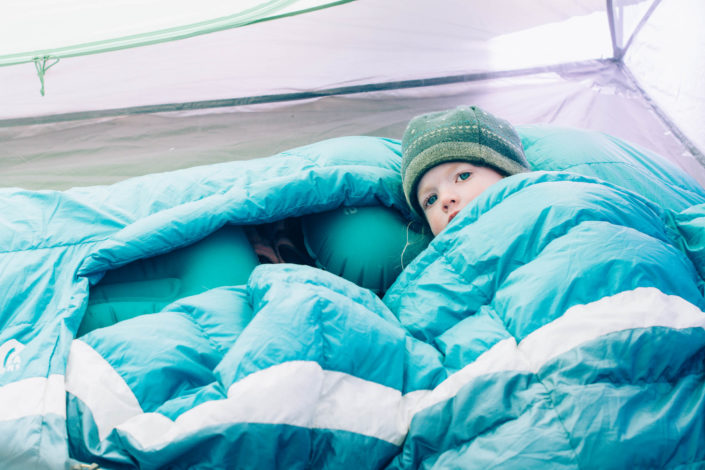 With a blanket-like top and fast ventilation for warm feet, the Sierra Design Backcountry Bed Duo 35/700 Dridown ($399.95) is perfect for the some-like-hot, some-like-it-cold couples. My husband typically runs hot and I run colder, so this was a great way for us to share a bag and make both of us happy. This bag is a bit heavier than two solo bags as it weighs in at 3 lbs., 12 oz. Even though it is slightly heavier, the bonus in features definitely make up for the weight.
I was excited when this bag came in to see it accommodated a 25-inch sleeping pad. It has two sleeping channels that are set for 20-inch pads, but it was easy to figure out how it can be opened up for the 25-inch pads. There are a number of buttons on the side so you can easily go between the two sizes as needed. My daughter, Sky, will start in her own bag but typically sneaks into my bag halfway through the night. Even with the standard 20-inch pads, we slept comfortably between the three of us. One thing to watch is that there is a middle channel between the two pads that is stuffed with filling so it remains warm. However, there is a slight dip between pads so if you shuffle quite a bit at night, you may find yourself sinking a bit.
Foot ventilation, integrated comforter, closure to seal out drafts and insulated hand pockets are the main benefits that give this a cozy feel. The insulated hand pockets on each corner, paired with the extra long comforter, make this feel like your bedding at home. This is an excellent hybrid between a sleeping bag and a quilt-style.
[gallery size="hikeitbaby-featured" columns="2" ids="922746,922747"]
Photos by Jessica Featherstone.
With a blanket-like top and fast ventilation for warm feet, the Sierra Design Backcountry Bed Duo 35/700 Dridown ($399.95) is perfect for the some-like-hot, some-like-it-cold couples. My husband typically runs hot and I run colder, so this was a great way for us to share a bag and make both of us happy. This bag is a bit heavier than two solo bags as it weighs in at 3 lbs., 12 oz. Even though it is slightly heavier, the bonus in features definitely make up for the weight.
I was excited when this bag came in to see it accommodated a 25-inch sleeping pad. It has two sleeping channels that are set for 20-inch pads, but it was easy to figure out how it can be opened up for the 25-inch pads. There are a number of buttons on the side so you can easily go between the two sizes as needed. My daughter, Sky, will start in her own bag but typically sneaks into my bag halfway through the night. Even with the standard 20-inch pads, we slept comfortably between the three of us. One thing to watch is that there is a middle channel between the two pads that is stuffed with filling so it remains warm. However, there is a slight dip between pads so if you shuffle quite a bit at night, you may find yourself sinking a bit.
Foot ventilation, integrated comforter, closure to seal out drafts and insulated hand pockets are the main benefits that give this a cozy feel. The insulated hand pockets on each corner, paired with the extra long comforter, make this feel like your bedding at home. This is an excellent hybrid between a sleeping bag and a quilt-style.
[gallery size="hikeitbaby-featured" columns="2" ids="922746,922747"]
Photos by Jessica Featherstone.
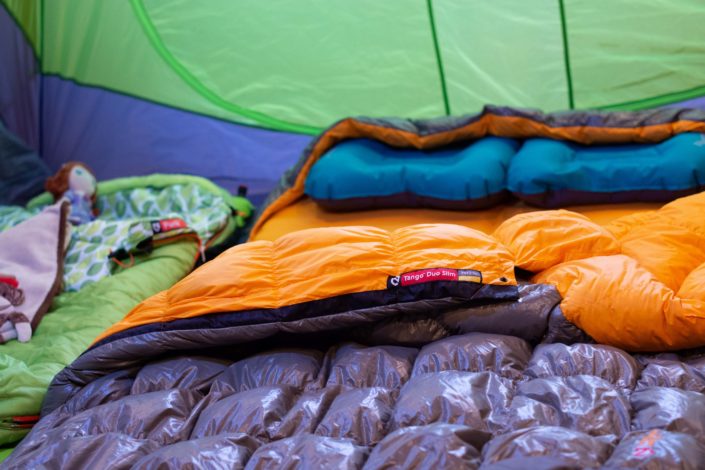 The simple, effective design of the Nemo Tango Ultralight Down Comforter ($329.95) compacts down small and keeps you cozy on trail. The backless design of the Nemo comforter makes it compress as small as a single-person sleeping bag, leaving plenty of room in the bottom of my Deuter 60L pack for its slipcover, two sleeping pads, pillows and Sky's blanket. (Never forget the blanket!) The slipcover keeps the two pads snug tight against each other.
The design is simple with only the foot box and top section that slides under the pads. The sides are open and bottom attaches to the top with a snap on each side. This allows each person to determine how much ventilation they desire whether it's a full open side or just enough to stick out a foot. The snap is strong and not even a preschooler rough housing can break it open.
Since this is backless and lightweight, I've also used it as a solo quilt. It was quite effective as a quilt and it's about the same size as other single sleeping bags. This is lightweight for a two-person bag at 2 lbs., 11 oz and compares to many single sleeping bags out there. This bag is an excellent choice for those who want to head out with the family and also use the same bag solo.
[gallery columns="2" size="hikeitbaby-featured" ids="922749,922748"]
Photos by Jessica Featherstone.
The simple, effective design of the Nemo Tango Ultralight Down Comforter ($329.95) compacts down small and keeps you cozy on trail. The backless design of the Nemo comforter makes it compress as small as a single-person sleeping bag, leaving plenty of room in the bottom of my Deuter 60L pack for its slipcover, two sleeping pads, pillows and Sky's blanket. (Never forget the blanket!) The slipcover keeps the two pads snug tight against each other.
The design is simple with only the foot box and top section that slides under the pads. The sides are open and bottom attaches to the top with a snap on each side. This allows each person to determine how much ventilation they desire whether it's a full open side or just enough to stick out a foot. The snap is strong and not even a preschooler rough housing can break it open.
Since this is backless and lightweight, I've also used it as a solo quilt. It was quite effective as a quilt and it's about the same size as other single sleeping bags. This is lightweight for a two-person bag at 2 lbs., 11 oz and compares to many single sleeping bags out there. This bag is an excellent choice for those who want to head out with the family and also use the same bag solo.
[gallery columns="2" size="hikeitbaby-featured" ids="922749,922748"]
Photos by Jessica Featherstone.
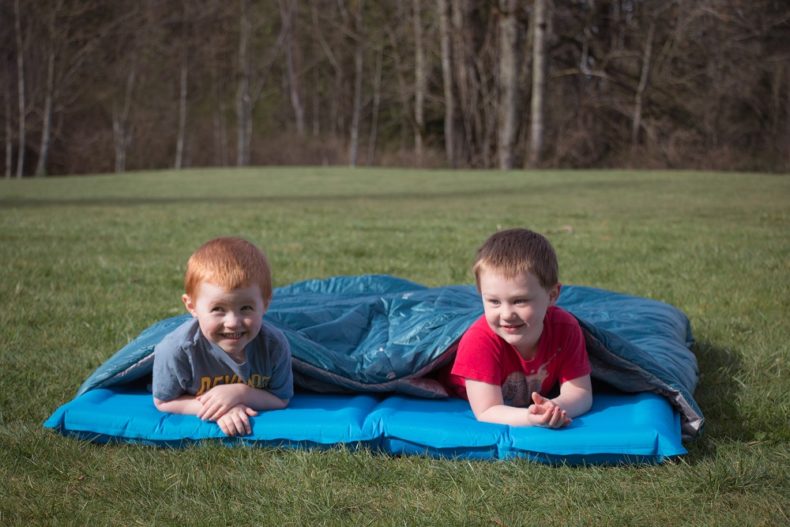 The lightweight, versatile and compact design of the Therm-a-Rest Ventana ™ ($269.95) makes it a great choice for families who take both family and individual adventures. Use as a cozy solo bag (it is also wide enough to fit a 25-inch sleeping pad) or use the included zip-in mattress coupler, which turns it into a soft, draft-free sleeping solution for two (or even three if you have early snuggle visits from a preschooler, like we do!).
We paired the sleeping bag with the NeoAir Camper Duo Pad ($299.95), and what I love about this camping pad is its separate chambers and how easy it is to use with the Ventana™. I tend to move around more in my sleep than my husband, and with this design, I don't feel bad for tossing and turning a bit at night. The comforter stayed connected (no fighting over the covers!) and he didn't get bumped around as I moved. I can also see us using this sleep system when I take my 3-year-old and 8-year-old boys camping solo. The three of us could easily all fit into the double and, because there isn't a gap in the middle, no one will feel like they're falling in the crack. For summer camping, I can also see us not attaching the comforter to the mattress (like shown), as we all tend to sleep warm.
With a temperature rated to 45 degrees (women) and 35 degrees (men), the sleeping bag is a great choice for summer camping adventures. The fabric and insulation will also do well in wetter conditions like the Pacific Northwest. While not the lightest bag on the block (4 lbs., 7 oz), both the bag and the sleeping pad pack down small and would be easy to take on a summer family backpacking trip, festival weekend or campsite adventure.
[gallery columns="2" link="none" size="hikeitbaby-featured" ids="920878,920880"]
Photos by Jessica Wynne.
When considering sleeping systems for your family, it is helpful to take into consideration the climate, versatility, size and weight of the sleep system, as well as those unique features that could help your family sleep while backpacking or camping.
The lightweight, versatile and compact design of the Therm-a-Rest Ventana ™ ($269.95) makes it a great choice for families who take both family and individual adventures. Use as a cozy solo bag (it is also wide enough to fit a 25-inch sleeping pad) or use the included zip-in mattress coupler, which turns it into a soft, draft-free sleeping solution for two (or even three if you have early snuggle visits from a preschooler, like we do!).
We paired the sleeping bag with the NeoAir Camper Duo Pad ($299.95), and what I love about this camping pad is its separate chambers and how easy it is to use with the Ventana™. I tend to move around more in my sleep than my husband, and with this design, I don't feel bad for tossing and turning a bit at night. The comforter stayed connected (no fighting over the covers!) and he didn't get bumped around as I moved. I can also see us using this sleep system when I take my 3-year-old and 8-year-old boys camping solo. The three of us could easily all fit into the double and, because there isn't a gap in the middle, no one will feel like they're falling in the crack. For summer camping, I can also see us not attaching the comforter to the mattress (like shown), as we all tend to sleep warm.
With a temperature rated to 45 degrees (women) and 35 degrees (men), the sleeping bag is a great choice for summer camping adventures. The fabric and insulation will also do well in wetter conditions like the Pacific Northwest. While not the lightest bag on the block (4 lbs., 7 oz), both the bag and the sleeping pad pack down small and would be easy to take on a summer family backpacking trip, festival weekend or campsite adventure.
[gallery columns="2" link="none" size="hikeitbaby-featured" ids="920878,920880"]
Photos by Jessica Wynne.
When considering sleeping systems for your family, it is helpful to take into consideration the climate, versatility, size and weight of the sleep system, as well as those unique features that could help your family sleep while backpacking or camping.
 Disclaimer: Hike it Baby was provided with free product for this round up and honest review. All thoughts, opinions, and photos are Hike it Baby’s own and not influenced by any company or its affiliates. Comments provided by Hike it Baby staff are their own and reflect their own love for their sleeping bags.
Snuggle More on Trail
I'll admit it. I'm a snuggler. Sure, I can sleep alone, but why would I want to? I'm not the only one out there since the double sleeping bag market has several great contenders in it. Before deciding on a sleeping bag, I looked through different reviews to see what would work for our family; however, most didn't take into consideration the special needs of a family with young children. Therefore, we've reviewed three bags below with families in mind.Good for the night sneaker
Sierra Design Backcountry Bed Duo 35/700 Dridown Pros: Accommodates 25-inch pads, snuggly comforter feel, foot ventilation
With a blanket-like top and fast ventilation for warm feet, the Sierra Design Backcountry Bed Duo 35/700 Dridown ($399.95) is perfect for the some-like-hot, some-like-it-cold couples. My husband typically runs hot and I run colder, so this was a great way for us to share a bag and make both of us happy. This bag is a bit heavier than two solo bags as it weighs in at 3 lbs., 12 oz. Even though it is slightly heavier, the bonus in features definitely make up for the weight.
I was excited when this bag came in to see it accommodated a 25-inch sleeping pad. It has two sleeping channels that are set for 20-inch pads, but it was easy to figure out how it can be opened up for the 25-inch pads. There are a number of buttons on the side so you can easily go between the two sizes as needed. My daughter, Sky, will start in her own bag but typically sneaks into my bag halfway through the night. Even with the standard 20-inch pads, we slept comfortably between the three of us. One thing to watch is that there is a middle channel between the two pads that is stuffed with filling so it remains warm. However, there is a slight dip between pads so if you shuffle quite a bit at night, you may find yourself sinking a bit.
Foot ventilation, integrated comforter, closure to seal out drafts and insulated hand pockets are the main benefits that give this a cozy feel. The insulated hand pockets on each corner, paired with the extra long comforter, make this feel like your bedding at home. This is an excellent hybrid between a sleeping bag and a quilt-style.
[gallery size="hikeitbaby-featured" columns="2" ids="922746,922747"]
Photos by Jessica Featherstone.
Versatile and Cozy
Nemo Tango Ultralight Down Comforter Pros: Compresses down small, able to use as a solo bag
The simple, effective design of the Nemo Tango Ultralight Down Comforter ($329.95) compacts down small and keeps you cozy on trail. The backless design of the Nemo comforter makes it compress as small as a single-person sleeping bag, leaving plenty of room in the bottom of my Deuter 60L pack for its slipcover, two sleeping pads, pillows and Sky's blanket. (Never forget the blanket!) The slipcover keeps the two pads snug tight against each other.
The design is simple with only the foot box and top section that slides under the pads. The sides are open and bottom attaches to the top with a snap on each side. This allows each person to determine how much ventilation they desire whether it's a full open side or just enough to stick out a foot. The snap is strong and not even a preschooler rough housing can break it open.
Since this is backless and lightweight, I've also used it as a solo quilt. It was quite effective as a quilt and it's about the same size as other single sleeping bags. This is lightweight for a two-person bag at 2 lbs., 11 oz and compares to many single sleeping bags out there. This bag is an excellent choice for those who want to head out with the family and also use the same bag solo.
[gallery columns="2" size="hikeitbaby-featured" ids="922749,922748"]
Photos by Jessica Featherstone.
Double or Solo
Therm-a-Rest Ventana™ 35™ Pros: Cozy feel, use as solo or double bag, fits 25-inch pads
The lightweight, versatile and compact design of the Therm-a-Rest Ventana ™ ($269.95) makes it a great choice for families who take both family and individual adventures. Use as a cozy solo bag (it is also wide enough to fit a 25-inch sleeping pad) or use the included zip-in mattress coupler, which turns it into a soft, draft-free sleeping solution for two (or even three if you have early snuggle visits from a preschooler, like we do!).
We paired the sleeping bag with the NeoAir Camper Duo Pad ($299.95), and what I love about this camping pad is its separate chambers and how easy it is to use with the Ventana™. I tend to move around more in my sleep than my husband, and with this design, I don't feel bad for tossing and turning a bit at night. The comforter stayed connected (no fighting over the covers!) and he didn't get bumped around as I moved. I can also see us using this sleep system when I take my 3-year-old and 8-year-old boys camping solo. The three of us could easily all fit into the double and, because there isn't a gap in the middle, no one will feel like they're falling in the crack. For summer camping, I can also see us not attaching the comforter to the mattress (like shown), as we all tend to sleep warm.
With a temperature rated to 45 degrees (women) and 35 degrees (men), the sleeping bag is a great choice for summer camping adventures. The fabric and insulation will also do well in wetter conditions like the Pacific Northwest. While not the lightest bag on the block (4 lbs., 7 oz), both the bag and the sleeping pad pack down small and would be easy to take on a summer family backpacking trip, festival weekend or campsite adventure.
[gallery columns="2" link="none" size="hikeitbaby-featured" ids="920878,920880"]
Photos by Jessica Wynne.
When considering sleeping systems for your family, it is helpful to take into consideration the climate, versatility, size and weight of the sleep system, as well as those unique features that could help your family sleep while backpacking or camping.
What are your favorite double sleep systems? Do you have any questions? Leave a comment below!
Read More:
- The new era of the family camping tents
- Light it up: Headlamp reviews
- The ultimate guide to camping with kids
Disclaimer: Hike it Baby was provided with free product for this round up and honest review. All thoughts, opinions, and photos are Hike it Baby’s own and not influenced by any company or its affiliates. Comments provided by Hike it Baby staff are their own and reflect their own love for their sleeping bags.
Related Content



Comments