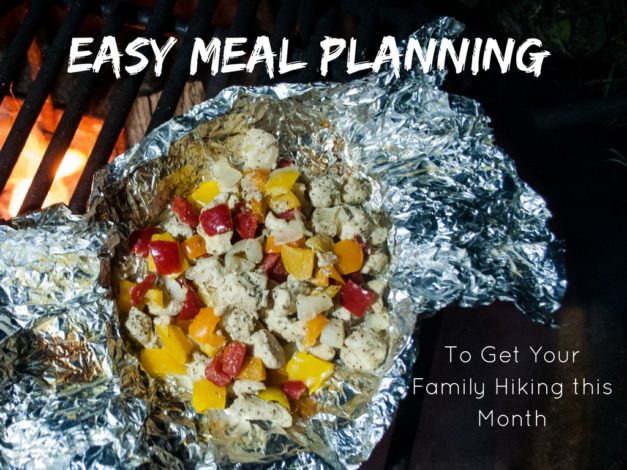
Easy Meal Planning to Get Your Family Hiking this Month

  1. Share
0 0
Easy Meal Planning to Get Your Family Hiking this Month by Heidi Schertz for Hike it BabyOne of the biggest challenges I face during a Hike it Baby 30 challenge is not the miles, but rather the hungry faces at the end of the day. Did I forget dinner prep? Oops! Looks like it's time for sandwiches again. Recently, I switched over to meal planning. Not only meal planning, but meal planning for the whole month. It changed my life. My biggest problem now is remembering to defrost or experiencing wild days if I ignore my own plan.
Make it Easy on Yourself

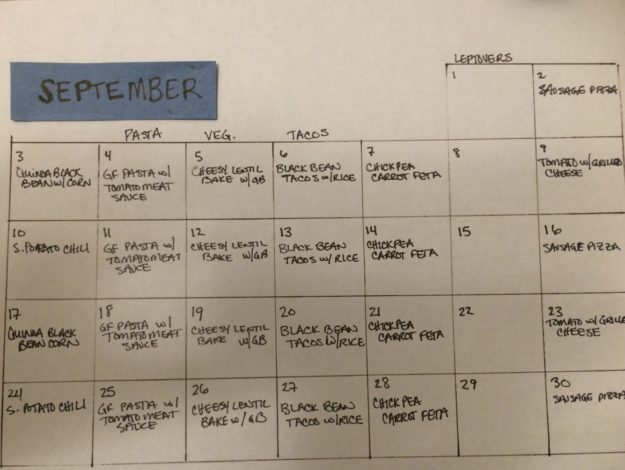
You do not need to create 30 individual, unique and different meals each month. If you like having pizza every Friday, then have pizza! Don't feel pressured to make different meals. Children, especially, crave consistency and having something that is the same every week really helps stabilize their routines. How else do I make it easy? Easy Meal Planning to Get Your Family Through a HiB30 Challenge by Heidi Schertz for Hike it Baby This is my low tech meal plan for the month. As you can see I opted to mix and match recipes from the guide below. I also make the same meal every Monday-Thursday. On the weekends I tend to switch it up more.
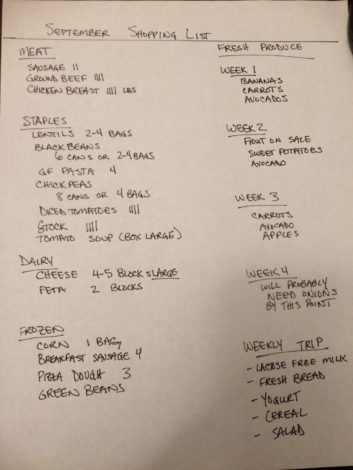
  • I shop ahead. I check my cupboard and then create a gigantic list of ALL the items for the month. Then I shop for the bulk of it ahead of time. By combining all the staples and freezable items into one large list, I spend less time at the grocery store and less money. Then I purchase fresh produce the week of during one of my quick trips. It's my easiest tip and the one that makes the most impact on my ability to get dinner on the table.
  • If you don't want to buy all the ingredients ahead due to space or monetary factors, I still suggest buying the first week ahead of time. It's worth it to sit down for five minutes and make four lists and then stick to them. You'll save time and money.
  • Some months I plan six meals, with one day of leftovers, and repeat that for each week of the month. Other months I plan two weeks worth of meals and alternate them throughout the month. No one has complained yet about the repetition, and I've been cooking this way for over a year.
  • If I'm not going to repeat weeks, then I typically like to make the same type of thing on the same day. Taco Tuesdays is a great example. Soup on Wednesdays is another.
  • Lunch is usually leftovers or sandwiches.
  • We typically budget at least one day of eating out a month.
  • I use the Pepperplate app on my phone to schedule meals and generate shopping lists. However, you can always go low tech with a pen and paper
  • I place "harder" meals either on a weekend or on days when I know we'll be home in the afternoon.
  • When making your list, be sure to adjust for the number of people in your house. My two kids together tend to eat one adult serving (except if it's pasta and then they eat the entire box), so I count our household as having "three adults." If I make a 4 adult serving meal, I'm usually guaranteed leftovers. Easy Meal Planning to Get Your Family Hiking this Month by Heidi Schertz for Hike it Baby This is my sample list. You can see that I have the bulk items on the left, these are all things that can be stored for a month. Most of the spices and other ingredients, like mustard, I already have on hand. The right is where I schedule the weekly shopping trips.

Weekly Meal Plans

Here are a few weeks' worth of meal plans. Each week has six meals, with the assumption that you'll have leftovers from at least one recipe. I've added Omnivore, Vegetarian and Gluten-free options. I've found most of these recipes can easily be adapted to avoid common food allergies/diets. There are a few repeats between sections. Also, I've tried to have a green veggie in each of these meals, but feel free to substitute with one your kids will eat or add more veggies. You can arrange the meals below to fit your schedule. Or see a recipe from another week you want to try? Go for it!

Omnivore Week 1

  • Grilled Chicken with Rice and Asparagus
  • Pasta with Tomato Meat Sauce: I love to make my pasta sauce the vehicle for tons of veggies my children can't fight over. I usually increase the spice quantities and add whatever veggie is in my fridge (usually carrots or zucchini). Dice them small or in an immersion blender for full effect. The recipe says to simmer for an hour, but you could just as easily slow cook this or eat it right away, I won't judge.
  • Chickpea Salad with Roasted Carrots and Feta: Don't let the list of ingredients fool you. The hardest part is the dressing; the meal can be ready in about 30 minutes.
  • Black Bean Tacos with Rice
  • Tomato Soup and Grilled Cheese: I always have one meal that I can throw together the instant I walk in the door. I tend to place this meal on a night when I know we're going to get home late. Try pairing sliced Granny Smith apples with cheddar if you feel fancy.
  • Homemade Sausage Pizza: We use a pre-made pizza dough instead of the pre-baked pizza crust, and we have found that the kids love to spread the dough while I slice toppings. Bonus: if you don't use the whole pound of ground beef for the pasta, you can use that as a pizza topping instead. (I also recommend two pizzas if you have older kids.) Store-bought is always an option as well.
  • Leftovers

Omnivore Week 2

  • Pork Chops in a Mushroom Soup Gravy with Green Peas: Take a can of mushroom soup and pour over pork chops in a frying pan. Cook until meat thermometer reaches appropriate temperature. Flip once. Thin-cut cooks faster and makes it easier for kids to cut themselves.
  • Crockpot Sweet Potato, Black Bean Quinoa Chili: Slow cookers are a great way to cook while you hike. Bonus: if you live in an area where September is still summertime, you don't heat the house up!
  • Creamy Chili Sauce with Zucchini, Spinach and Pasta : If you want more protein, try one of the chickpea or lentil pastas. They are very filling and have a great texture and taste like regular pasta.
  • Baked Omelet Pie (aka Frittata): What's great about a frittata is that if you make it ahead of time, you can serve it sliced like pizza and the kids can eat it with their hands. This one is a great combo of ham, red pepper and mushroom. Add a side of your favorite biscuit or toast and you're set.
  • Slow Cooker Barbeque: It's easy and quick to serve. Serve with coleslaw. Yum!
  • Grilled Pesto Chicken and Tomato Kebabs: The genius here is that you can have older kids help you skewer the food in the morning before hiking. Then pop onto a grill or pan fry when you get home. Serve over rice.
  • Leftovers

Vegetarian Week 1

  • Cheesy Lentil Bake with Side of Green Beans: My family loves to serve this with salsa or hot sauce. It's so delicious, non-vegetarians won't miss the meat.
  • Black Bean Tacos with Rice
  • Sweet Potato Lentil Dal Served with Rice
  • Sesame Soba Noodles Served with Pan Fried Tofu for extra protein
  • Pasta with Tomato Sauce and Veg: Toss in as many veggies as you can find and give it a blend at the end. I always substitute for vegetarian broth and it's delicious.
  • Quinoa and Black Beans: This dish is one that can easily be customized to your tastes. Feeling Mediterranean? Top with feta and olives. Want to indulge your need for tacos? Top with taco seasoning or salsa and guacamole.
  • Leftovers

Vegetarian Week 2

  • Crockpot Sweet Potato, Black Bean Quinoa Chili: Slow Cookers are a great way to cook while you hike. Bonus: if you live in an area where September is still summertime, you don't heat the house up!
  • Tomato Soup and Grilled Cheese: Tomato and Grilled Cheese is a huge comfort meal in our house. It easily throws together and requires almost no prep. If you want, you can make fancier grilled cheese with avocado or pears in addition to the cheese.
  • Easy Vegan Red Lentil Dal: Lentils are fast becoming a comfort food in my home.
  • One Pan Crack Bean Burritos: It's quick, easy and delicious.
  • Chickpeas in Tumeric Peanut Butter Curry: For those with peanut sensitivities, cashew or almond butter would probably also be amazing.
  • One of my favorite dinners is actually breakfast! Pick your favorite pancake recipe and whip it together. Top with jam or peanut butter. Add a side of cheesy eggs and you've got dinner.
  • Leftovers

Gluten-free Week 1

  • Chickpea Salad with Roasted Carrots and Feta: This recipe is worth the ingredient list. Pop it in the oven and it practically makes itself. 
  • Black Bean Tacos with Rice: I have found that steaming the corn tortillas dramatically increases how flexible the corn tortillas are and prevents breakage. My sister swears by tossing them on top of her rice cooker while the rice is cooking.
  • Buffalo Chicken Quinoa Salad: This one might need to be tamed down for the spice-sensitive people and the kids, but some sour cream would work great with that. Besides, it can't always be about the kids. ;)
  • Creamy Chili Sauce with Zucchini, Spinach and Pasta: You've probably located your favorite GF pasta by now, but if you haven't tried one of the chickpea or lentil pastas, I really encourage you to do so. They are very filling and have a great texture.
  • Quinoa and Black Beans: There are a million ways to make this dish your own and flavorful. It's also good as is, in case you aren't feeling experimental.
  • Grilled Pesto Chicken and Tomato Kebabs: The genius here is that you can have older kids help you skewer the food in the morning before hiking. Then pop onto a grill or pan fry when you get home. Serve over rice.
  • Leftovers

Gluten-free Week 2

  • Crockpot Sweet Potato, Black Bean Quinoa Chili: Throw the ingredients in and cook while you hike? Check. Delicious? Also check. 
  • Slow Cooker Enchilada Quinoa Bake
  • Baked Omelet Pie (aka Frittata): Sometimes I like to make this the night before and serve it cold. The problem with this strategy is that it sometimes gets eaten for breakfast also. This Fritatta is a ham, red pepper mix, but you could easily change out the veggies for ones you have in the fridge.
  • Up for a Slow Cooker Barbeque? Check to make sure your sauce is gluten-free or make your own. Put on your favorite GF roll or on top of mashed potatoes.
  • Lentils and Spinach with a Side of Steamed Cauliflower: This is another recipe that allows you to start the cooking process and then clean the kids up before it's ready.
  • Cheesy Chicken & Broccoli Rice Bowls: I love things that you can make ahead of time if you want. But to be honest, this one won't make it to the fridge because it will all be eaten (most likely by me).
  • Leftovers

Dessert & Snack Options

Try one of these recipes for those celebratory moments during your challenge. Most are Vegetarian and Gluten-free (though I'm sure you can add meat or gluten if you feel strongly about that). Do you have a favorite recipe you cook when you hike? What are the ones you fall back on during challenge months. Share with us below!

Photos Courtesy of Melissa Hollingsworth and Heidi Schertz

Comments

To view comments or leave a comment, login or sign up.

Related Content

0
What Is the 10 Minute Walk & Why Your City Needs It
Have You Heard About the 10-Minute Walk Initiative? Suppose you believe that access to parks and green spaces improves physical and mental health, especially during times of crisis, or that life simply feels better when nature is close by. In that case, you are already aligned with the vision behind the 10 Minute Walk Initiative. Photo by Monique Vargas What Is the 10 Minute Walk Initiative? The 10-Minute Walk Initiative is a nationwide effort to ensure that everyone in the United States has safe, easy access to a quality park within a ten-minute walk of home by the year 2050. This is not just a goal for green-friendly states like California or Colorado. It is a promise for every city, every neighborhood, and every family. Want to know if your city is part of it? Visit the 10 Minute Walk website to see if your mayor has signed on. If you do not see your city listed, you can do what some of our community members have done: sign up for updates and learn how to get involved. You may even be able to encourage your local leaders to take part. If you are part of the OutGrown community, you already know our roots go back to the Hike it Baby movement and its guiding value: Leave No Family Behind. That means no matter your pace, parenting moment, or personal identity, you belong here. Whether you are changing a diaper, feeding your baby, managing a meltdown (yours or theirs), or just starting, we will not leave you behind. But here is the hard truth: Some families are being left behind simply because they do not have access. Parks are too far, sidewalks are unsafe, and transit is unreliable.  That is why OutGrown supports the 10-Minute Walk Initiative. Ensuring every family has access to nature is the first step in building an inclusive and equitable future outdoors. OutGrown exists to be a hub of tools, stories, and support for families with babies and young children who want to grow up outside, together. Learn more about our mission and how you can be part of it at WeAreOutGrown.org. About OutGrown OutGrown is a national nonprofit working to ensure that every family, especially those with babies and young children, can experience the benefits of time outside. Since our grassroots beginning in 2013, we have supported more than 300,000 families with the help of thousands of volunteers across the country. We believe nature belongs to all of us from the very beginning. That means creating opportunities, removing barriers, and supporting families in finding their way outdoors, whether that starts with a stroller walk, a community outing, or a quiet moment under the sky. You can learn more and explore our programs at WeAreOutGrown.org. Editor’s Note Thank you for reading. At OutGrown, we believe content should offer more than information. It should create a connection, support real-life caregiving, and reflect how families grow together through nature. Everything we share is made with care by our team and volunteer community. If this piece inspired you or helped you feel more confident in your outdoor journey, we invite you to support our work by donating today. Your contributions help us keep resources free and accessible to all families. Please remember that the experiences and tips shared in this article are for general information only. They are not a substitute for professional medical, mental health, or safety advice. Always consult with a qualified provider if you have specific concerns or questions. We are glad you are here. We are growing something meaningful together
0
5 Tips for Trail Cleanup Safety
Trail cleanups can be a powerful way for families to give back and connect with nature at the same time. With little ones in tow, safety and simplicity are key. Whether joining a group event or picking up trash on your usual stroll, this guide offers practical tips to help make your next cleanup effort safe, age-appropriate, and meaningful for everyone involved. Winters can be hard on trails. Many will need both cleanup and maintenance come springtime. You can contact your local or state park system to see if they have anything planned, or you can plan your own trail cleanup hike with your Hike it Baby branch! Hike it Baby offers lots of information on organizing a trail cleanup, and safety is a consideration when participating in a trail cleanup. Some of these things may seem like common sense, but it’s always nice to double check your preparedness whenever you try something new (or for the first time in a while). 5 Tips for Trail Cleanup Safety 1. Bring proper cleanup supplies Certain supplies will come in handy during a trail cleanup. This would include gloves, trash grabbers and bags. It’s a good idea to have the littles carry the trash bag instead of picking up trash. They may not know what they should and shouldn’t touch. 2. Work in pairs or groups Sticking together and staying in communication with the organizer are very important. Make sure you have a charged cell phone or walkie-talkie with you. A compass could also come in handy if you're off the beaten path. Make sure someone knows exactly what area your group will be working in. Check in often with the organizer and stay close to your partner or group. Or, if you're hosting the hike, help the group stay together and communicate the meet up locations and times. 3. Bring your normal safety supplies All normal hiking injuries can occur on a trail cleanup. In fact, after winter, the trail will likely be in worse shape than usual, so be prepared. Make sure you pack your typical first aid kit, plus plenty of water and snacks. 4. Give the kiddos simple tasks The concept of trail cleanup is super important to share with our kids beginning at a young age as it teaches them to be stewards for our trails and parks. It’s even better to reinforce as they get older. That being said, not every trail cleanup is organized with young children in mind. If attending a hike organized by another group or parks department, speak to the cleanup organizer before deciding whether or not you will bring young children. Make sure there will be tasks suitable for their age and ability. With supervision and proper gloves and grabbers, tiny people are great at holding trash bags, spying trash, and they love to use trash grabbers! Older kids can also be great to pair with younger kids. If hosting your own hike, make sure you communicate what supplies to bring and provide safety tips during Welcome Circle. 5. Use caution Don't ever touch anything sharp or lift anything too heavy. While you will typically feel totally awesome after participating in a trail cleanup, you might not if you cut yourself and get an infection. After winter, there could be trees or large branches across the trail. Don’t try to be the hero and lift something too heavy on your own. Even professional bodybuilders use a spotter to lift. Bring a notepad with you and document anything you can’t handle. Then give this list to the trail cleanup organizer so that the proper crew can address it. (Or, if you're hosting, contact the parks department with the information.) For toddlers and little kids, have them spot the trash ("I spy!") instead of picking it up. This will ensure they aren't picking up anything dangerous or unsanitary. What are your safety tips for trail cleanup? Have a question about safety while participating in a trail cleanup? Leave a comment or a question below! Read More: 11 Tips for Safety on Trail 3 Trail Safety Tips You Must Know Photos by Vong Hamilton. Hike it Baby hikes are hosted by volunteers who have no professional training and are not experts to guide families on hikes. They are people who want to raise a generation to love the outdoors and they accomplish this by facilitating outings for all to join. Our tips are gathered from collective experience. As with any physical activity, please be sure to check with your healthcare provider and other experts when hiking with your children. About OutGrown OutGrown is a national nonprofit working to ensure that every family, especially those with babies and young children, can experience the benefits of time outside. Since our grassroots beginning in 2013, we have supported more than 300,000 families with the help of thousands of volunteers across the country. We believe nature belongs to all of us from the very beginning. That means creating opportunities, removing barriers, and supporting families in finding their way outdoors, whether that starts with a stroller walk, a community outing, or a quiet moment under the sky. You can learn more and explore our programs at WeAreOutGrown.org. Editor’s Note Thank you for reading. At OutGrown, we believe content should offer more than information. It should create a connection, support real-life caregiving, and reflect how families grow together through nature. Everything we share is made with care by our team and volunteer community. If this piece inspired you or helped you feel more confident in your outdoor journey, we invite you to support our work by donating today. Your contributions help us keep resources free and accessible to all families. Please remember that the experiences and tips shared in this article are for general information only. They are not a substitute for professional medical, mental health, or safety advice. Always consult with a qualified provider if you have specific concerns or questions. We are glad you are here. We are growing something meaningful together.