Park Ranger Interview with Miriam Hornstein

  1. Share
0 0
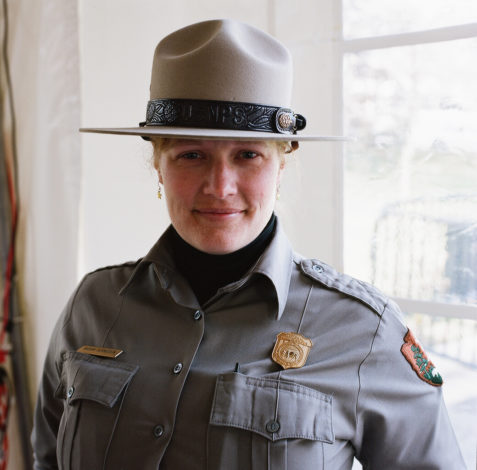
Miriam is proud to be a Park Ranger. Miriam in the welcome tent at the National Cherry Blossom Festival in Washington, D.C. In this interview series, I'm going to introduce you to park rangers across the United States. Today's post features Miriam Hornstein, a park ranger at Yellowstone National Park.
What is your name and job title? My name is Miriam Hornstein and I am an Interpretive Supervisory Park Ranger at Yellowstone National Park.

Is this the first National Park you've work at? If not, tell me what other parks/nature centers you've worked at.

Nope, this isn't my first National Park; as a matter of fact, this isn't even the first time I've worked at Yellowstone as a Park Ranger! I've worked at Arches NP, Canyonlands NP, Joshua Tree NP, the Black Canyon of the Gunnison NP, Big Cypress National Preserve, Colorado National Monument, Yellowstone NP–all as a seasonal ranger. Then I spent four years with the U.S. Fish & Wildlife Service on the island of Kauai at the Kilauea Point National Wildlife Refuge. I worked at the National Park Service at the National Mall and Memorial Parks in Washington, D.C., for five years, and then moved to Delaware Water Gap National Recreation Area for three years. Finally, I returned to the West for my current position as a park ranger at Yellowstone.

Where did you grow up? The country, the city or the suburbs? 

I grew up in a combination of places. Mostly suburbs/smaller cities in MN, TX and ND. When I graduated high school in ND, I went to college at Oberlin College, near Cleveland, OH. It's a small town with a focus on green, environmental-type living. I also spent a year living in Munich, Germany, when my father was a Fulbright Exchange Teacher. That taught me that I wasn't cut out for the big-city life pretty quickly. Too many people and too loud!

What did you love about the outdoors as a child?

What I loved about the outdoors as a child was that it was an endless playground filled with adventures. There was always something to see and do to spark my imagination.

When did you know you wanted to work in outdoor education? 

I didn't consider a career in outdoor education until I graduated with my degree in Geology. I did a three-month-long internship at Arches NP through the NPS's Geo-Scientists-in-the-Parks program. Half of the time, I worked on synthesizing information for an interpretive trail exhibit, and the other half I worked as an interpretive park ranger. My eyes were opened to a whole new world. Interpretive park rangers are the ones who focus on outreach and education. We're the ones visitors meet in the Visitor Centers and give the guided hikes and programs.
We work to help visitors form intellectual and emotional connections to the resources that we're charged to protect because people are far more likely to protect what they care about and understand. After I worked in my internship for about a month, I realized that National Parks were a classroom that changed every day, filled with students who wanted to be here and who wanted to learn. And I haven't stopped loving that feeling since.

Who encouraged you to pursue a career in outdoor education?

I've had multiple mentors in the NPS who took me under their wing to help me learn and grow as a park ranger, but ultimately the strongest mentors would be my parents, specifically my mom. She was a Girl Scout herself and was determined that her daughter would at least have a basic appreciation for the great outdoors if not the basic skills to handle it. My mom enrolled me in Girl Scouts at an early age and even became a troop leader despite her busy working schedule to help keep me involved and to ensure that the experience was about the outdoors.
She and my dad always found a way to send me to camps and encouraged me on adventures like canoeing the Missouri River from below the Garrison Dam to the Bismark-Mandan area the summer between 7th and 8th grade with the Girl Scouts. And when I talked with them about becoming a ranger, both of my parents always encouraged me. They admit that they love having an "in" at all these parks and a reason to visit them.

What is the most common question you get from park visitors?

Without a doubt, the number one question at any park is, "Where's the nearest bathroom?" But for me as a person, visitors are very curious about how I got started as a ranger. And as I've gotten older, they want to know what it's like trying to juggle a personal life with the remote conditions that I live in. I'm always happy to answer their questions about how I got started, but I draw the line at the questions about my personal life. It gets a little irritating to get subjected to questions like, "What does your husband think about you living out here?" when my male coworkers are never asked questions like that.

How can parents raise kids to love the outdoors?

From what I've observed, the best way for parents to raise their children to enjoy the outdoors is to take them outside with them and have adventures together. We all spend too much time attached to our various devices and too much time indoors these days. Let your time with your children be your time to get out there and have fun.
If it's cold, bundle up and enjoy it! Snowshoeing and cross-country skiing are popular wintertime activities for a reason, but even something as simple as sledding can be great fun. I can't tell you how many great memories I have of sledding with friends and family, laughing until we all fell off the sled!
One of the best gifts my parents gave my brother and I was a huge sandbox in the backyard. We played for hours in it and most of the neighborhood parents knew that when they couldn't find their kids, they would check our backyard. Hours of imagination and fun! 
If it's spring, get out and enjoy what's blooming. There are so many free to low-cost apps for phones that help you identify a plant, flower or bird. And most of them don't require cell service once you have them installed. I use these ID apps a lot and I don't have cell service where I live and work!

Anything else you want to share about your job or what you love about nature/being outside?

I think what I'd like to share the most is that it doesn't take a big, expensive, once-in-lifetime type trip to a National Park like mine for families to fall in love with the outdoors and nature. No matter where you live, there is nature around you. Take advantage of your city, state and county parks. Get to know your neighborhood and what type of outdoor volunteering opportunities there are available. And take the time to step away from your electronics to experience your world around you. It's such a beautiful, wonderful place. I am so lucky to find my calling and be a park ranger. I hope that if we teach our children to love the outdoors, there will be future park rangers to follow in my footsteps.

Community tags

This content has 0 tags that match your profile.

Young Explorers (Walker +)

Comments

To view comments or leave a comment, login or sign up.

Related Content

0
5 Tips for Trail Cleanup Safety
Trail cleanups can be a powerful way for families to give back and connect with nature at the same time. With little ones in tow, safety and simplicity are key. Whether joining a group event or picking up trash on your usual stroll, this guide offers practical tips to help make your next cleanup effort safe, age-appropriate, and meaningful for everyone involved. Winters can be hard on trails. Many will need both cleanup and maintenance come springtime. You can contact your local or state park system to see if they have anything planned, or you can plan your own trail cleanup hike with your Hike it Baby branch! Hike it Baby offers lots of information on organizing a trail cleanup, and safety is a consideration when participating in a trail cleanup. Some of these things may seem like common sense, but it’s always nice to double check your preparedness whenever you try something new (or for the first time in a while). 5 Tips for Trail Cleanup Safety 1. Bring proper cleanup supplies Certain supplies will come in handy during a trail cleanup. This would include gloves, trash grabbers and bags. It’s a good idea to have the littles carry the trash bag instead of picking up trash. They may not know what they should and shouldn’t touch. 2. Work in pairs or groups Sticking together and staying in communication with the organizer are very important. Make sure you have a charged cell phone or walkie-talkie with you. A compass could also come in handy if you're off the beaten path. Make sure someone knows exactly what area your group will be working in. Check in often with the organizer and stay close to your partner or group. Or, if you're hosting the hike, help the group stay together and communicate the meet up locations and times. 3. Bring your normal safety supplies All normal hiking injuries can occur on a trail cleanup. In fact, after winter, the trail will likely be in worse shape than usual, so be prepared. Make sure you pack your typical first aid kit, plus plenty of water and snacks. 4. Give the kiddos simple tasks The concept of trail cleanup is super important to share with our kids beginning at a young age as it teaches them to be stewards for our trails and parks. It’s even better to reinforce as they get older. That being said, not every trail cleanup is organized with young children in mind. If attending a hike organized by another group or parks department, speak to the cleanup organizer before deciding whether or not you will bring young children. Make sure there will be tasks suitable for their age and ability. With supervision and proper gloves and grabbers, tiny people are great at holding trash bags, spying trash, and they love to use trash grabbers! Older kids can also be great to pair with younger kids. If hosting your own hike, make sure you communicate what supplies to bring and provide safety tips during Welcome Circle. 5. Use caution Don't ever touch anything sharp or lift anything too heavy. While you will typically feel totally awesome after participating in a trail cleanup, you might not if you cut yourself and get an infection. After winter, there could be trees or large branches across the trail. Don’t try to be the hero and lift something too heavy on your own. Even professional bodybuilders use a spotter to lift. Bring a notepad with you and document anything you can’t handle. Then give this list to the trail cleanup organizer so that the proper crew can address it. (Or, if you're hosting, contact the parks department with the information.) For toddlers and little kids, have them spot the trash ("I spy!") instead of picking it up. This will ensure they aren't picking up anything dangerous or unsanitary. What are your safety tips for trail cleanup? Have a question about safety while participating in a trail cleanup? Leave a comment or a question below! Read More: 11 Tips for Safety on Trail 3 Trail Safety Tips You Must Know Photos by Vong Hamilton. Hike it Baby hikes are hosted by volunteers who have no professional training and are not experts to guide families on hikes. They are people who want to raise a generation to love the outdoors and they accomplish this by facilitating outings for all to join. Our tips are gathered from collective experience. As with any physical activity, please be sure to check with your healthcare provider and other experts when hiking with your children. About OutGrown OutGrown is a national nonprofit working to ensure that every family, especially those with babies and young children, can experience the benefits of time outside. Since our grassroots beginning in 2013, we have supported more than 300,000 families with the help of thousands of volunteers across the country. We believe nature belongs to all of us from the very beginning. That means creating opportunities, removing barriers, and supporting families in finding their way outdoors, whether that starts with a stroller walk, a community outing, or a quiet moment under the sky. You can learn more and explore our programs at WeAreOutGrown.org. Editor’s Note Thank you for reading. At OutGrown, we believe content should offer more than information. It should create a connection, support real-life caregiving, and reflect how families grow together through nature. Everything we share is made with care by our team and volunteer community. If this piece inspired you or helped you feel more confident in your outdoor journey, we invite you to support our work by donating today. Your contributions help us keep resources free and accessible to all families. Please remember that the experiences and tips shared in this article are for general information only. They are not a substitute for professional medical, mental health, or safety advice. Always consult with a qualified provider if you have specific concerns or questions. We are glad you are here. We are growing something meaningful together.
0
Parks Defined: What does "park" mean to you?
Whether it's an urban playground, a nearby greenspace or a national, state or other agency-run park, there are plenty of options to enjoy for the whole family. This article was updated on May 31, 2024. What does the word "park" mean to you? City parks are familiar to many of us—from tiny neighborhood playgrounds to larger areas of trees, ponds, wildlife and trails. But there are many other types of parks, like state and national parks.    You Have a Big Backyard No matter where you live, how small your yard at home, or how urban your neighborhood—you have a very big backyard. It’s called “public land” and it belongs to all citizens of the United States. It includes vast wilderness areas, lakes, rivers and forests. Having access to such great places to play is a unique privilege. But All Parks are Not Created Equal In my some places there may be several nearby public lands with similar names but run by different agencies. For example: Ashford County Park | Nisqually Mashel State Park | Gifford Pinchot National Forest | Mount Rainier National Park. These four different agencies manage these four parks (and forests): one at the county level, one at the state level, and two at the federal level. The name is often your first clue to the type of park you’re heading into and what sorts of activities are allowed there.  This varies quite a bit because ... It’s All About the Mission The agency's mission dictates how land can be used by the public. For example, the National Park Service's mission is “to preserve unimpaired the natural and cultural resources.” The US Fish and Wildlife Service must “protect and enhance fish, wildlife, plants, and their habitats for the continuing benefit of the American people.” State park missions often emphasize providing recreation opportunities. What's Allowed and What's Not? First, find out the rules and regulations before you go because they can vary greatly! Rules about whether or not dogs, bicycles or strollers are allowed on trails may impact hikers. Camping may be allowed anywhere, or only in designated areas.  Not sure where to look? Start with the park's website, where regulations are almost always posted. Additionally, entrance stations may hand out literature, or signs may be posted at trailheads. You can also stop at visitor centers for information. Playing by the rules protects you and the park you're visiting. Buddy Bison and Kids to Parks Day are part of National Park Trust's mission to get kids outside! Find the Right Park For You Determine if a particular type of park is going to give you the experience you’re looking for before you go. If you’re envisioning a great family hike but can’t dream of leaving the dog behind, then head to a trail in a national forest instead of a national park, since dogs are prohibited on most national park trails. If you’re looking for a purist backpacking experience with no bikes or pets and very few people, then a wilderness area might be a good fit, as they have the strictest rules on types of use. Looking to canoe or kayak with the family? A national recreation area may have the perfect lake for you. Get Outside! Finally, wherever you decide to go, get out there and enjoy your parks! Need more info? Check out these websites: State Parks:  http://www.stateparks.org/find-a-park/ National Parks:  www.nps.gov National Forests:  www.usda/gov/usfs Bureau of Land Management: www.blm.gov US Fish & Wildlife Service:  www.usfs.gov Here's a little more about OutGrown: We're a national, 501c3 nonprofit with over a decade of experience helping families get outside with their babies and young children. We believe it is critical to include and center families from birth because it is a crucial developmental time for both the infant and the parent, where we can create a life-long, multi-generational impact. We know that we protect what we love and we're helping families build a loving connection with the outdoors so they can value and protect it for generations to come. As a community-driven organization, we have been working with indigenous, Latine, BIPOC, immigrant & refugee, and rural families to co-design multilingual and culturally relevant solutions in our programming. Since its grassroots inception in 2013, OutGrown is a growing community of 280,000 families and over 300 volunteers. More information on all of our programs can be found at WeAreOutGrown.org  EDITORS NOTE: We hope you enjoyed reading this article from OutGrown. We’re working hard to provide our community with content and resources that inform, inspire, and entertain you. But content is not free. It’s built on the hard work and dedication of writers, editors, and volunteers. We make an investment in developing premium content to make it easier for families with young children to connect with nature and each other. We do not ask this lightly, but if you can, please make a contribution and help us extend our reach.